

My husband Brent and I recently wrote an article about the Turkish government's escalating attacks on their LGBTQ community. Because of that article, it’s no longer safe for us to visit.
It’s the end of April 2024, and dawn has come to Istanbul.
Yellow and orange spill across the sky like turmeric. The Golden Horn reflects it, and above the jumble of rooftops the red dome of the Greek Orthodox school catches the first light.
From this window, I’ve watched Istanbul wake up every day for the past month.
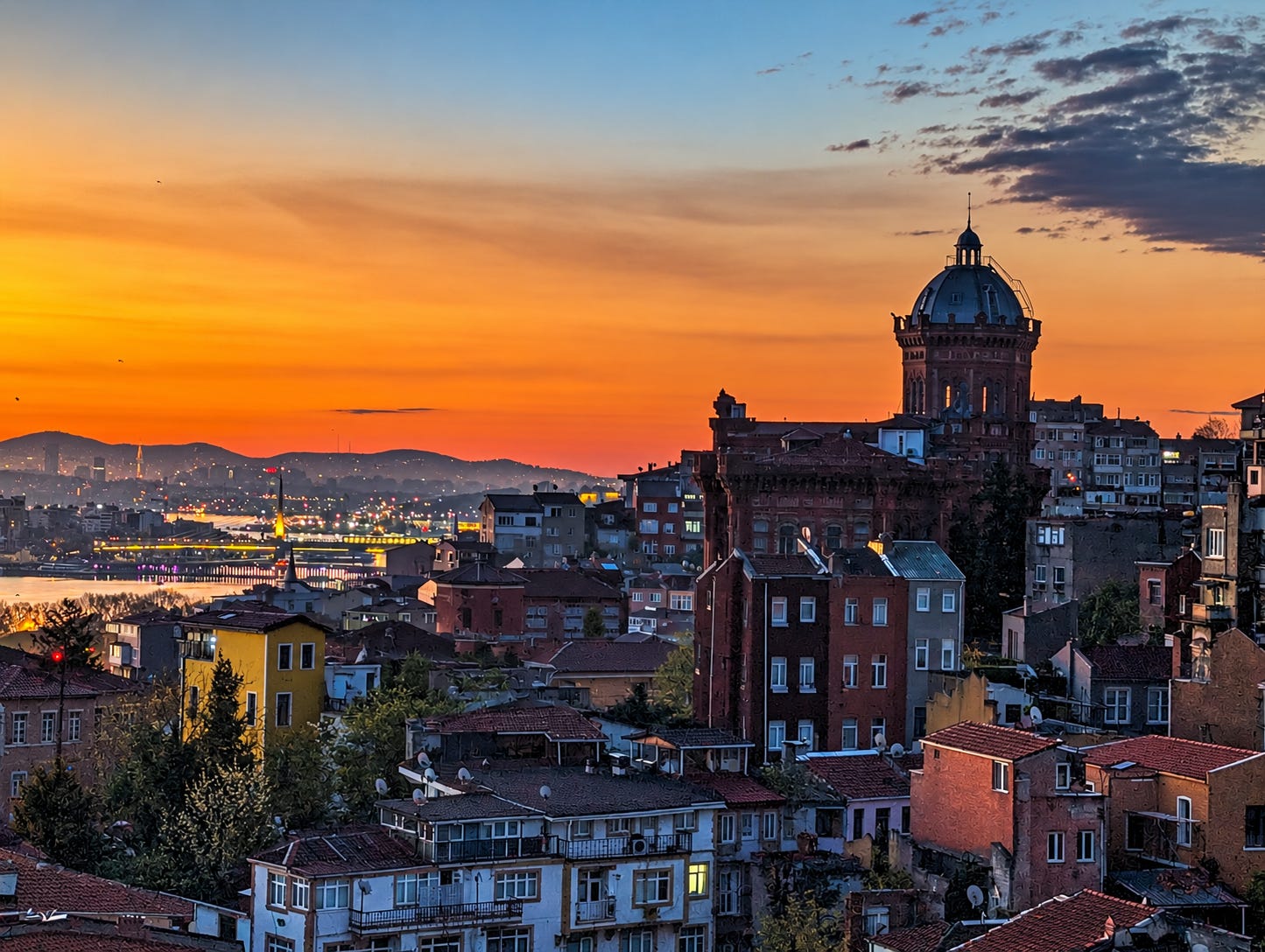
We are living in Balat, a neighborhood that has existed in one form or another for 1,600 years. It was once the city's Jewish quarter. Except for a narrow strip popular with tourists near the water, now it's gritty, working-class, and mostly Muslim.
Our not-so-nice apartment is on the top floor of a building clinging to a hillside like a Turk clutching his cup of coffee. It has a “cumba,” a windowed room jutting out into the air that makes me feel like I’m floating.

I sit in it every morning with tea and cake while crows, magpies, and gulls streak past at eye level. The room is cold and drafty, and my back aches from the stiff wooden chair.
I happily pay the price.
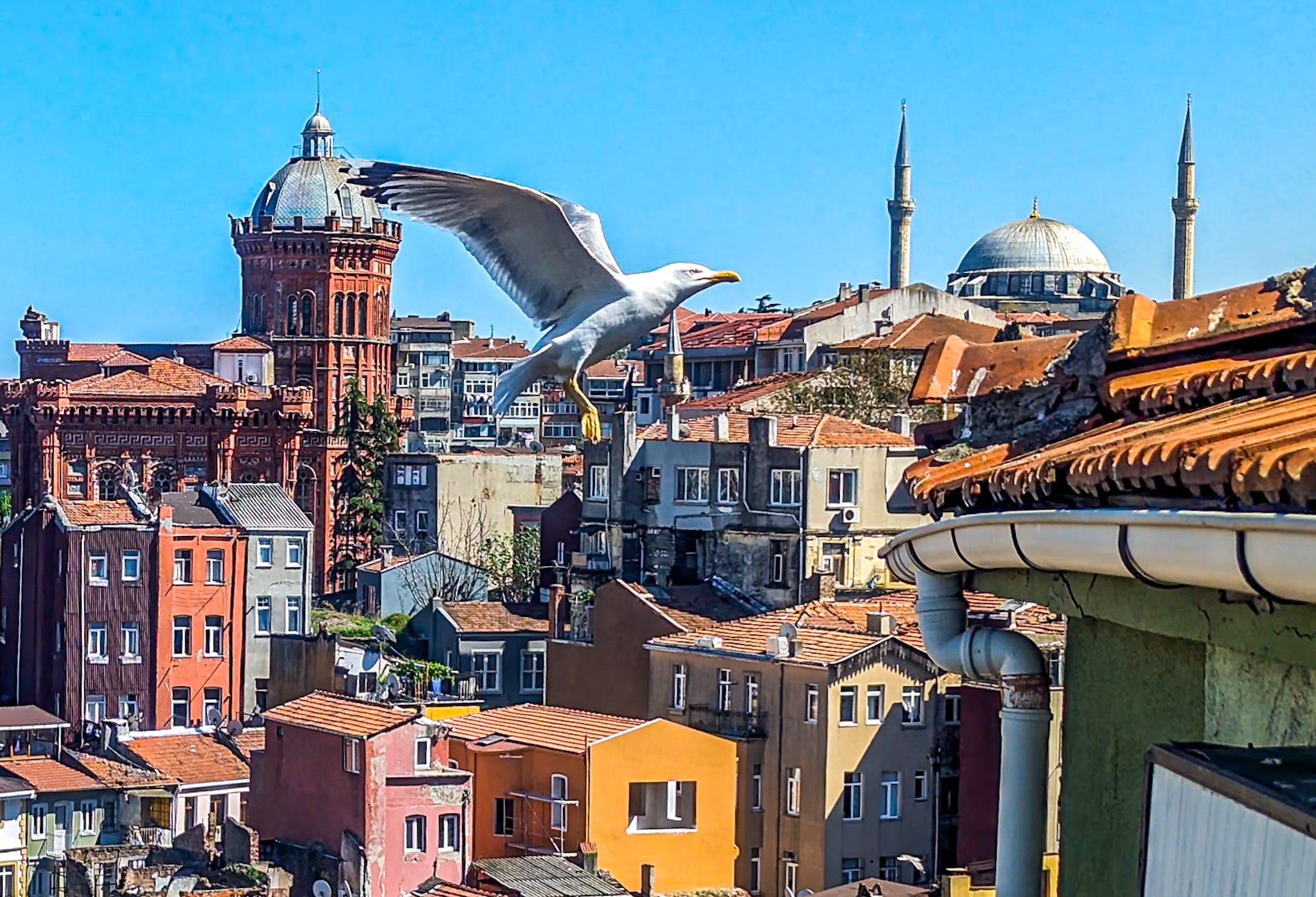
Despite the chill, I open the windows and let the Call to Prayer rise from the mosques below.
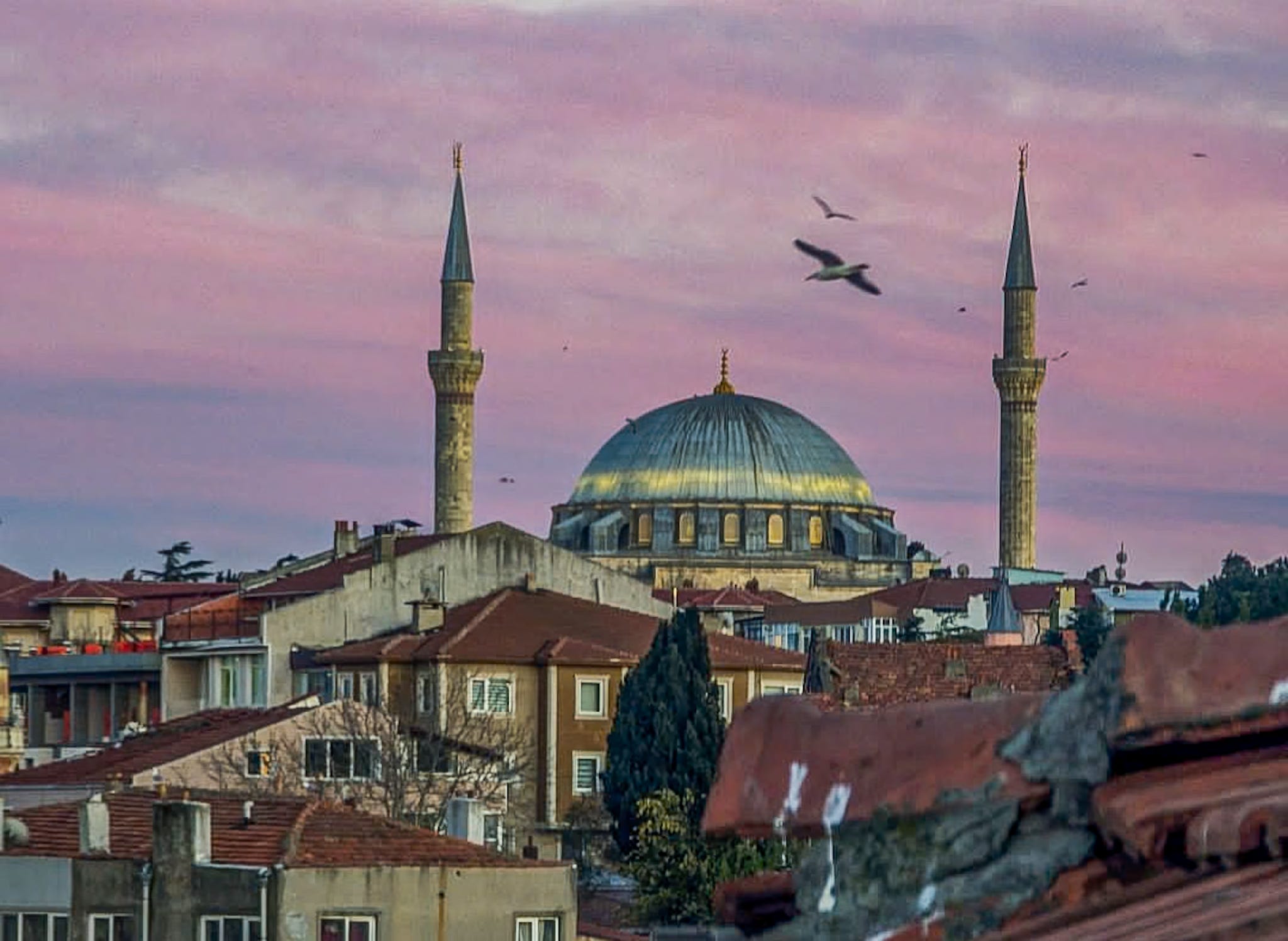
Today is our last day. So I set out to walk the city one more time.
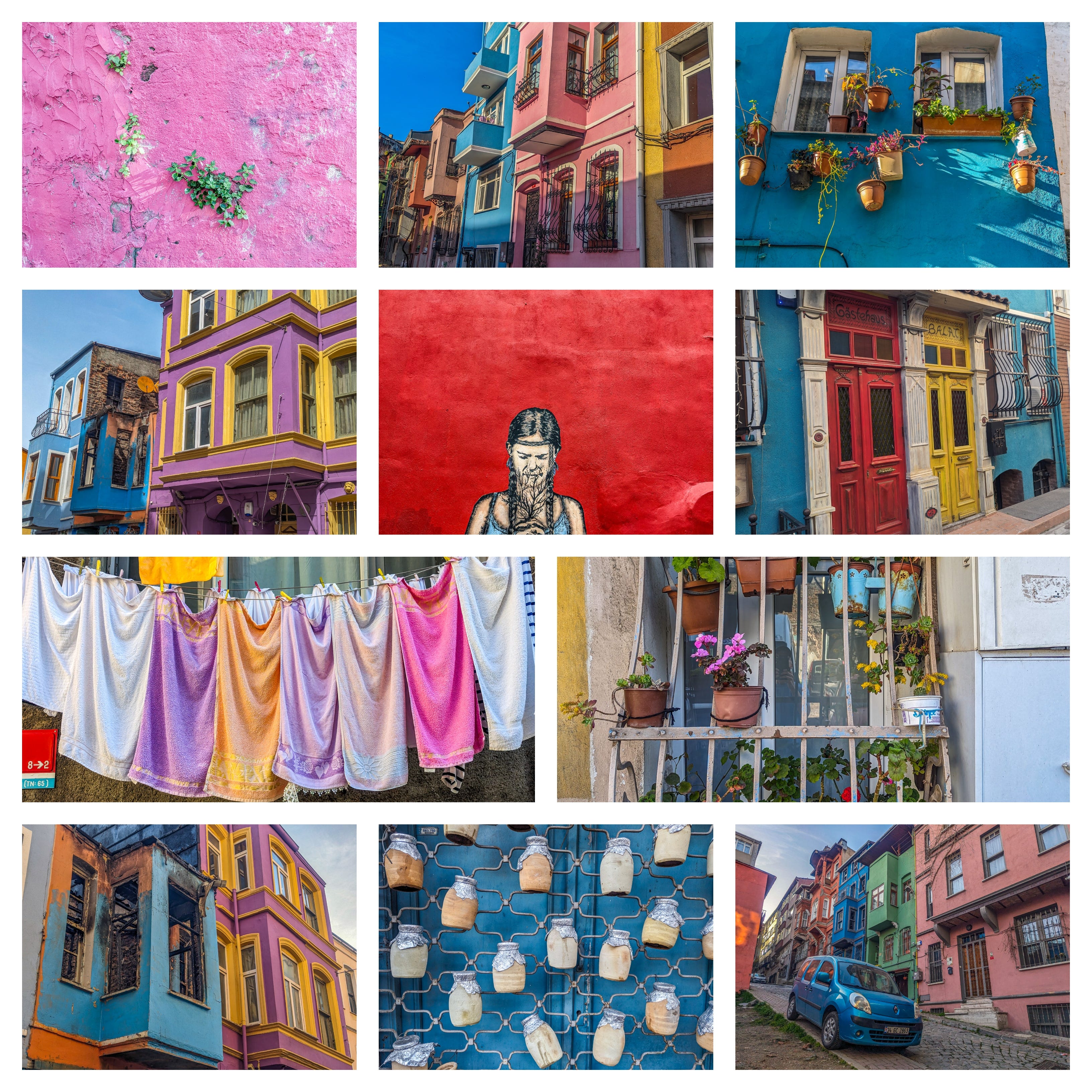
Balat might be most famous for its colored houses, and we live only a few minutes’ walk from some of the most cheerful.
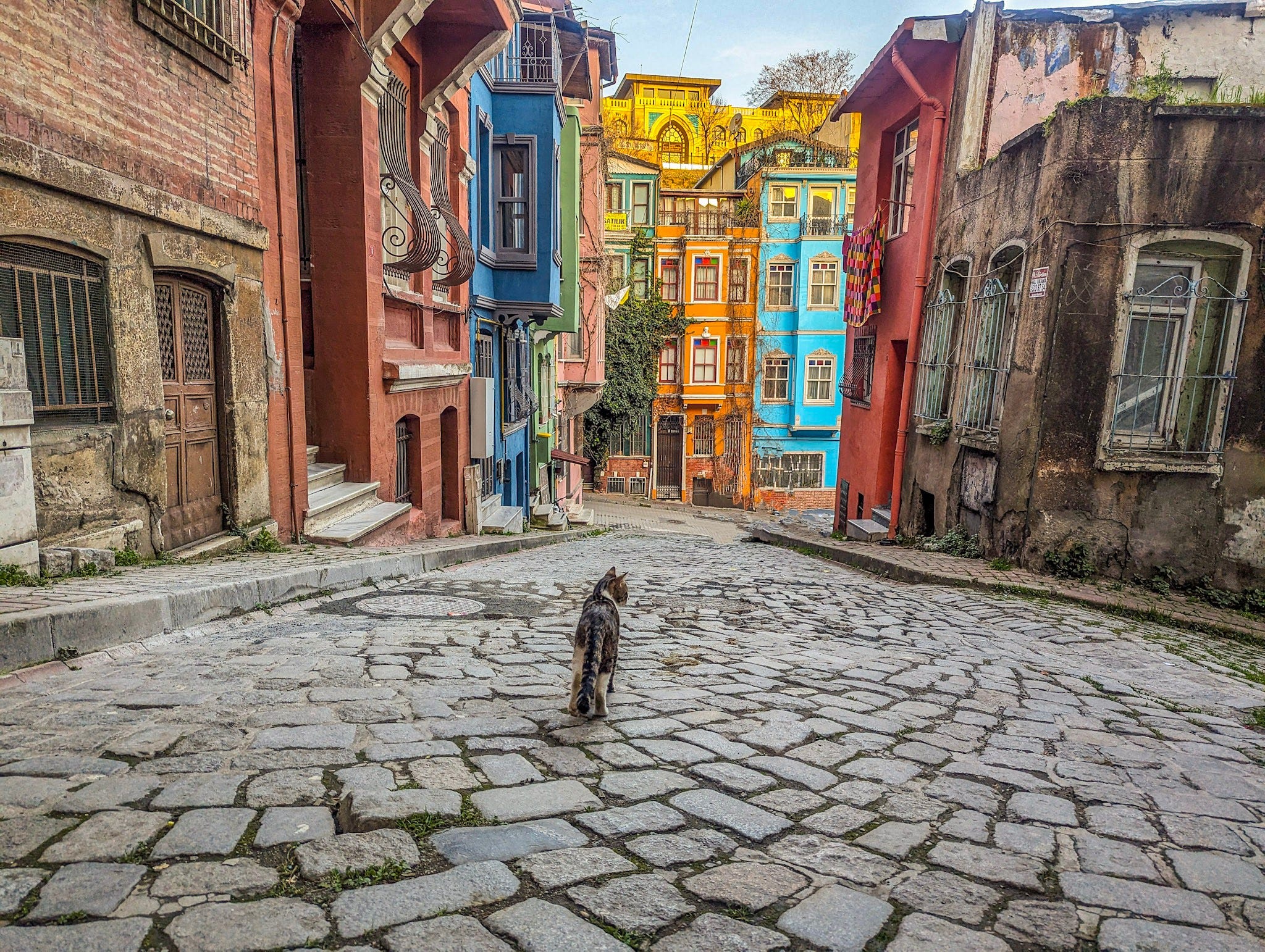
They buildings are humble, nothing like the city’s Blue Mosque, and I prefer them for that and the quiet lives they’ve witnessed. Even though I already have hundreds, I take picture after picture, knowing that after tonight, pictures are all I'll have.
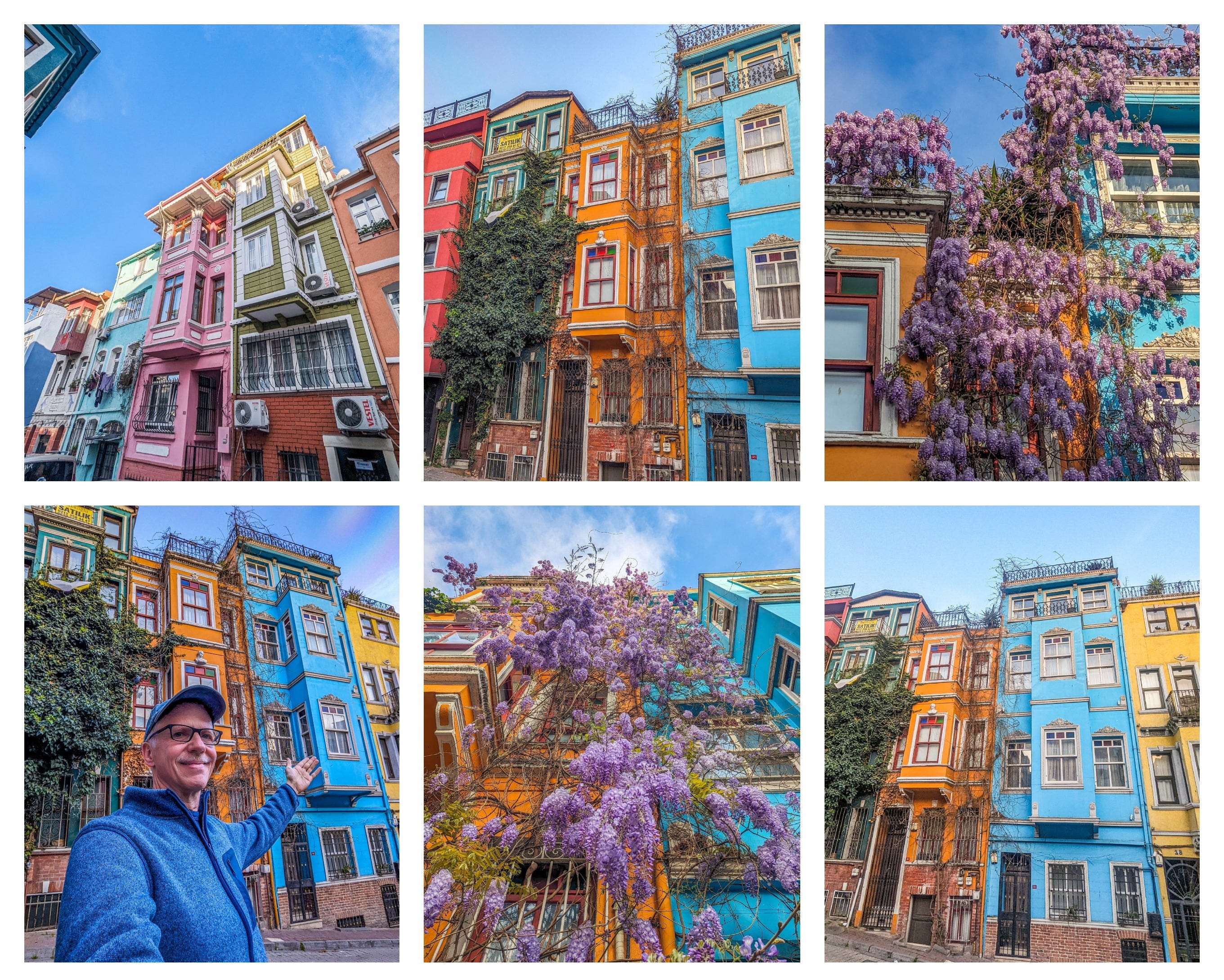
Next, it’s down the steep hillside — watch out for the uneven cobblestones! Charming yes, but dangerous to the unwary photographer.
At my favorite bakery I’ve bonded with the young woman behind the counter because she’s Russian and I can speak a bit as well, which always makes her smile.
I’m sad she won’t have anyone else to chat in Russian with once I’m gone.
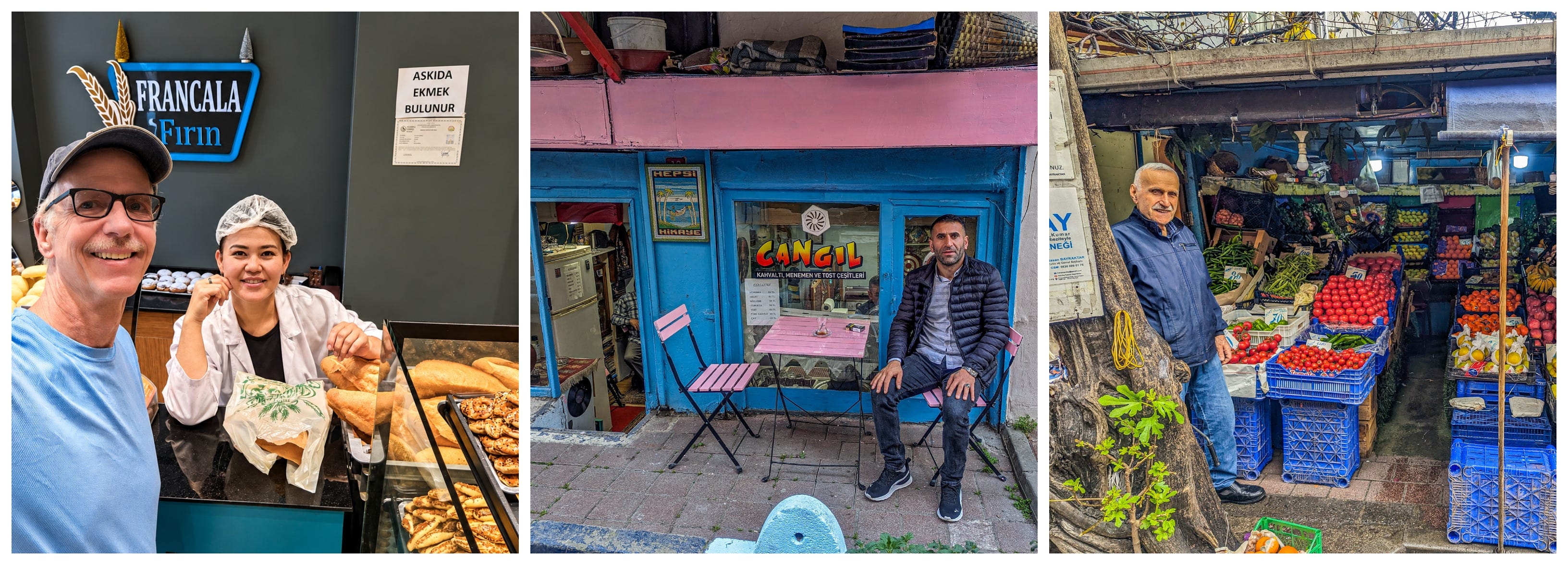
At the fruit shop I say “Merhaba!” to Mehmet, the man who runs it and who always made sure I had the best tomatoes. Another man sits outside a coffee shop smoking. He notices me taking pictures and motions for me to take his. I do and he gives me a thumbs up when I show it to him.
Istanbul is full of moments like these.
After I drop off coffee and pastries for Brent, I head for Fatih, where there’s a bustling market every Wednesday.
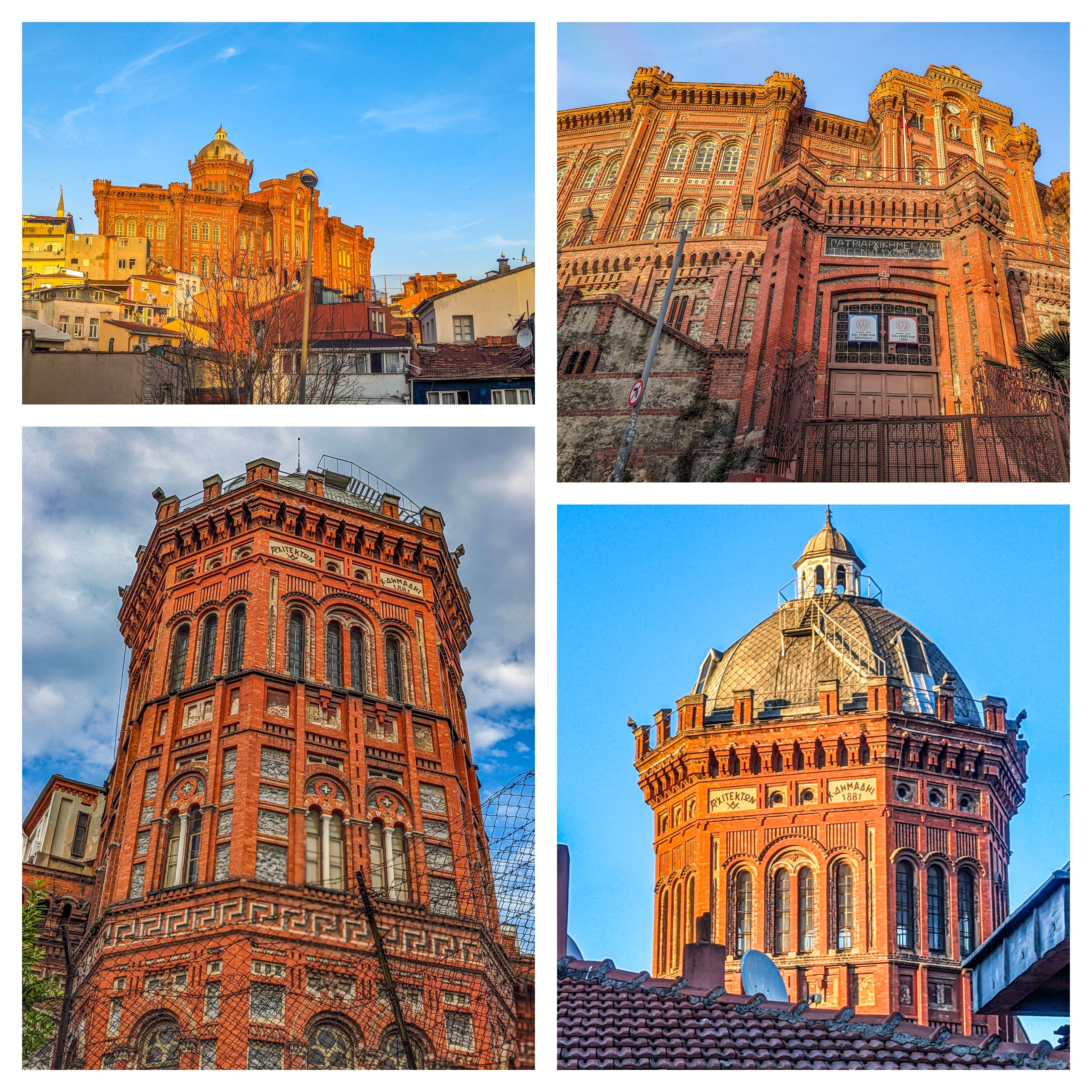
On the way, I pass beneath a huge brick structure glowing in the morning light. It’s the Neo-Gothic Phanar Greek Orthodox College, built back in 1883, and she’s a beauty.
I continue on, the narrow streets growing ever more crowded because reaching the Wednesday market means navigating the crowds that come here to feed their families.
Even though I stick out like a pink, sweaty thumb, I thrive in the strangeness and chaos that isn’t chaos once you know the rules.
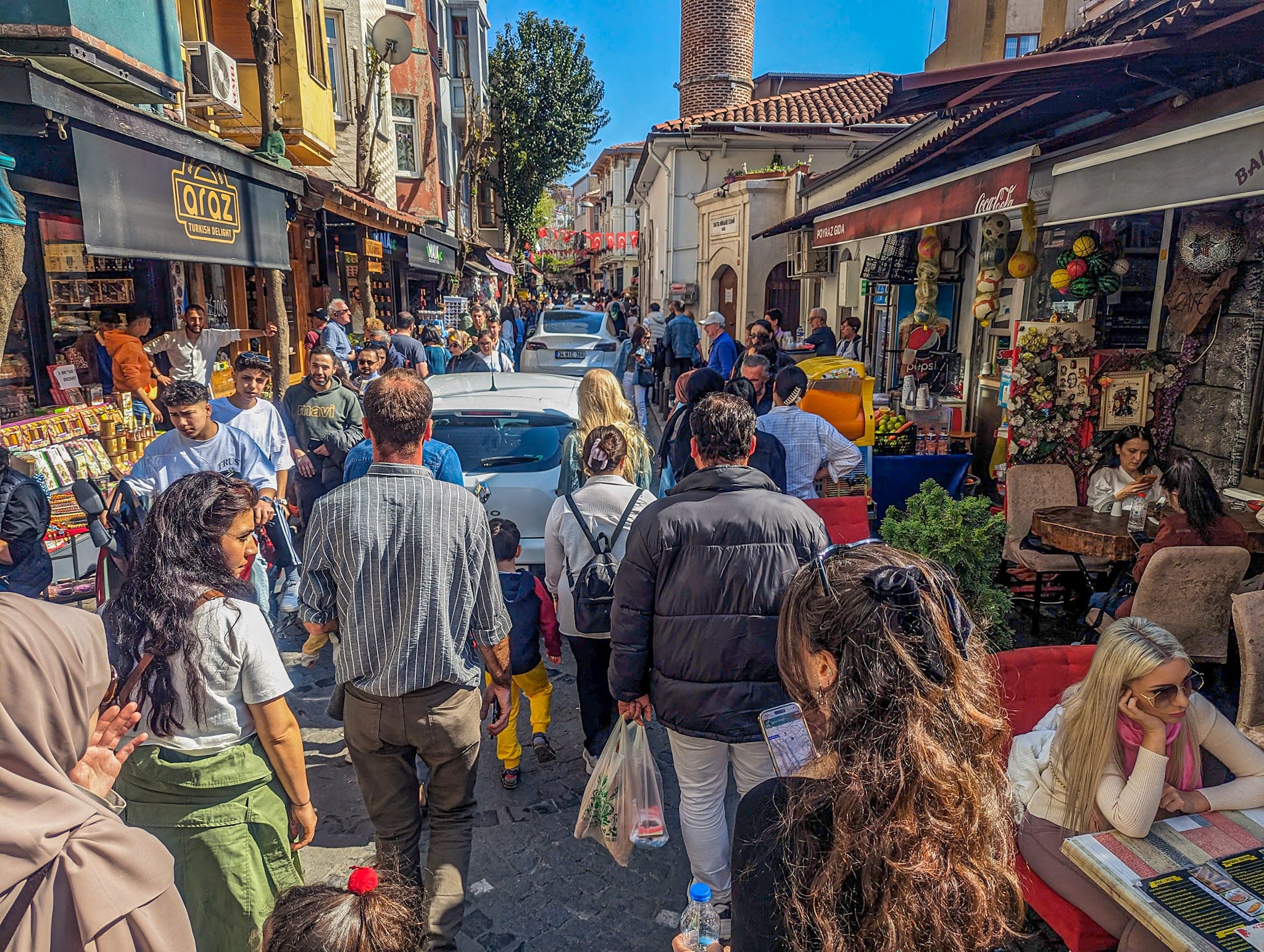
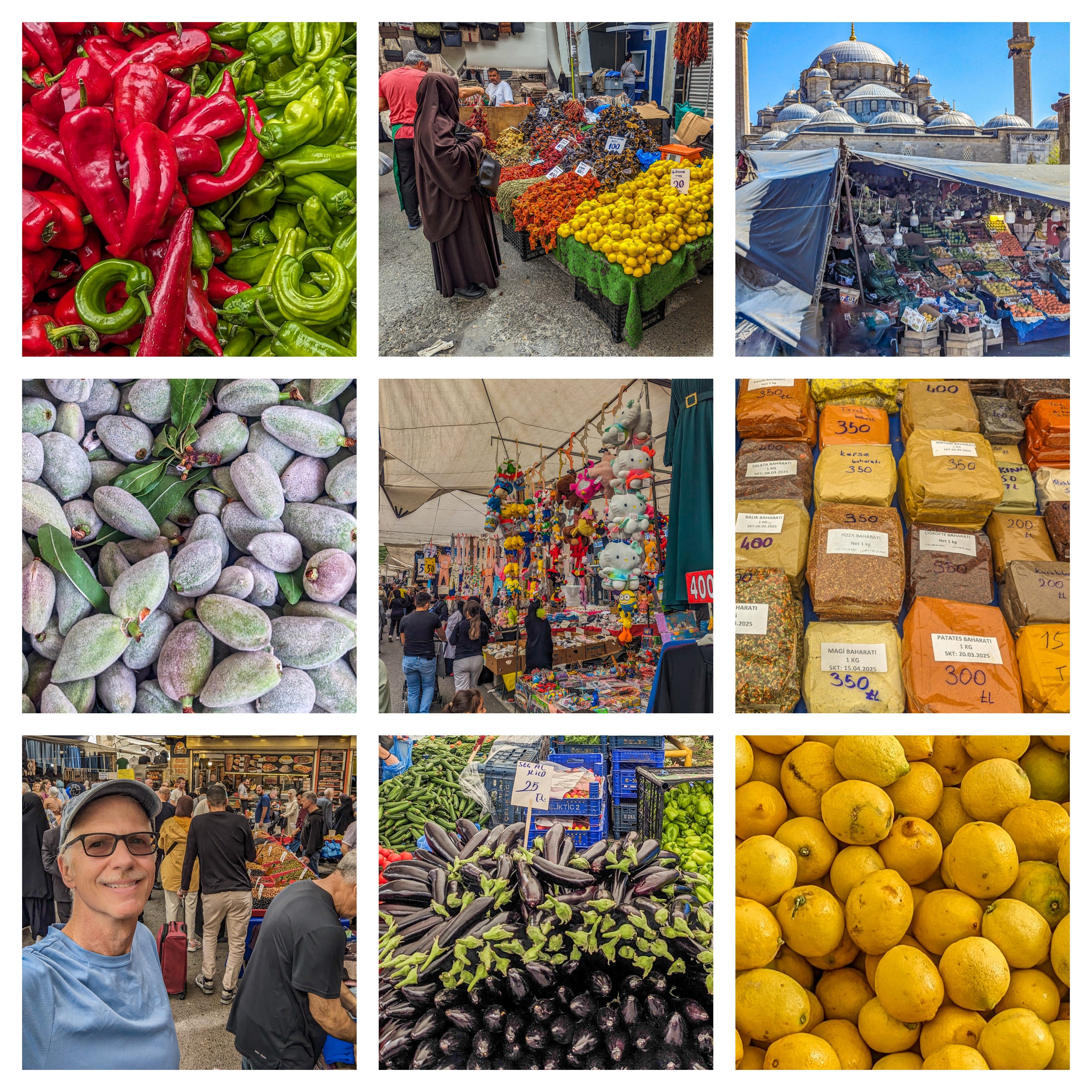
I reach the market, where for a month I bought the freshest spices, peppers, lemons, and much more from these stalls.
Today I buy nothing and take only photographs.
From here it’s a short walk to the very heart of old Istanbul, where the Blue Mosque, Hagia Sophia, Topkapi Palace, and the Basilica Cistern hold court as the sultans once did.
While they are all amazing, those places aren’t the part of Istanbul I love most.
Instead, I turn and head for Galata Bridge, which will carry me to the other side of the Golden Horn.
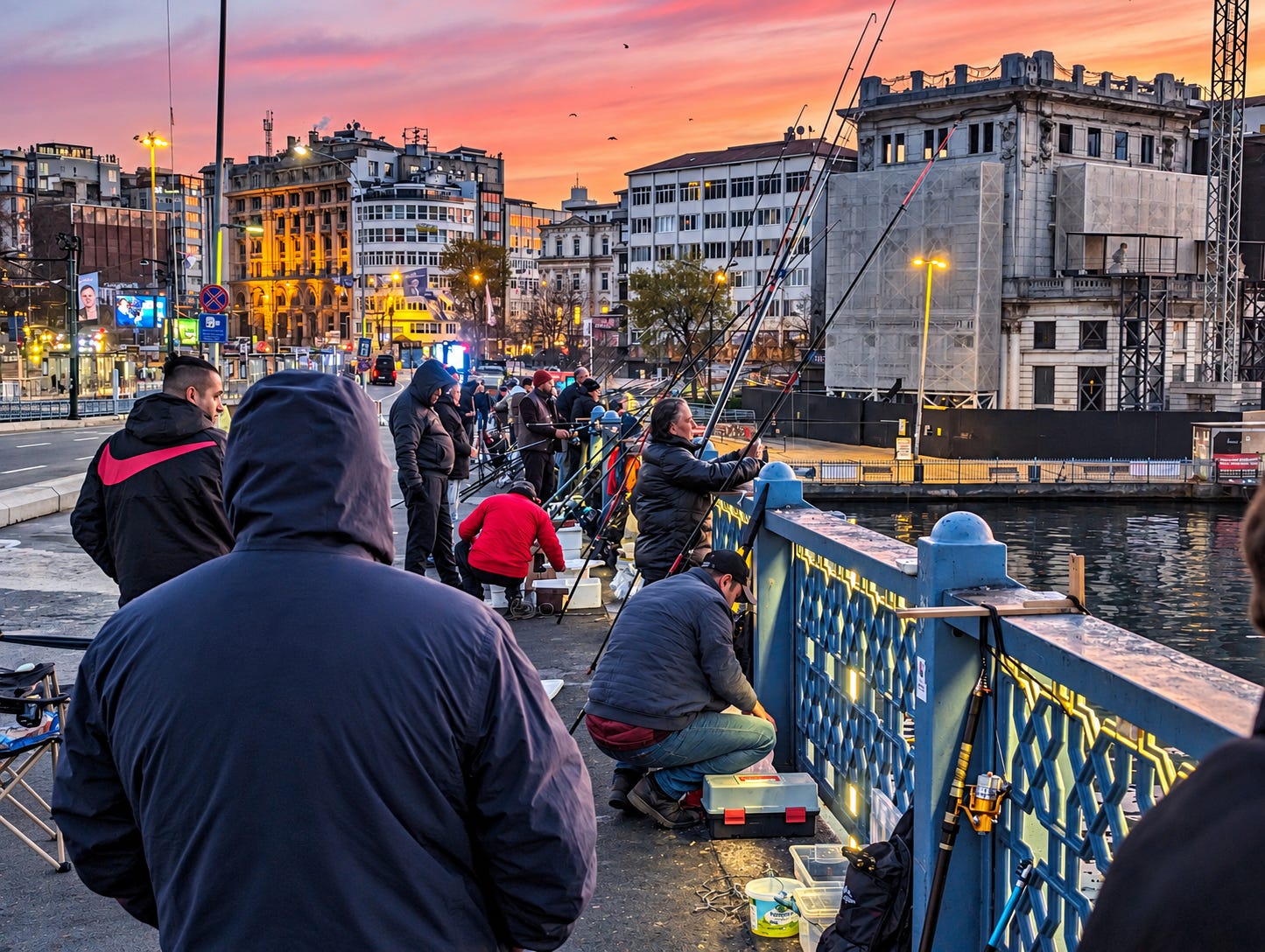
The bridge is thick with fishermen, their poles thrusting upward like the lances of the soldiers who once defended this oft besieged, yet rarely conquered city.
Crossing the bridge, I leave behind ancient Istanbul for Beyoğlu, the more European side of the city and where we lived for two months our first time here.
To reach it we first pass by Galata Tower, built by Genoese traders who had arrived more than 700 years ago.
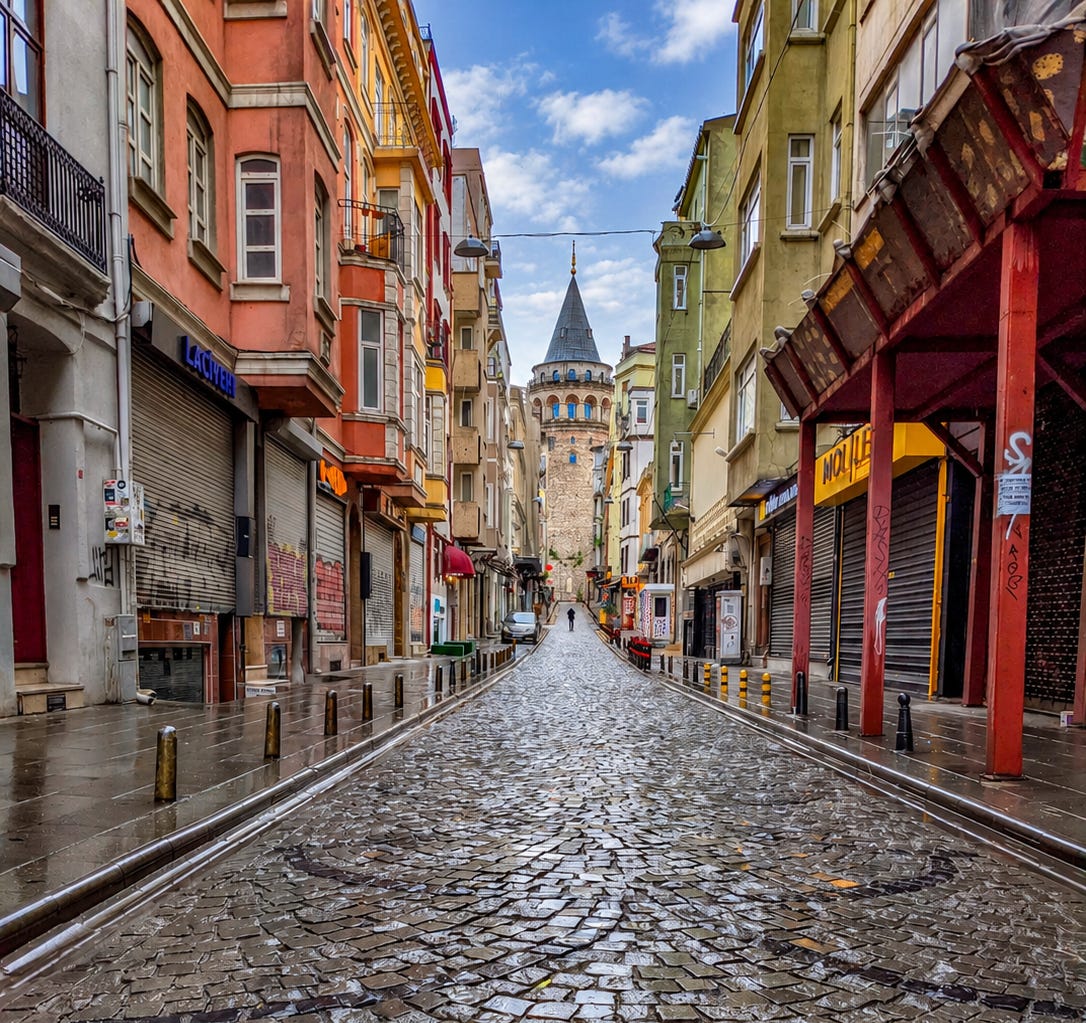
It’s early still and the tower’s iron door is locked. Don’t worry. We’ll return at sunset to show you something special.
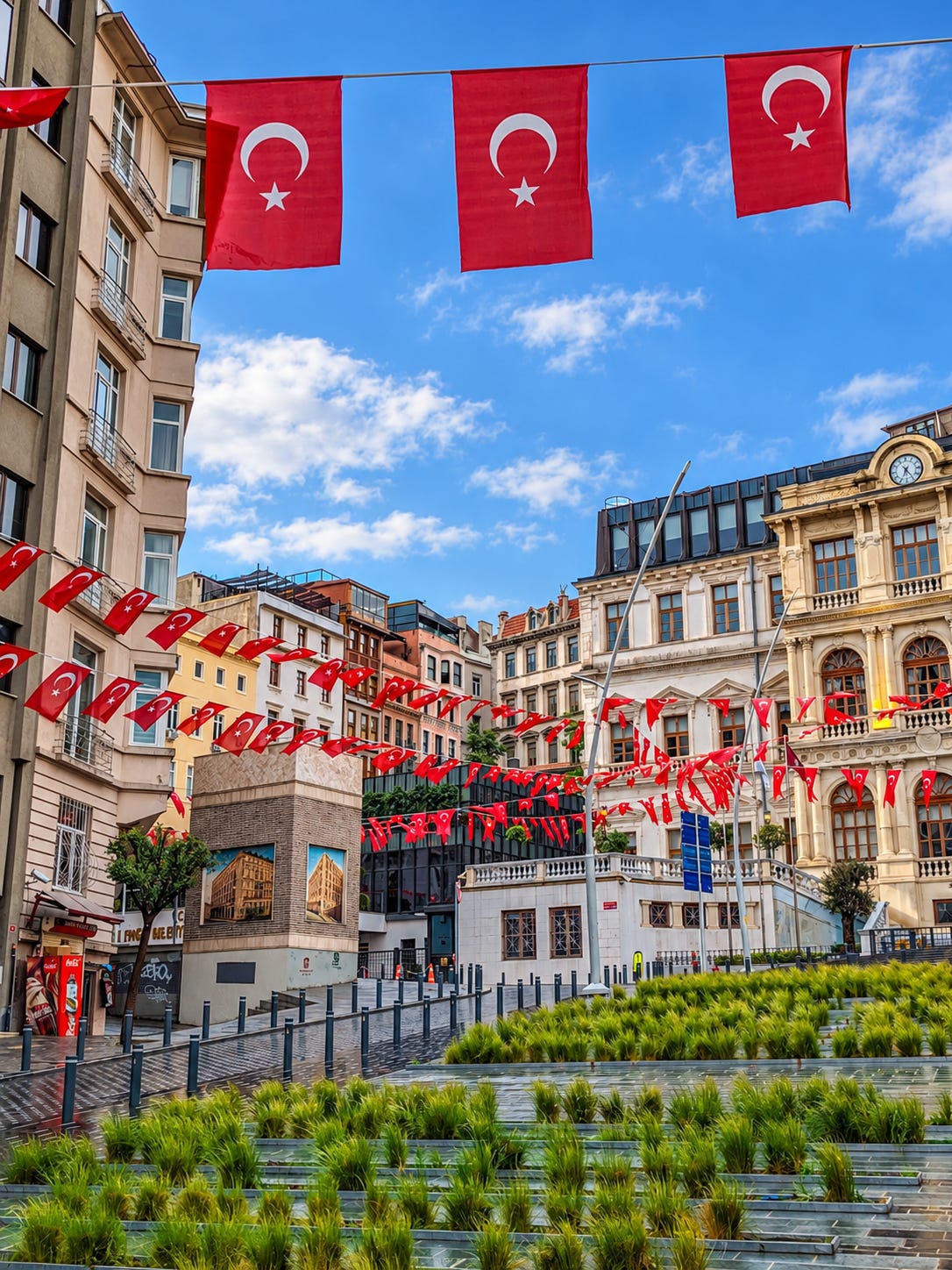
Next we arrive at İstiklal Avenue, a 1.4-kilometer pedestrian street that is the heart of Beyoğlu, one of Istanbul’s most liberal neighborhoods.
I spent hours strolling it, exploring every side street and pasaj, the covered arcades filled with shops.
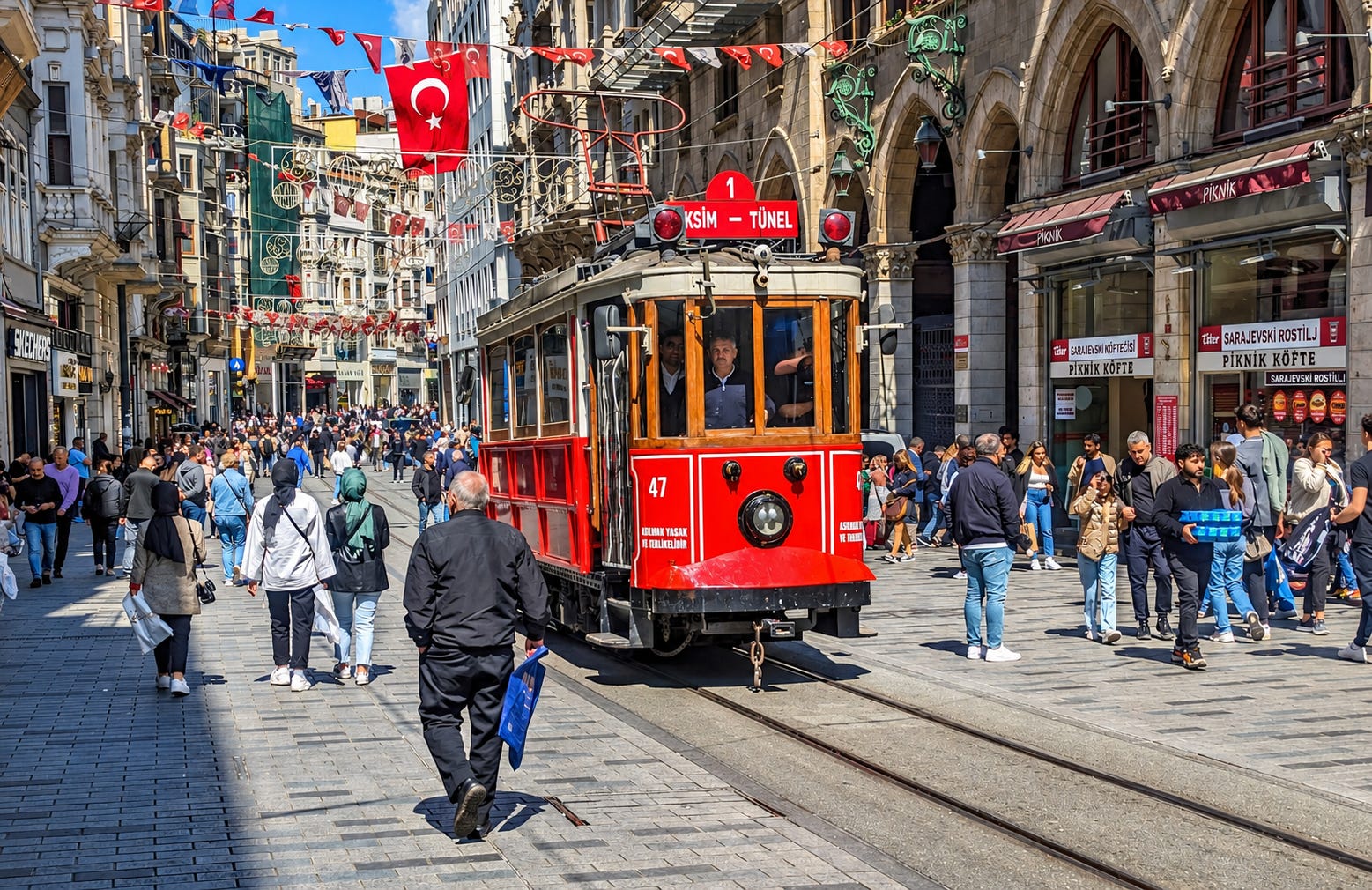
Old-fashioned European buildings lining the avenue, a mix of Neoclassical, Neo-Baroque, Art Nouveau, and Beaux-Arts, sometimes mixed together. That perfectly matches the neighborhood’s melting pot personality.
Bustling energy fills İstiklal as Turks stroll up and down its length — families with strollers, men with scalps an angry red from a recent hair transplant, old couples walking slowly.
Vendors sell Turkish coffee so strong that the one time I tried it I nearly cried. Buskers play, prompting a woman to dance. Young men, almost certainly just friends, walk with their arms slung over each other’s shoulders, something Brent and I would never do even in such a liberal place.
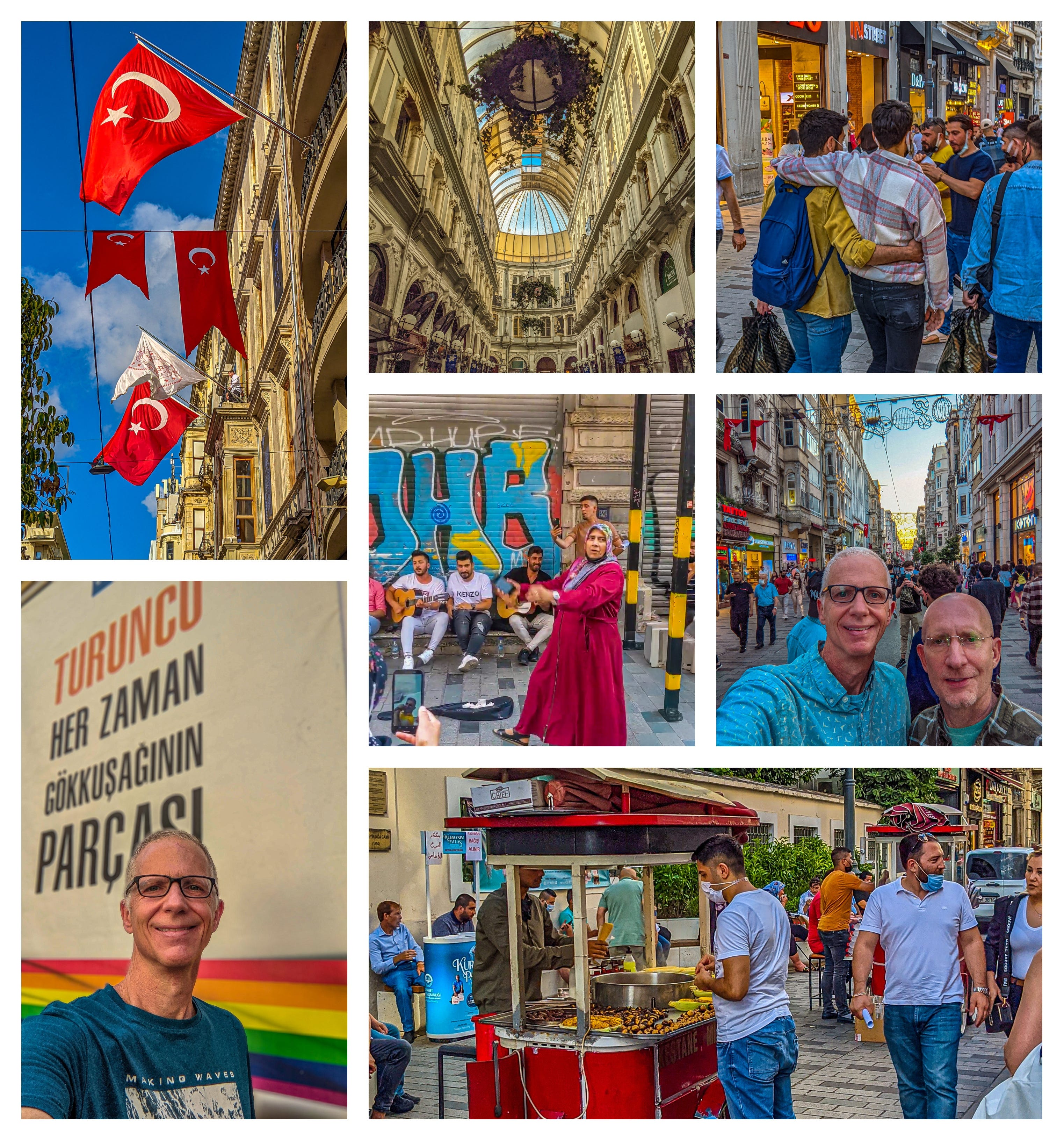
I stop in front of the Dutch Consulate which is defying the Turkish government with a pro-LGBTQ poster saying “Orange is always part of the rainbow.” Brent and I once passed by here, grateful for any sign of gay visibility.
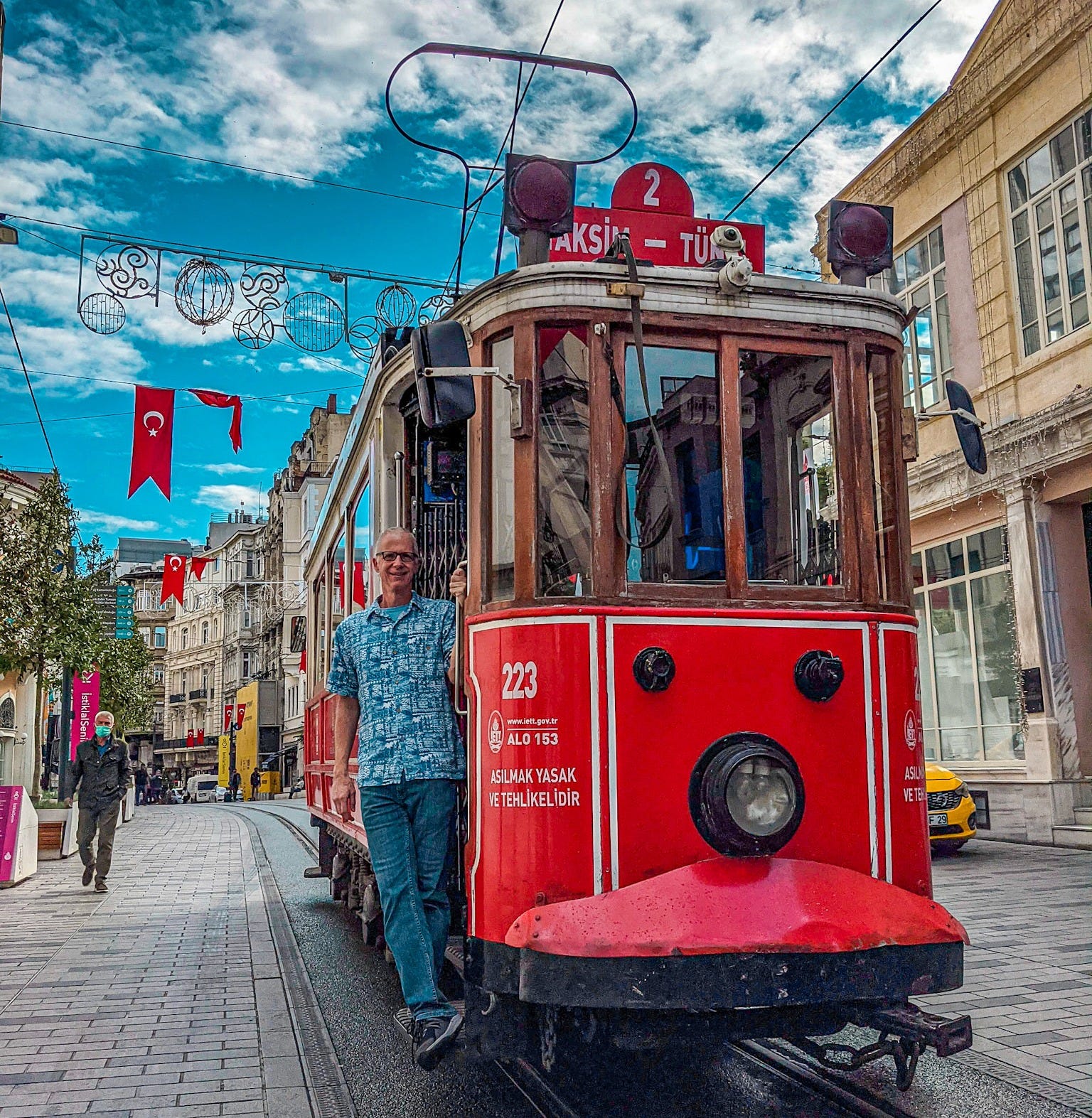
The 1914 red trolley rattles through the crowd, and people scatter, then stop to photograph it, including me, of course.
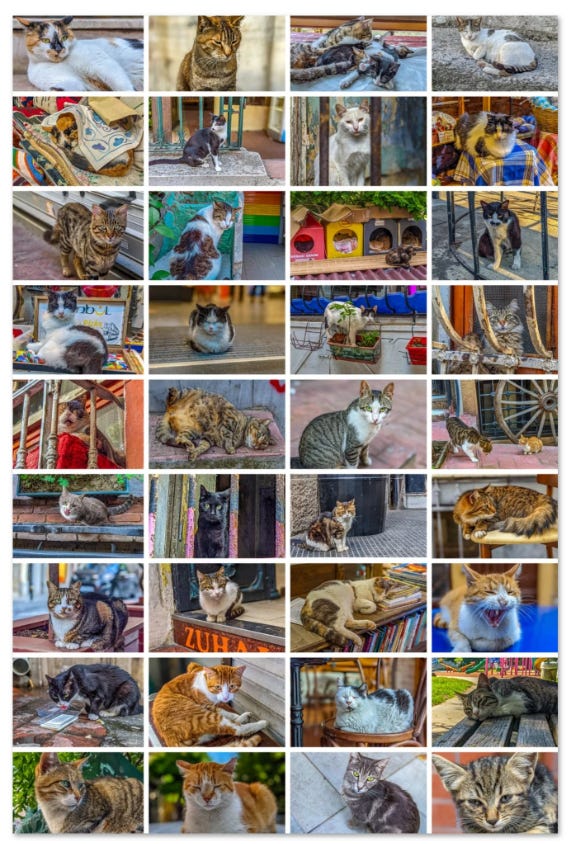
And the cats, because Istanbul belongs to them and the rest of us are just guests. I try to photograph every one of them.
Then Asmali Mescit, my favorite street, the best either Brent or I have ever lived on.
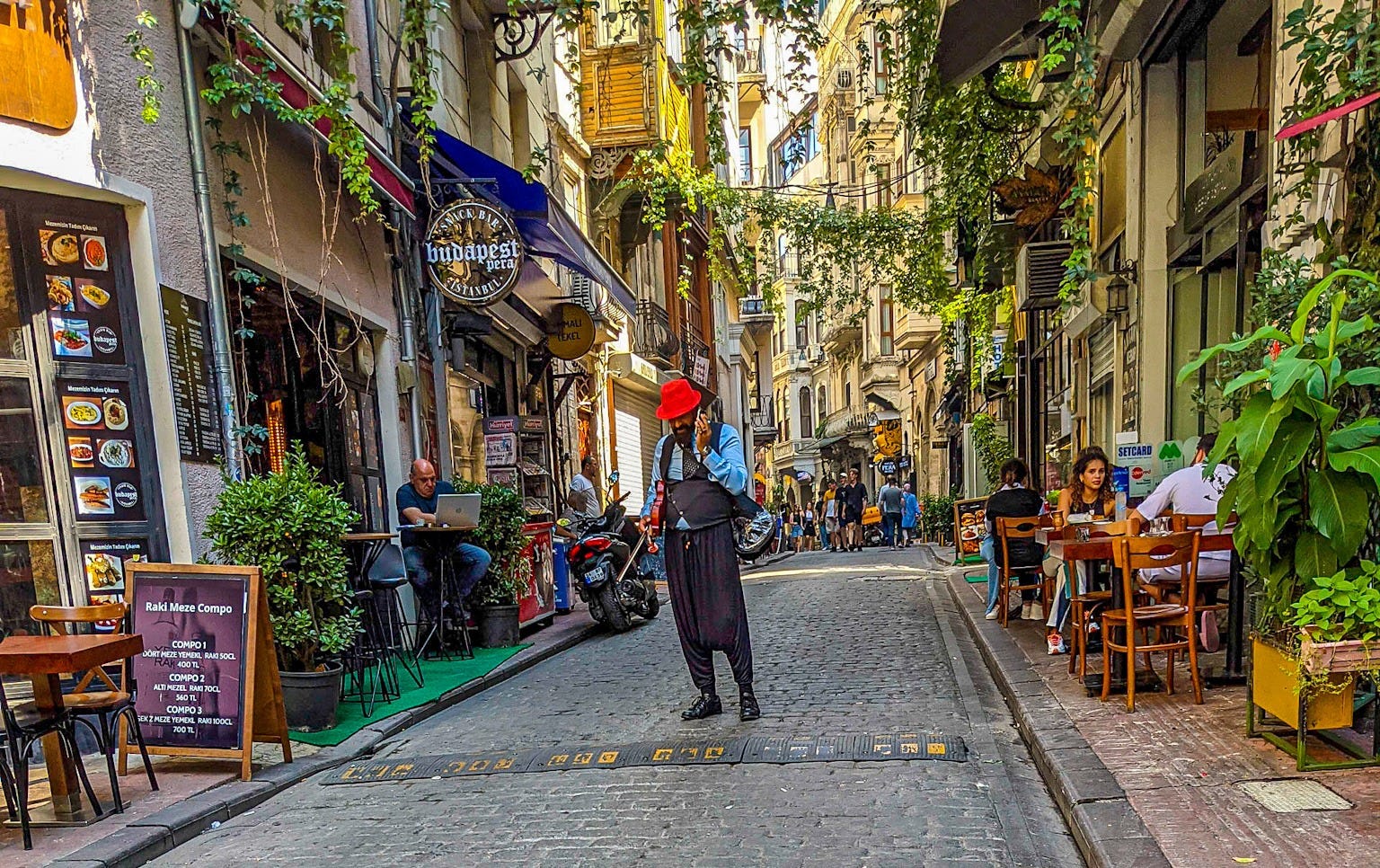
I walk it end to end in five minutes, but in those five minutes: a man playing violin, a grumpy shop owner carving döner, a cat sleeping on some steps, a family washing the huge round tepsis that carried kebabs and hummus to the lunch crowd.
Vines run along the utility wires between the five-story buildings as if waiting for a tightrope walker. Green things grow everywhere.
Asmali Mescit is also home to Resul, the baker who lived and worked right next door to us. Every time I came in, he insisted on giving me free samples. Even though I speak only a few words of Turkish and he speaks no English, we use Google Translate to get to know each other at least a little.
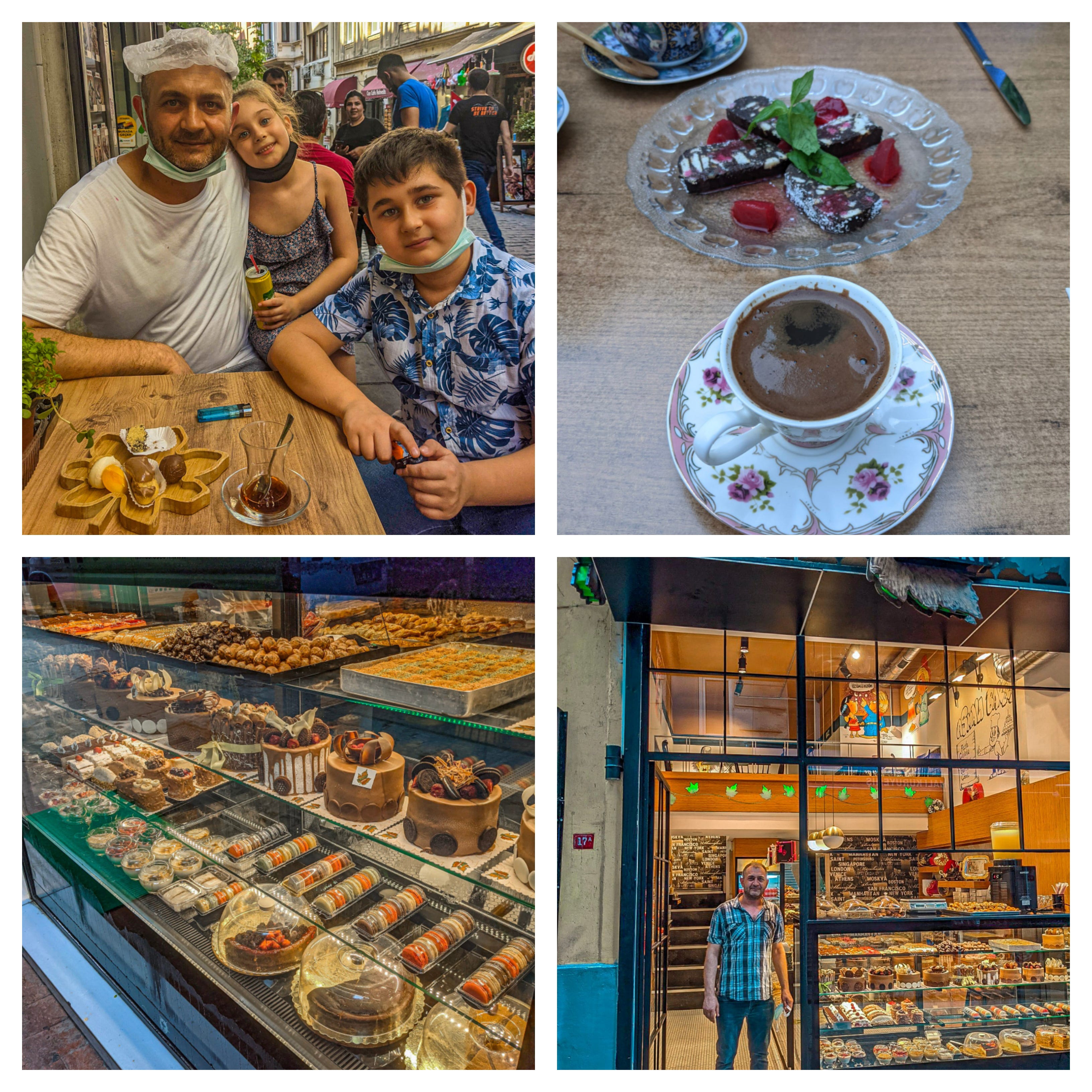
I stop in to say goodbye, but he’s sold the shop and moved away, and a different man works behind the counter.
It’s getting late and I know I need to get home to Brent soon. Still, I stop and look back at Asmali Mescit one last time.
Now to keep my promise. This morning Galata Tower’s iron door was locked. Now I climb the winding staircase and step out at the top.
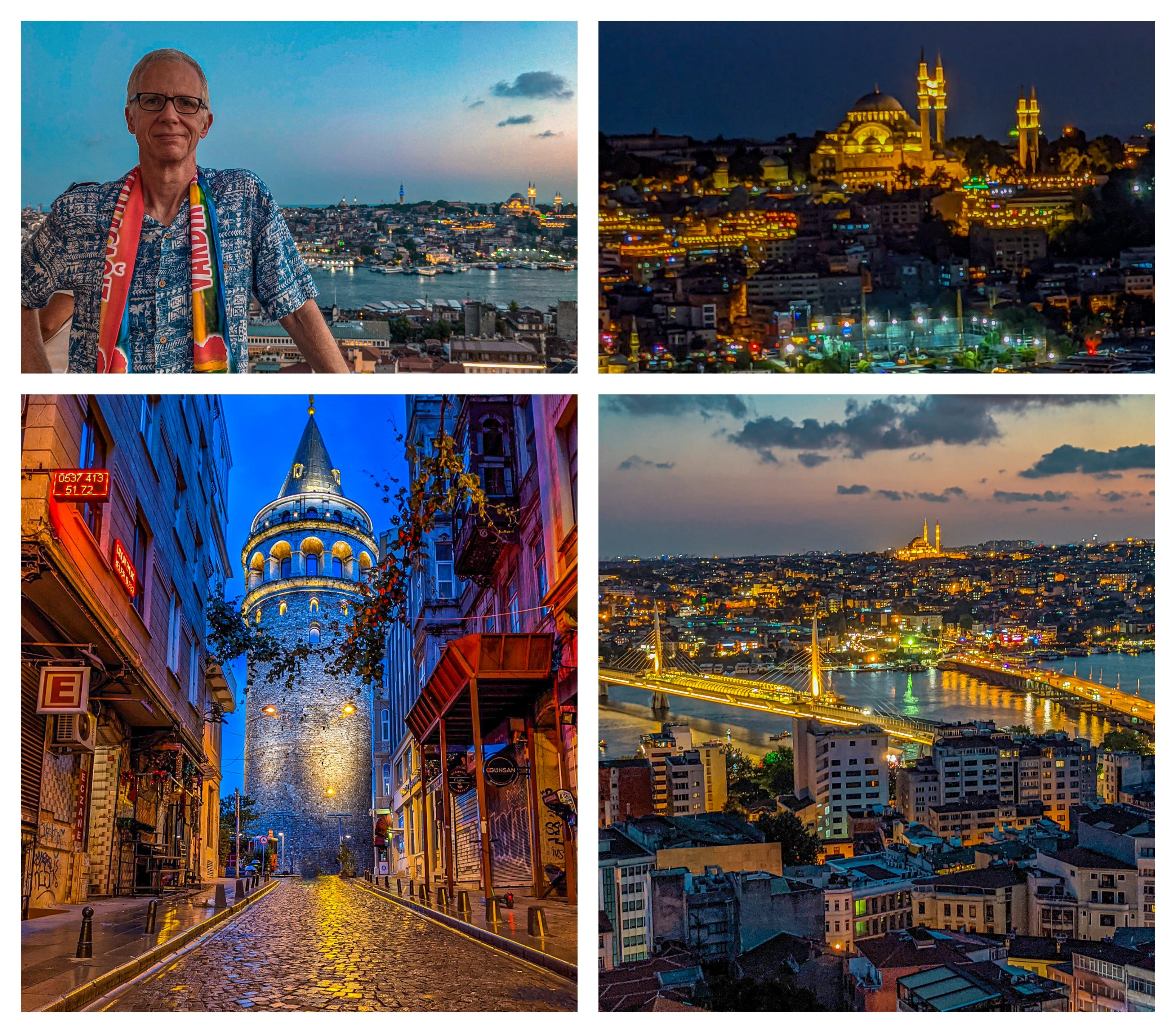
All of it is below me: the domes of the old city across the water, the Phanar's brick bulk glowing in the last light, the Golden Horn going copper, the fishermen on the bridge still holding their lines. Byzantine, Ottoman, Genoese, European. Fifteen hundred years in one frame.
Across the city, the evening Call to Prayer begins for me one last time, the muezzins' voices sinking deep into my bones.
If Turkey has captured a piece of your heart too, you can bring a little of it home with one of my photographs for sale here.
Michael Jensen is a novelist and editor. To buy his photos and travel poster, visit him at Michael Jensen Photography.
Governments change and hopefully Istanbul will revert back to a more progressive city. We didn't spend a lot time in Balat, Faith and Sultanahmet but the other areas were very westernized. We had planned to be back in Jan 2027 but our plans changed with our sitter. We hope to spend time in other parts of Türkiye and explore the Aisian side as well as the Bosphorus area more.
You've done a great job in describing the city.
I've always wanted to visit Istanbul, this article conveys such a vibrancy about the city, and I love that you photographed all the cats! Travelling with our kids, we have to stop to look at and interact with every animal we find, so it is familiar to me!
The colours in your pictures are incredible too.
Do you think it is a place we should boycott? We are not in a place where it would be unsafe for us to visit, and I think it is sad if good people within a country miss out on income and interaction with other cultures because of a government making decisions they don't agree with. At the same time, it feels strange going somewhere where other people are currently so unwelcome and unsafe. Maybe that is an unfair question to ask, so you are welcome to ignore it!