

“Live like a local!”
It’s one of travel writing’s most durable clichés, right up there with “Travel changes you!” and “Go off the beaten path!”
In Hong Kong, it usually means haggling at a night market, eating at restaurants too small to have English menus, or taking the Star Ferry across Victoria Harbour at dusk. The Instagram version that fits in a caption.
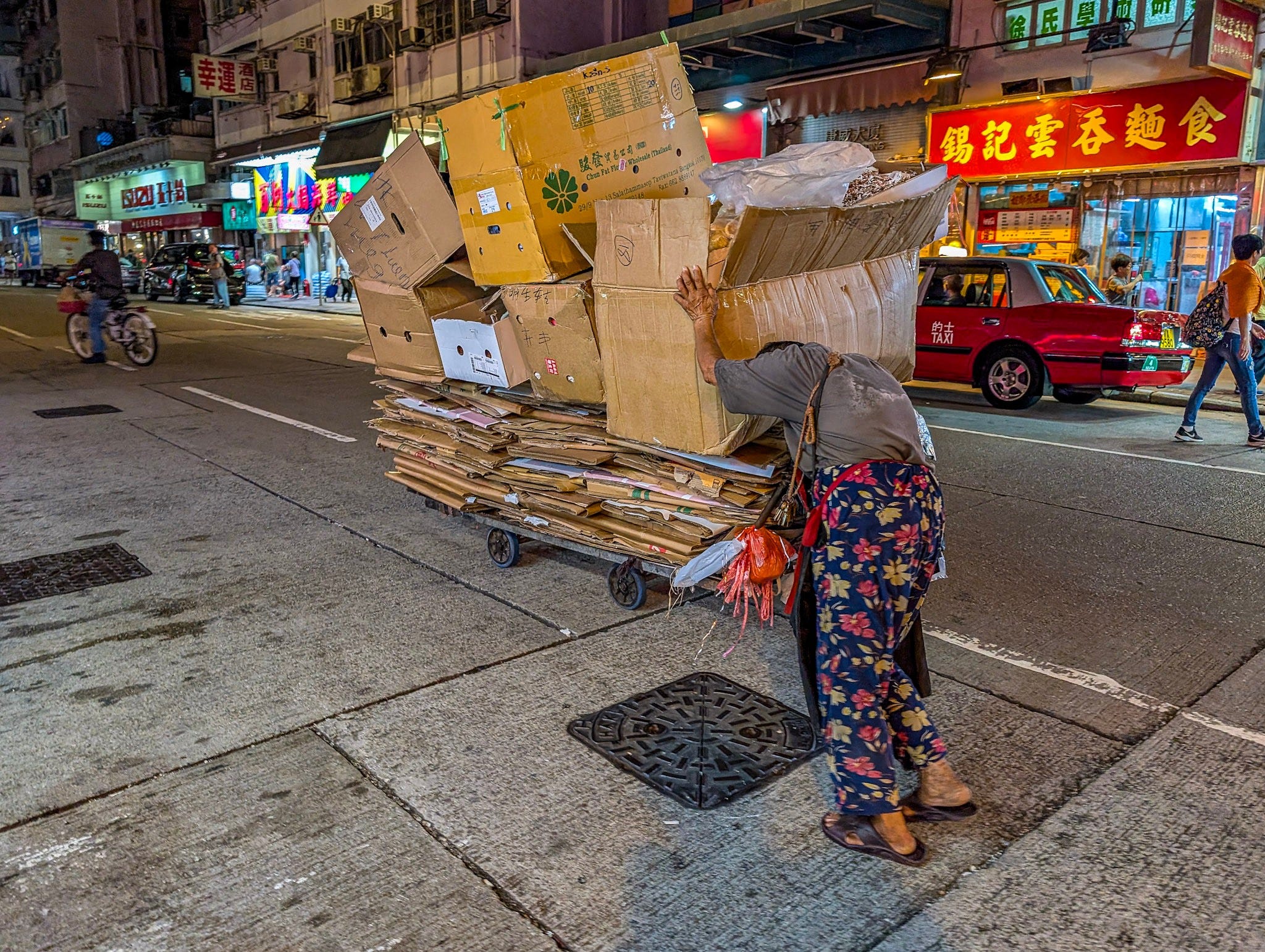
It doesn’t mean what the woman in the photo above is doing.
She is a “cardboard granny” — one of hundreds of elderly Hong Kongers who push carts through the city collecting discarded cardboard to sell for a few dollars, supplementing incomes so meager that this grueling labor is worth doing in the sweltering heat.
She is living like a local. Just not the local anyone means when they use that phrase.
My image of Hong Kong had been assembled from financial headlines about the city’s great wealth and shows like Expats — specifically about the lives of people who will never resemble the woman with the cardboard.
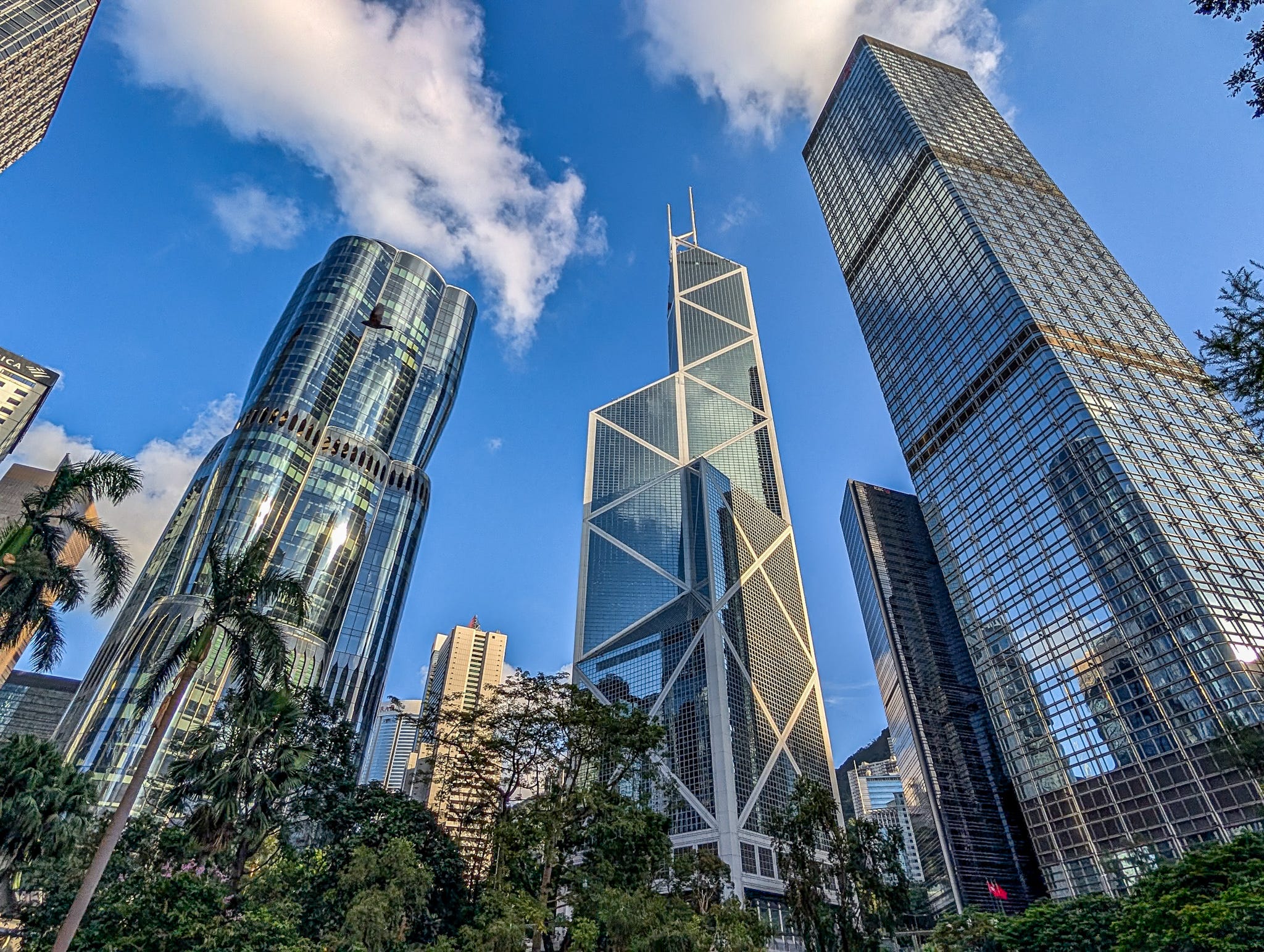
I expected Victoria Peak, that iconic skyline, and gleaming malls stocked with Gucci and Fendi. After all, Hong Kong has the second‑highest concentration of billionaires in the world, and billionaires need somewhere to put all that money besides real estate.
When Brent and I found a two‑bedroom Airbnb in Hong Kong last October at a price that felt reasonable — reasonable by the standards of Westerners able to travel the world full‑time — we were pleased.
The listing advertised “True local HK living,” which felt like a bonus.
After nine years of full‑time nomading, we don’t kid ourselves that we actually ever live like locals. But we do try to live in a way that gives us a deeper experience than visiting for a week.
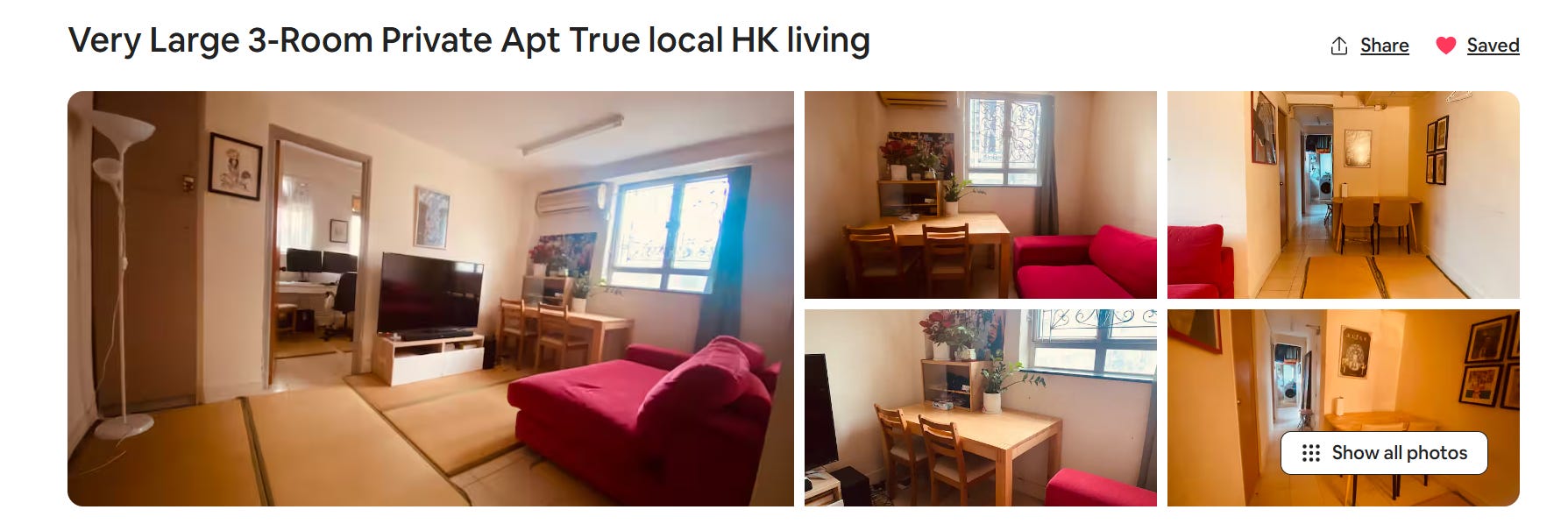
Our apartment was in Yau Tong in Kowloon, across the harbor from the more upscale Hong Kong Island. It was on the seventh floor of a building without an elevator, which we’d known about before arriving. We also knew homes in Hong Kong were notoriously small and that we were lucky to have a two-bedroom place.
We hadn’t known the building featured stairwells that looked like New York City circa 1980, apartment doors fitted with metal security cages, and a top floor I took to calling the “murder room” because it looked that scary.
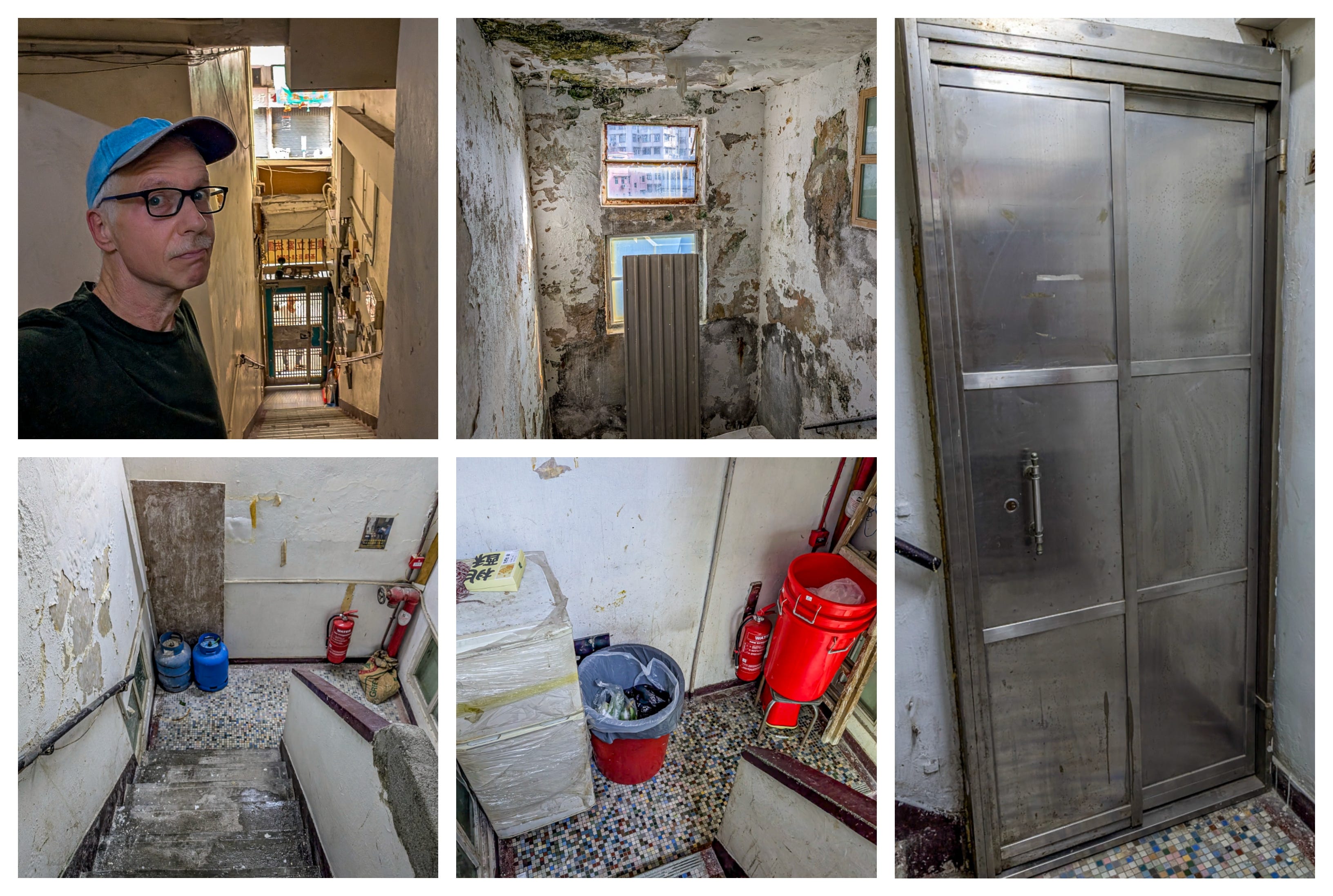
The bathroom was gritty, the toilet wobbly every time you used it. We cooked on a single propane burner in a kitchen so small and cramped that the top of the washer was our pantry.
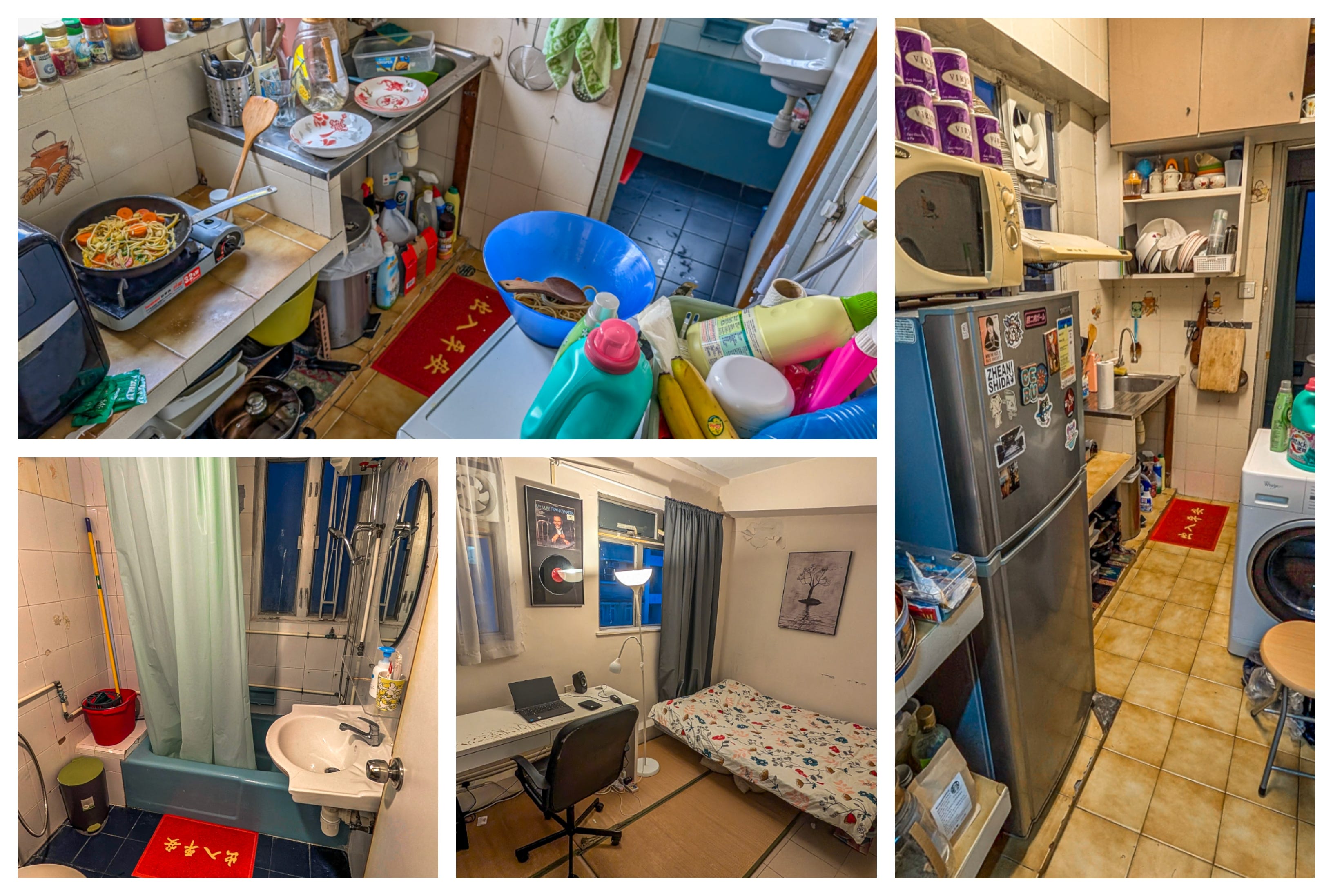
Is this really what it means to live like a local? I wondered, hauling water up seven flights for the second time that week.
I would soon learn we actually had it much better than many locals.
In nine years of nomading, Brent and I have visited places that would have floored our more sheltered 2017 selves — Siem Reap, Cambodia; Tbilisi, Georgia; Khlong Toei in Bangkok. But we’d been prepared for those places; we understood the enormous gap that existed between our lives in the U.S. and the lives of locals in those places.
We were not prepared for that in Hong Kong.
What I found in Yau Tong threw me in a way that Eastern Europe and Southeast Asia hadn’t. I wanted to learn more.
In every place we live, I take long walks to see and photograph as much as I can. Those walks often take me far from the usual tourist destinations. They’re one of the ways I come to some kind of understanding of a place.
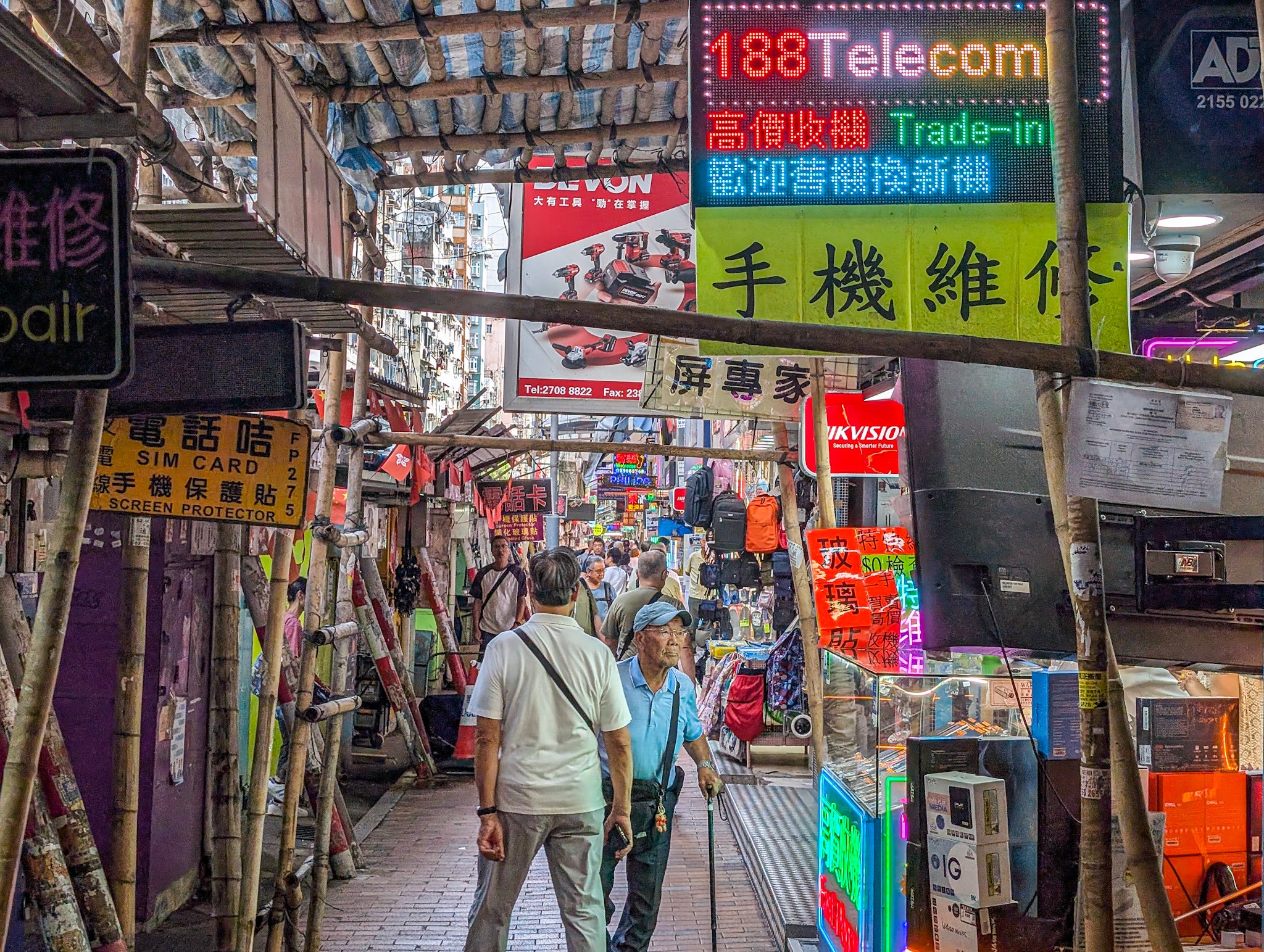
Two of my walks in Hong Kong took me to Sham Shui Po, one of the city’s poorest districts. I was drawn by the street markets — especially Apliu Street’s flea market, photogenic in that gritty urban way that street photographers love.
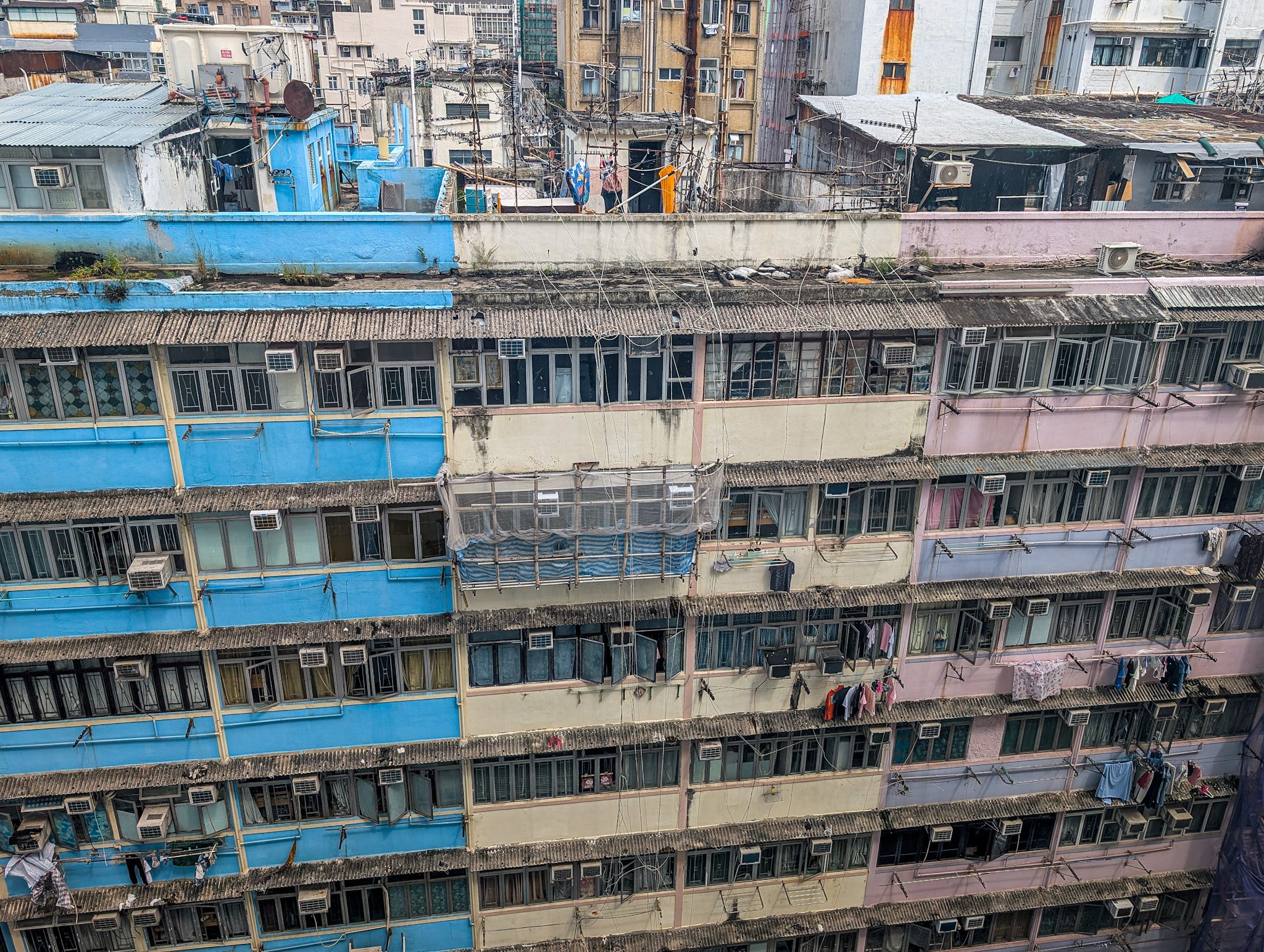
The neighborhood’s apartment blocks had originally been painted in bright pastels — yellows, greens, pinks — now badly faded and streaked with rust and black residue from decades of dirty rain.
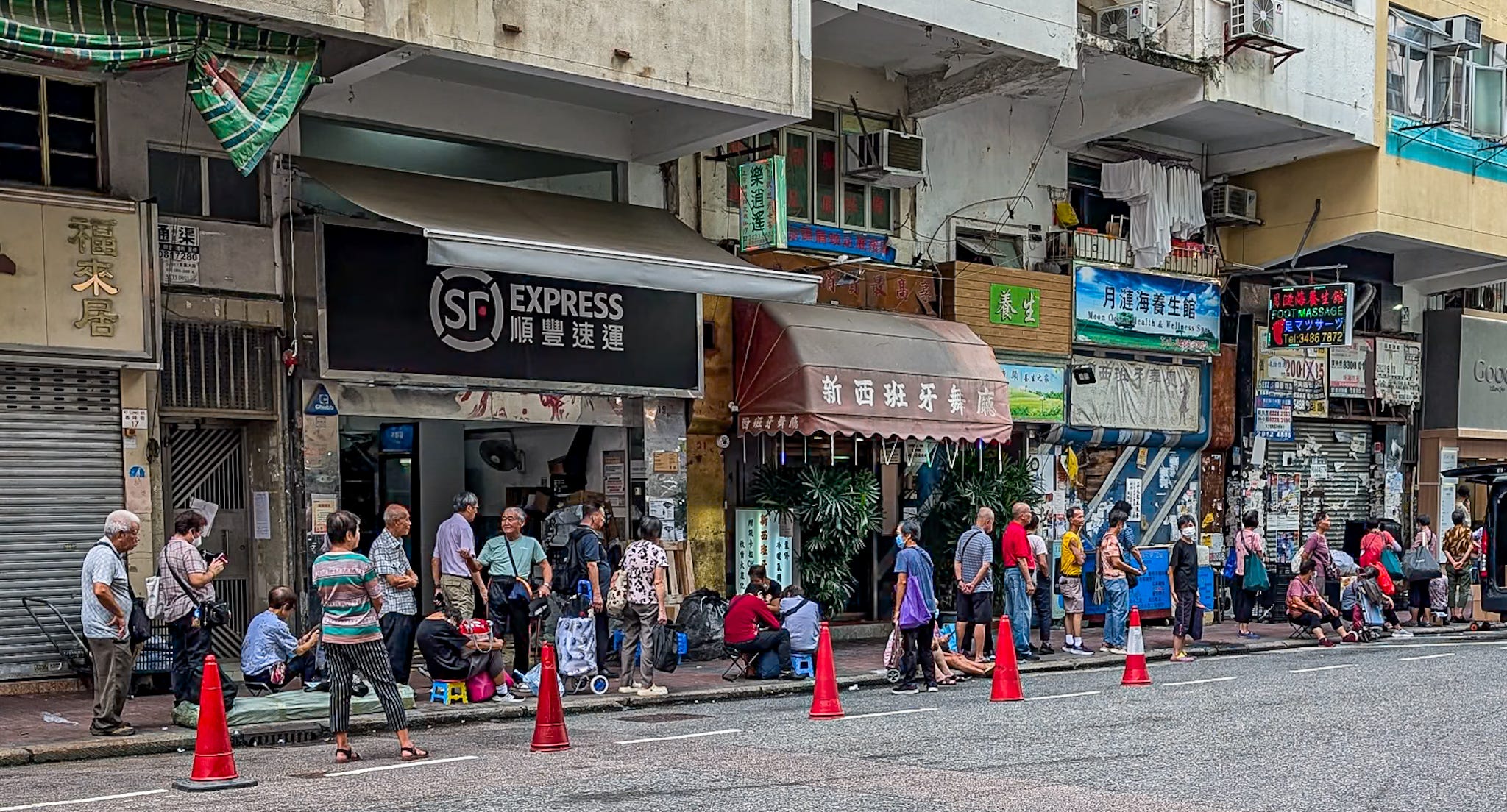
The streets were packed with people going about their lives: men outside convenience stores, women hauling groceries up narrow stairs, battered‑looking storefronts filled with people trying to make a buck.
Then there were the elderly who, lacking any kind of retirement, were disproportionately affected by poverty. I often saw them standing in long lines, waiting for government assistance in the form of small cash amounts that helped but not nearly enough.
One afternoon, I took the metro to the Yick Cheong Building complex — widely known as the Monster Building. Five interconnected 17‑story towers housing between 7,000 and 10,000 people, each apartment roughly 350 to 450 square feet, typically home to a family of three or four.
I thought the photos I’d seen ahead of time had prepared me. They hadn’t. Standing at the base, craning up at tier after tier of drying laundry and air conditioning units and window grilles stacked on top of each other, I felt like a termite at the base of its colony’s nest.
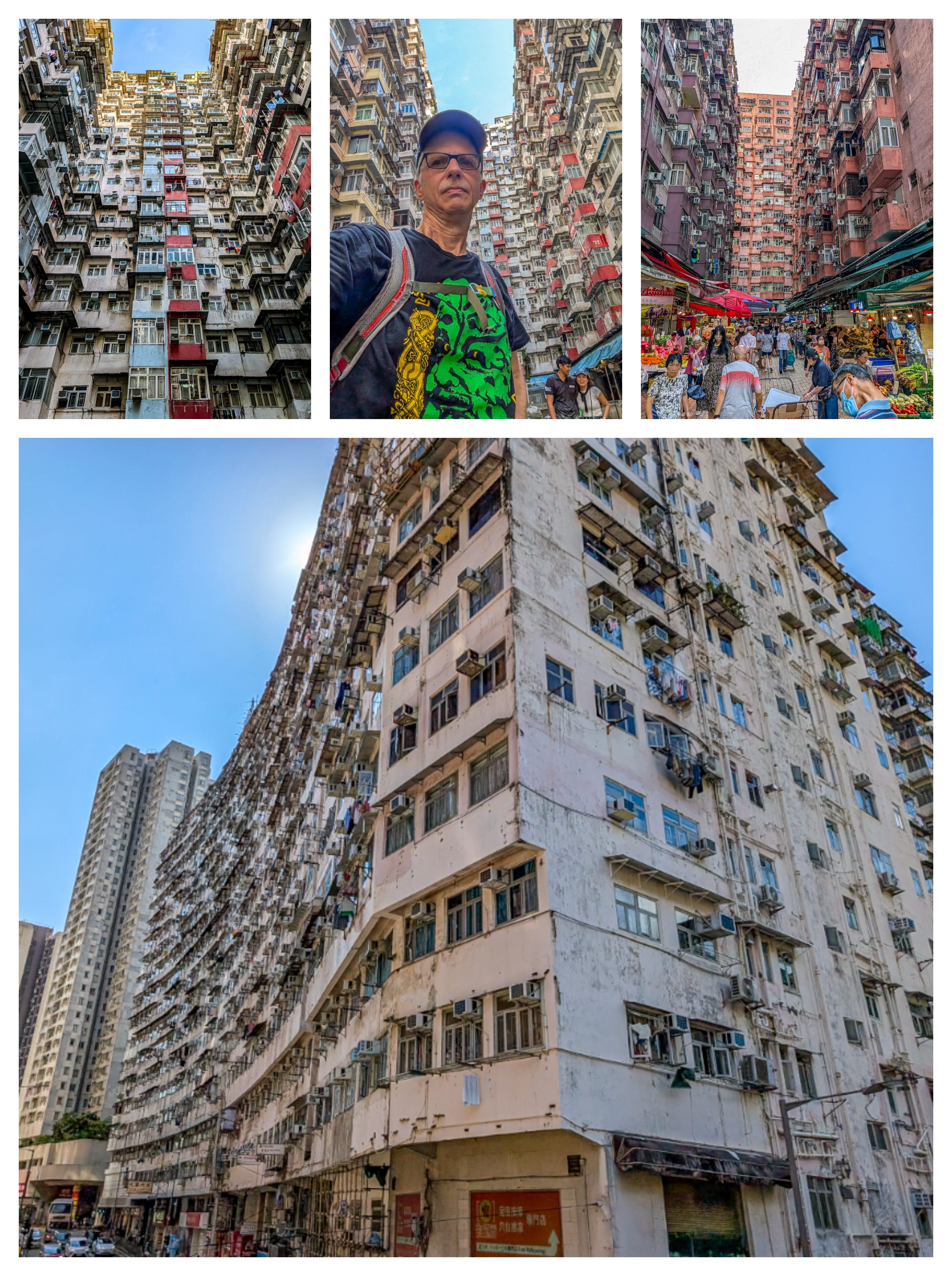
Standing there, I kept thinking about something I'd read: in Hong Kong, the wealthiest 10% earn 81.9 times as much per month as the poorest 10%. The absolute poverty rate is 20.2%.
For more than three million people in the eighth-richest city in the world, living like a local means genuinely struggling to keep a roof over their heads — and the system is designed that way. Hong Kong finances its government through land sales, which means keeping property values high is policy.
The poor aren't a failure of the system. They're a result of it.
And the numbers are only getting worse.
This is not an accident. Hong Kong has historically financed its government through land sales, creating a structural incentive to keep property values high, which keeps housing unaffordable, which keeps the poor poor.
It isn’t a bug, but a feature.
During my research, I came across SoCO — the Society for Community Organization — an NGO focused on Hong Kong’s housing crisis, including what are known as cage homes: subdivided apartments where residents sleep in actual metal cages, often with no windows, no ventilation, and shared toilets.
Cage homes are illegal. At least 200,000 Hong Kongers live in them anyway, because the alternative is the street. The actual number is almost certainly higher, and there are also tens of thousands more who squat on rooftops with no amenities at all.
SoCO offers tours of these parts of the city designed to raise awareness. They do not take visitors into homes where people actually live. Instead, they’ve furnished an apartment with cage beds to show people what the reality looks like.
Wanting to further educate myself, I signed up.
We met near a metro stop. Our guide was a young woman named April, who clearly wanted us to grasp the reality of life for the poor in Hong Kong. The topic wasn’t abstract for her. She’d grown up in a subdivided apartment — cramped, she said, but nothing like what we were about to see. Her family had waited decades to get a larger, government-subsidized apartment.
As we walked, she explained the structural forces behind the crisis: the land‑sale financing model, developers building luxury apartments for foreign investment, and restrictions on development. Then she said something I haven’t stopped thinking about.
“My generation feels trapped,” she told us, “and that there is no way out for us.”
With her income, buying even a small apartment would take decades of saving every single cent she earned. The government housing wait list is years long.
We arrived at the run-down building that housed the cage apartments. A dry cleaner stood guard next to the dark, narrow stairwell. The October afternoon was hot, and I imagined the heat from the laundromat snaking upward, making a bad situation for those above even worse.
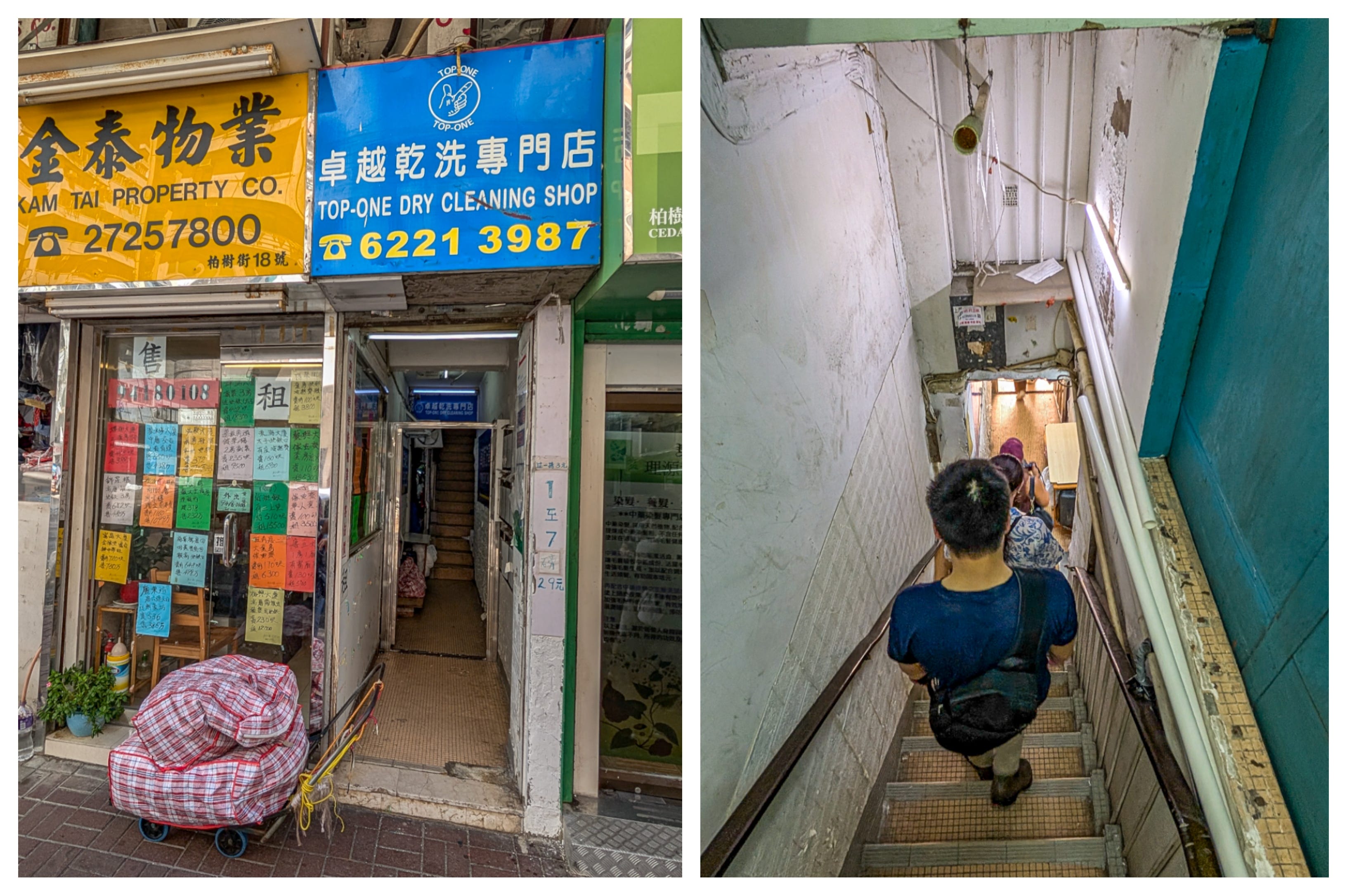
The cage apartment was exactly what it sounds like: a room filled with four metal cages, each roughly the dimensions of a large dog kennel, in which a person sleeps and keeps their possessions locked up.
The twelve of us took turns squeezing into the small apartment — because it wasn’t large enough to accommodate us all at once.
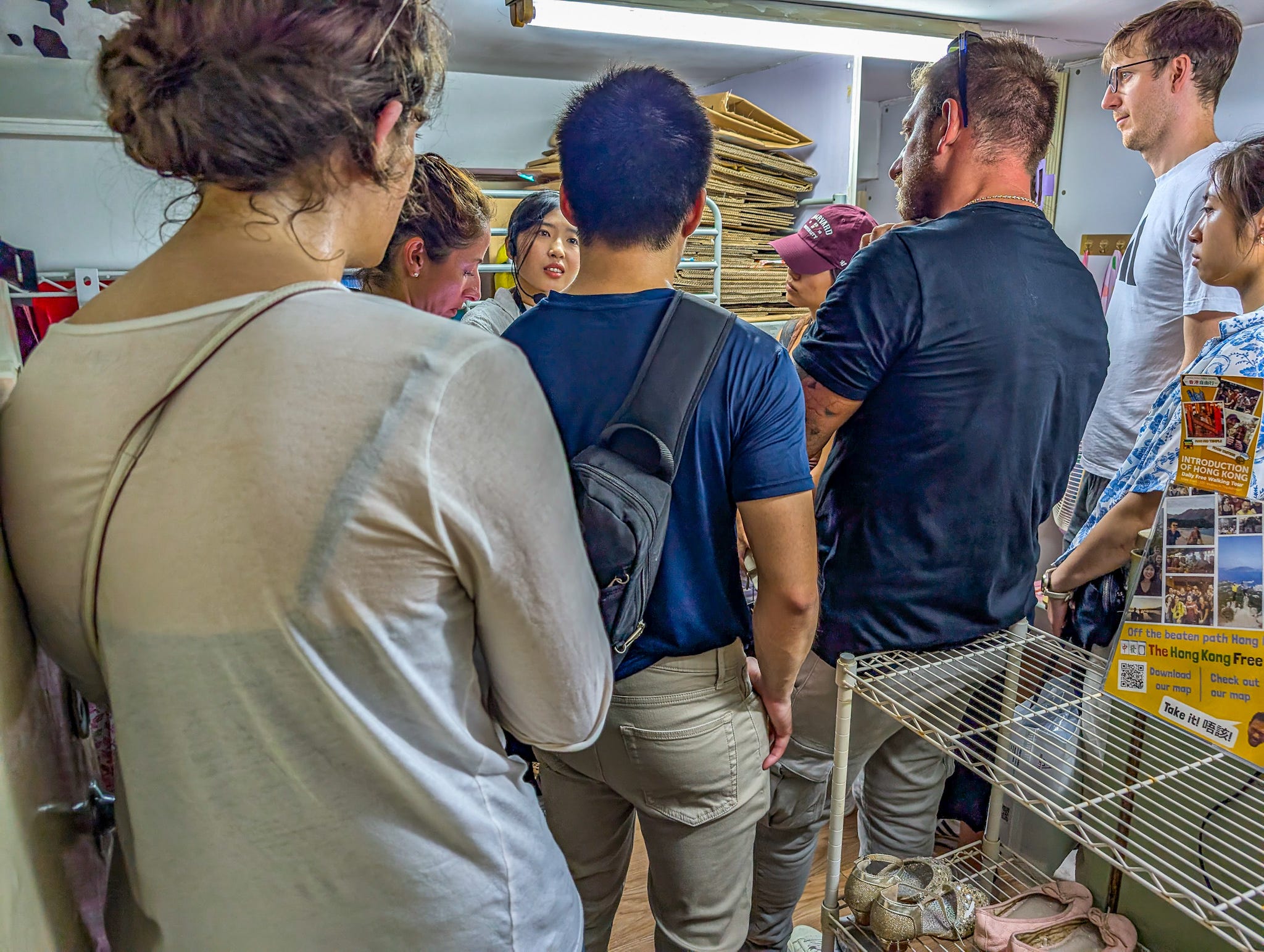
The air was stale and stuffy. I had almost no headroom. The bathroom, shared by four people, stood right next to the kitchen and offered minimal privacy. A hot plate made cooking possible, which only made the space feel more suffocating.
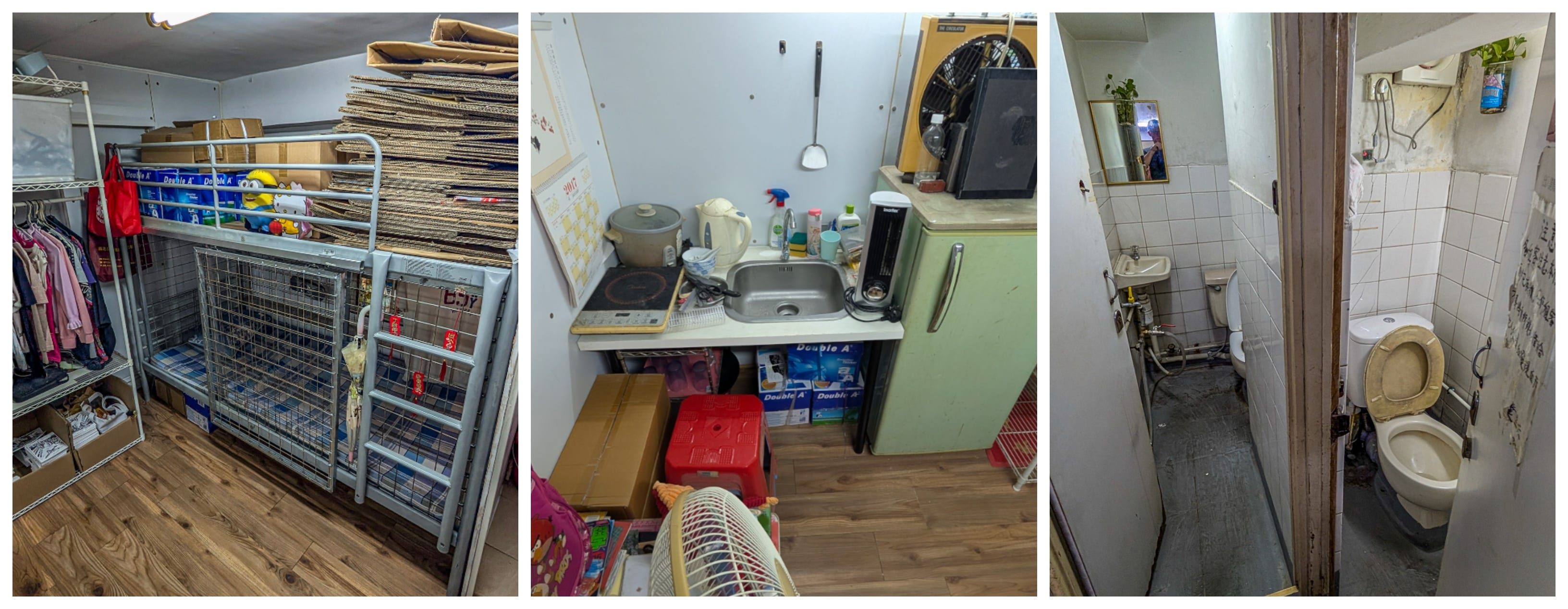
April told us that in summer, the temperature regularly climbs into the nineties, and the humidity is miserable. Infectious diseases spread quickly. Rats, cockroaches, and bedbugs are common.
Residents of cage homes are significantly more likely to die by suicide — a rate that spiked during Covid lockdowns.
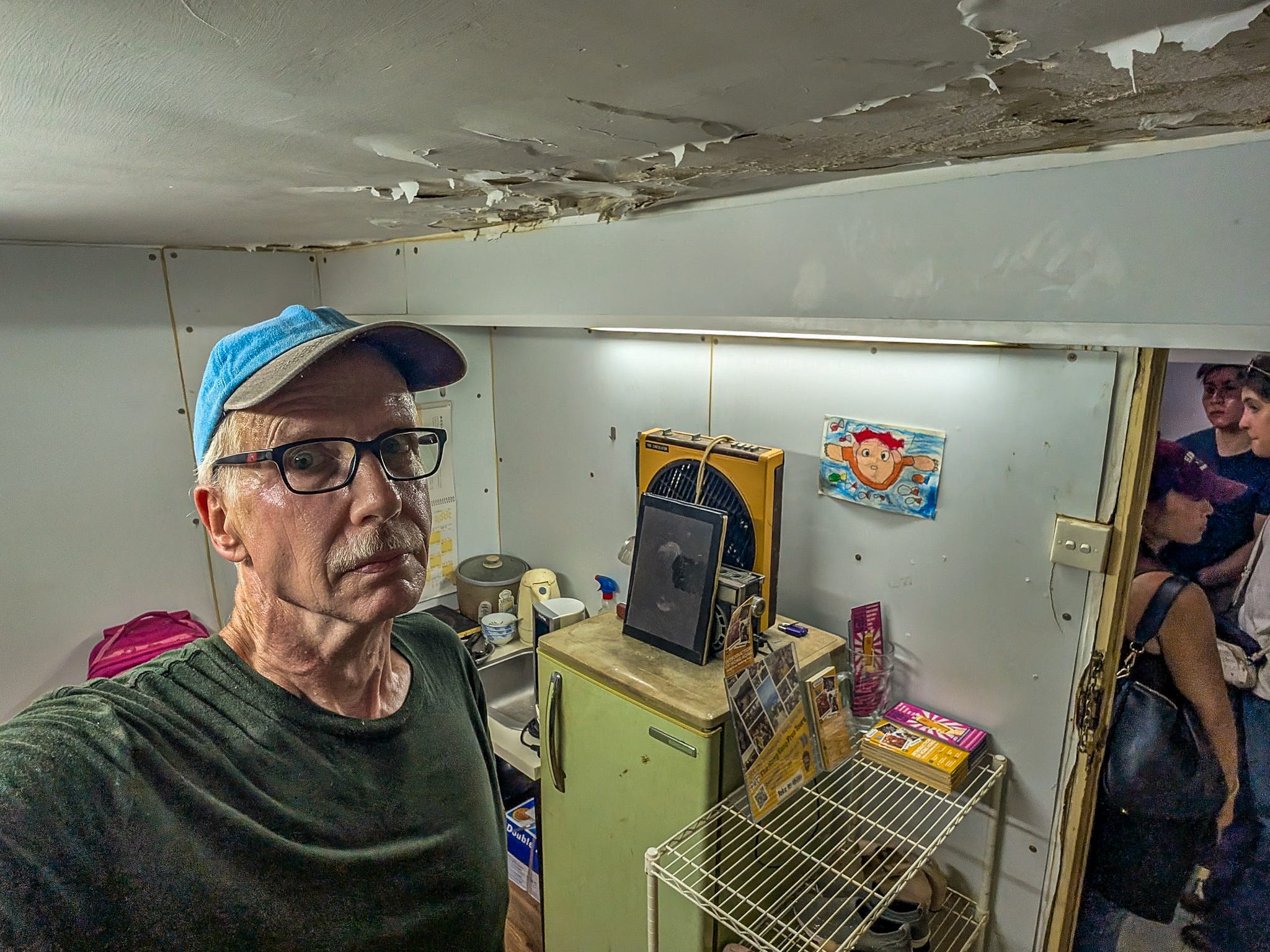
We stayed ten minutes. By the time we left, I was drenched in sweat and felt vaguely ill.
Actually live like a local here or in Sham Shui Po or in most of Hong Kong?
Ha.
I could barely handle our Airbnb for a month — our two‑bedroom with its wobbly toilet and cramped kitchen, which I complained about to Brent at least twice a week.
In Hong Kong, I photographed elderly women doing backbreaking work for pocket money and rundown buildings that even hardworking young people can’t afford to live in. Now I’m writing an essay about it for a newsletter people pay to read.
I’m not a neutral observer. That tour exists because organizations like SoCO need money and attention, and tourists and travel writers are one way to generate both.
I believe in that work. I also know that I got on a plane at the end of the month and went somewhere else, and the cardboard granny did not.
The “live like a local” fantasy sells access — the idea that travel can dissolve the distance between you and somewhere else.
Of course, that distance never really dissolves, not unless you stay for years, and probably not even then.
But maybe by paying attention — and by trying to act on that attention, whether through financial support or advocacy — you can understand it a little better.
I know I can’t live like a local, but at least I can try to live like someone who doesn’t look away.
Use this link to donate to SoCO. To sign up for a tour, use this link.
Michael Jensen is a novelist and editor. For a newsletter devoted just to my photography, visit me at www.MichaelJensen.com. To purchase photos, visit Michael Jensen Photography.
This is so interesting to read and see. It wasn’t until I read the book Poverty by America by Matthew Desmond that I realized the poor have a role in rich people’s societies - they allow the rich to be rich, but this phenomenon sadly stretches everywhere. In Bangladesh, some of the security guards and drivers sleep in beds in a room and they work every day, seems like indentured servitude. Cheap labor is used to make other people wealthy. It’s sad to see Hong Kong is no different. Also, some of these buildings makes me claustrophobic - and I live in Dhaka!!
Thank you for this heartbreakingly honest look into a reality most of us would rather not see and for your example of choosing to engage with it.