

Note: This is my first newsletter in four months, for which I apologize. I recently launched Michael Jensen Photography, and it took me much longer to build than I expected. But I’m finally back!
It was Day 5 of our two-week Alaska cruise, and filled with anticipation, I sprang out of bed early to watch us sail into Glacier Bay National Park.
For me, Glacier Bay was the highlight of our entire cruise.
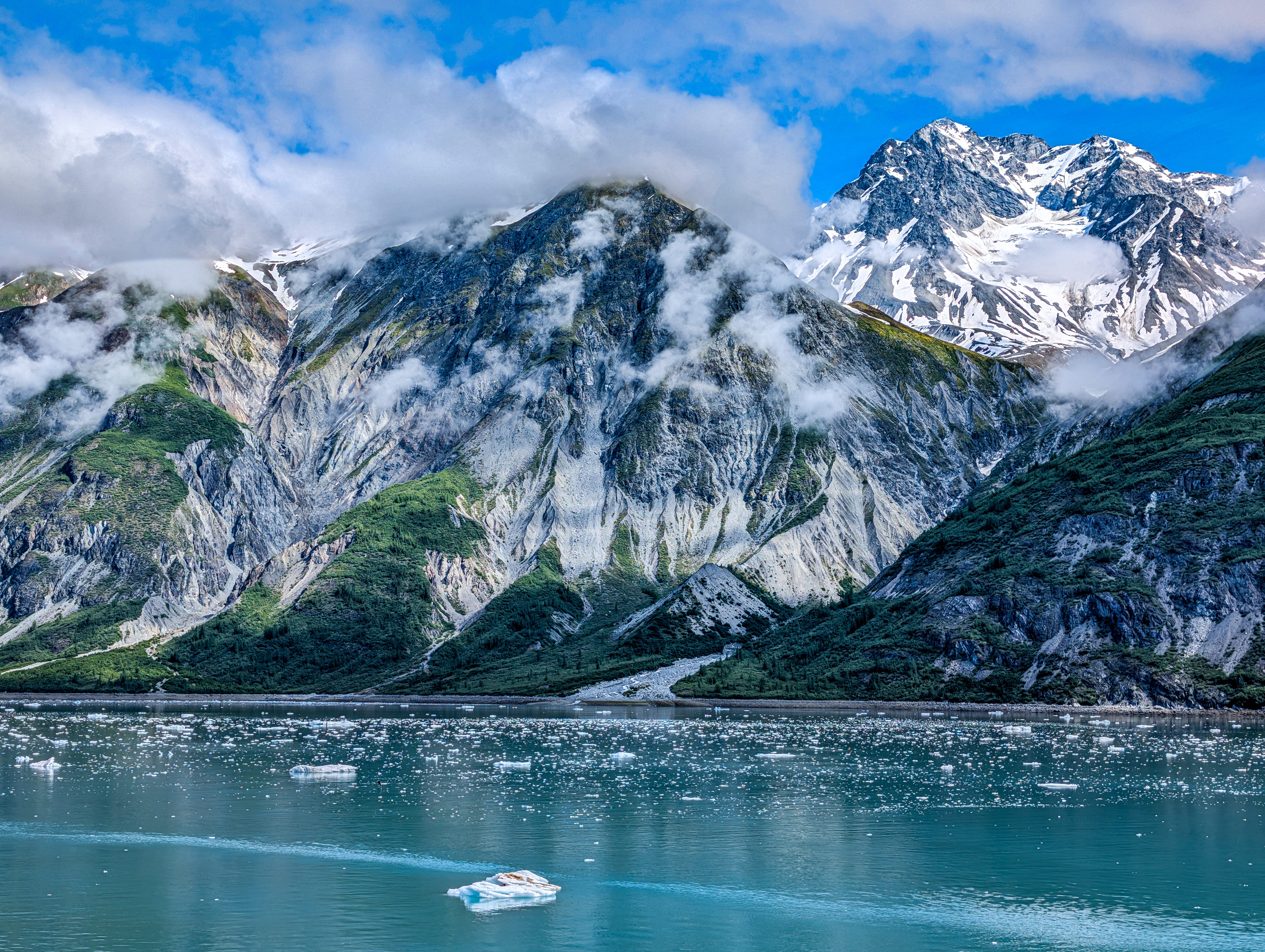
I was out on deck before we’d even entered the bay itself. A few other hardy souls joined me, all just as determined not to miss anything. Unfortunately, I was confronted with the grey skies typical of Southeast Alaska.
Alaska was vibing more Skull Island from King Kong than the blue skies I’d hoped for.
Atmospheric, yes. Photogenic, mostly not.
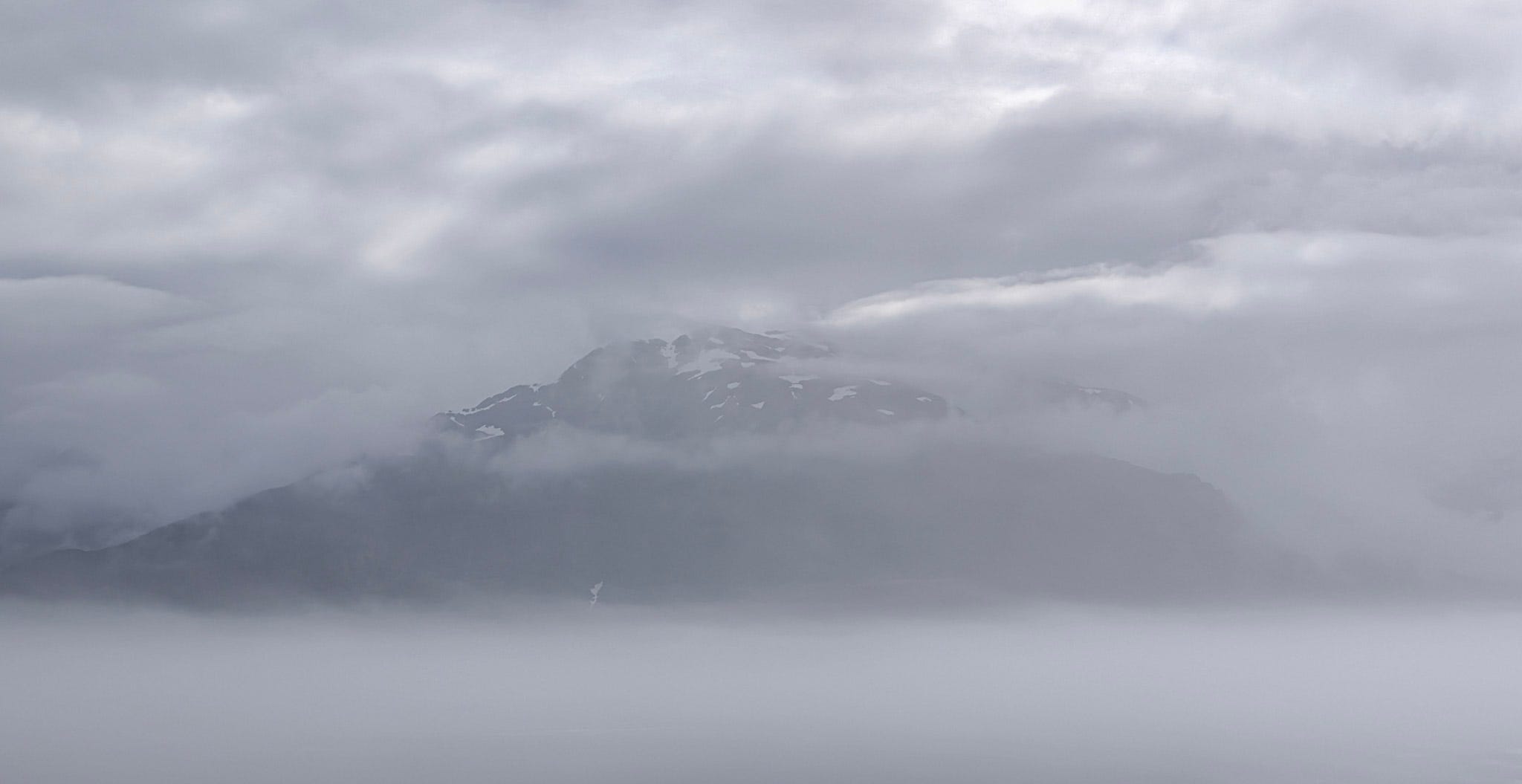
Sure, the mist and silver-colored water as we entered via Icy Strait looked pretty, but I fervently hoped the conditions would improve.
Otherwise, I’d come away empty-handed, photographically speaking. And I really hoped today would give me one “perfect” photo I could be especially proud of. Perhaps even one to sell in my store.
In Southeast Alaska, the predominant color — aside from gray skies and water — was the green forest covering the low mountains rising from the sea.
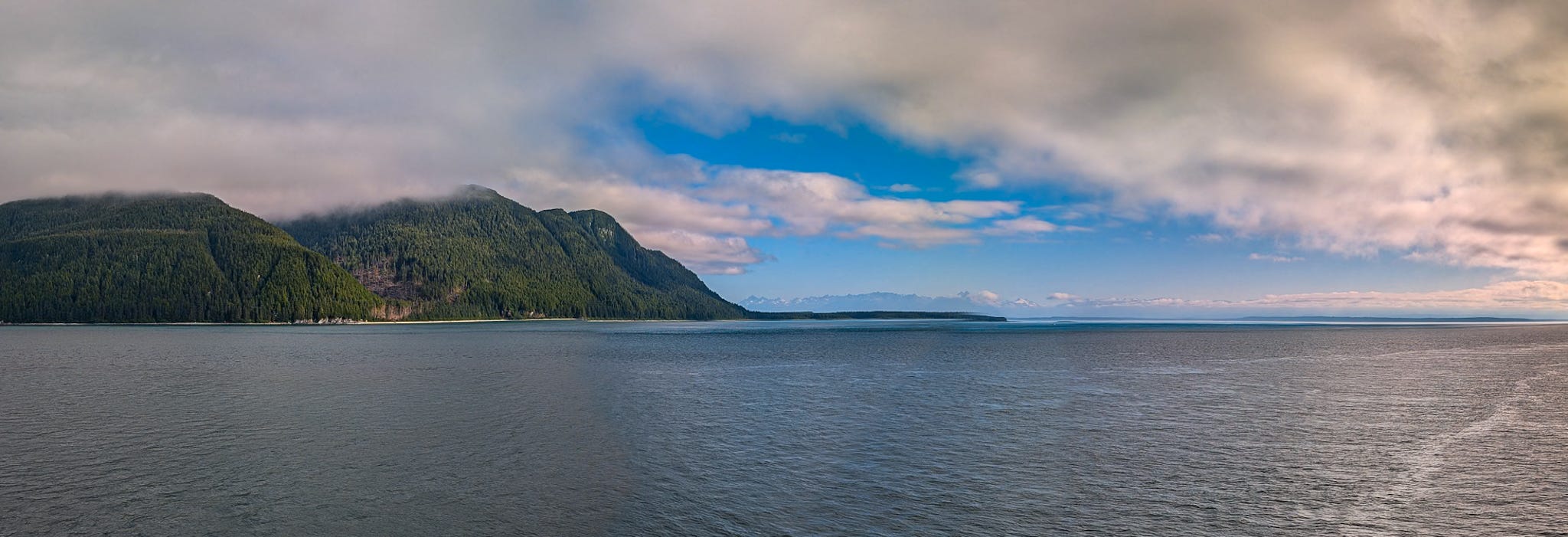
On the bright side, the day was starting to clear, though it was chilly enough that I was bundled up.
From the naturalist on board, I’d learned that as recently as 1787, almost all of Glacier Bay had been buried beneath ice.
Then the glaciers started retreating.
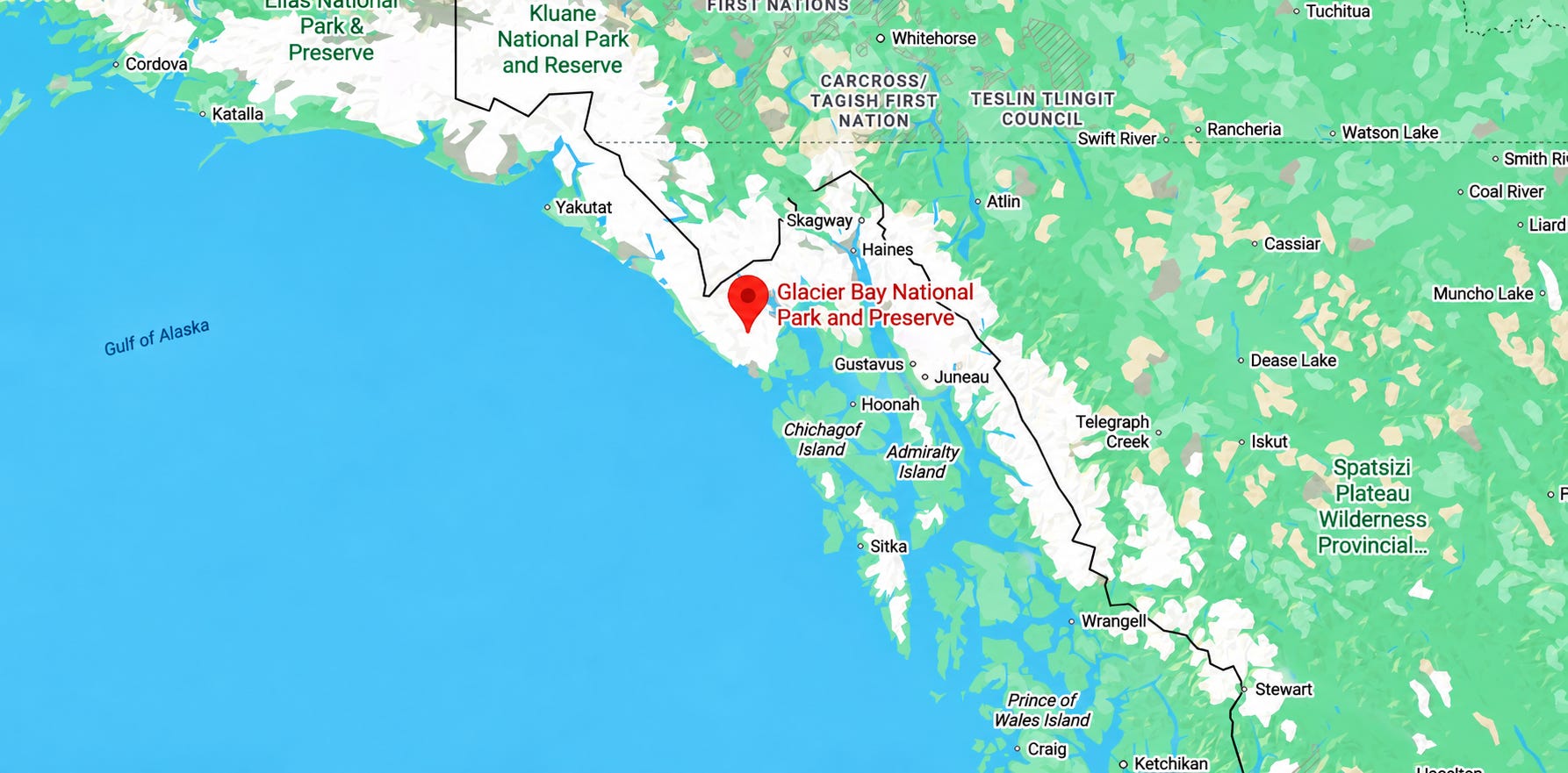
When John Muir visited nearly a century later, almost 40 miles of the bay had emerged from beneath the ice.
Today, we would sail nearly 65 miles into the bay, almost to its end, where the last few tidewater glaciers still reached the sea.
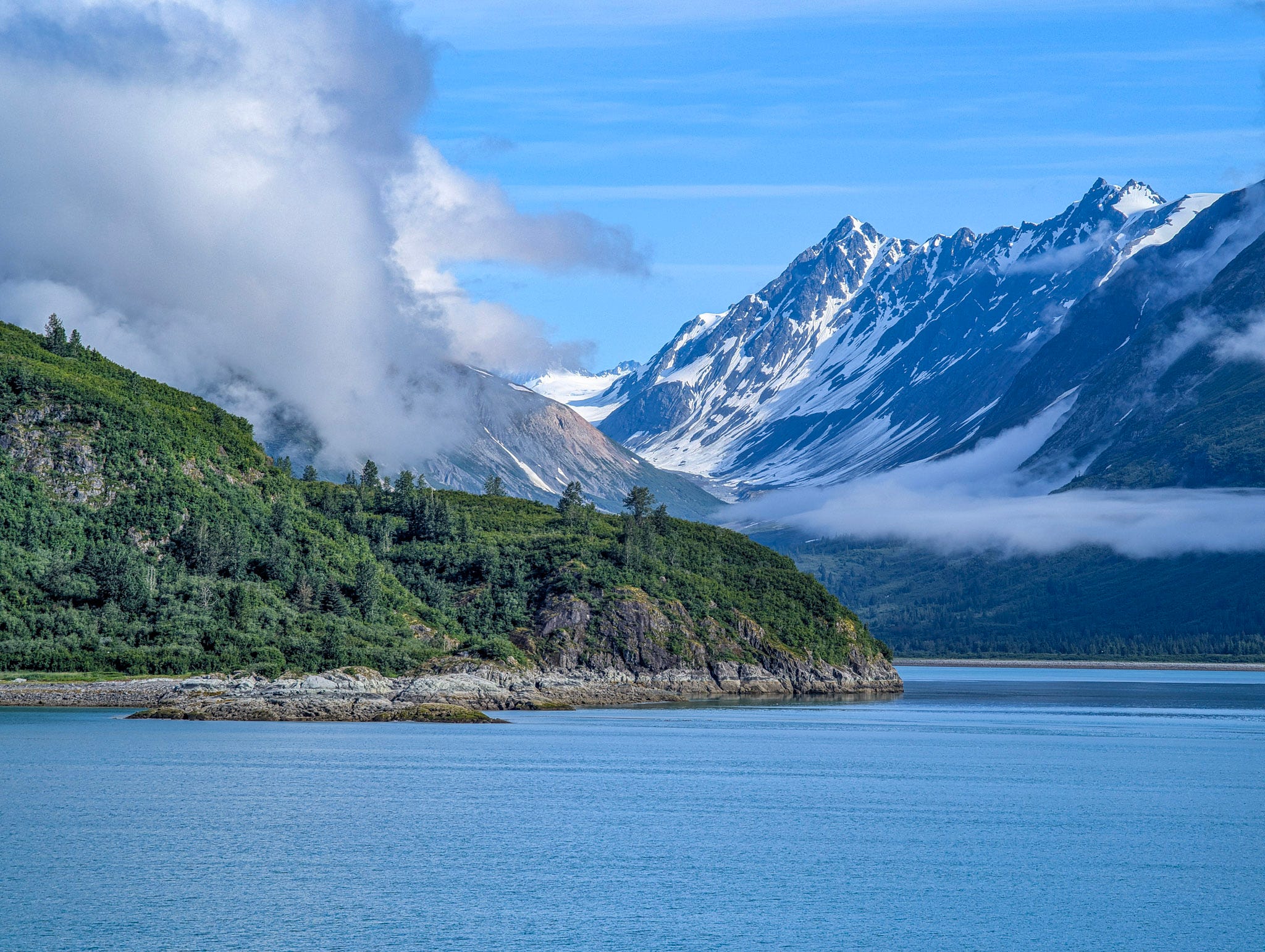
Today our cruise would sail nearly 65 miles, almost to the end of the bay, where the last few tidewater glaciers — glaciers that still reach the sea — had hung on.
From the bow of the ship, I watched the scenery slide past.
Already the mountains grew taller and the forests thinner, the trees having had less time to regrow after the retreating ice scraped everything away.
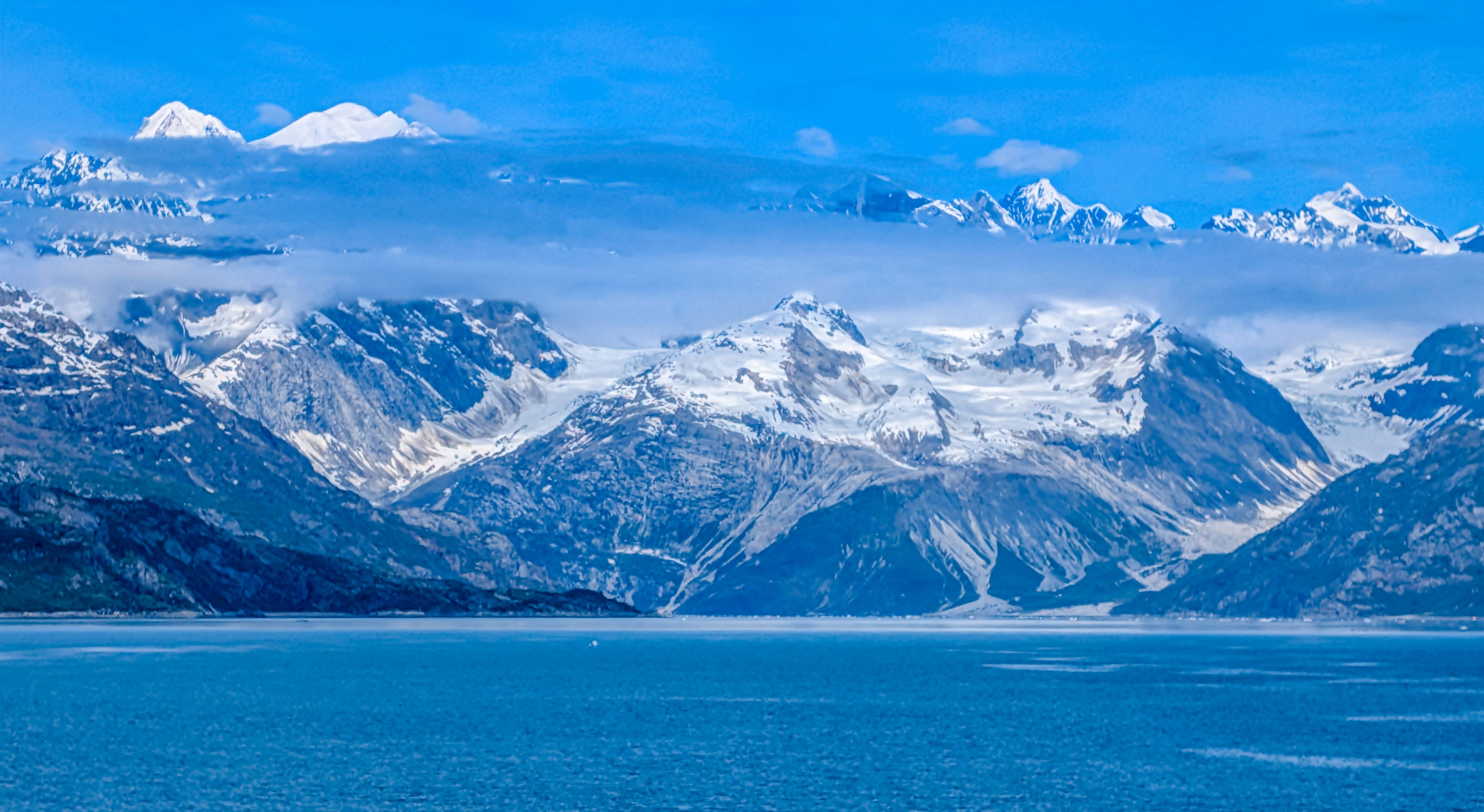
Even though we had a long way to go, I snapped picture after picture. I didn’t want to miss anything. Besides, who knew which picture might end up being the perfect one?
The morning air still had a bite, but the sun had come out, with puffy white clouds drifting above.
There was no wind at all; the surface of the bay was almost perfectly smooth except for the wake of our ship.
The conditions were now perfect for photography.
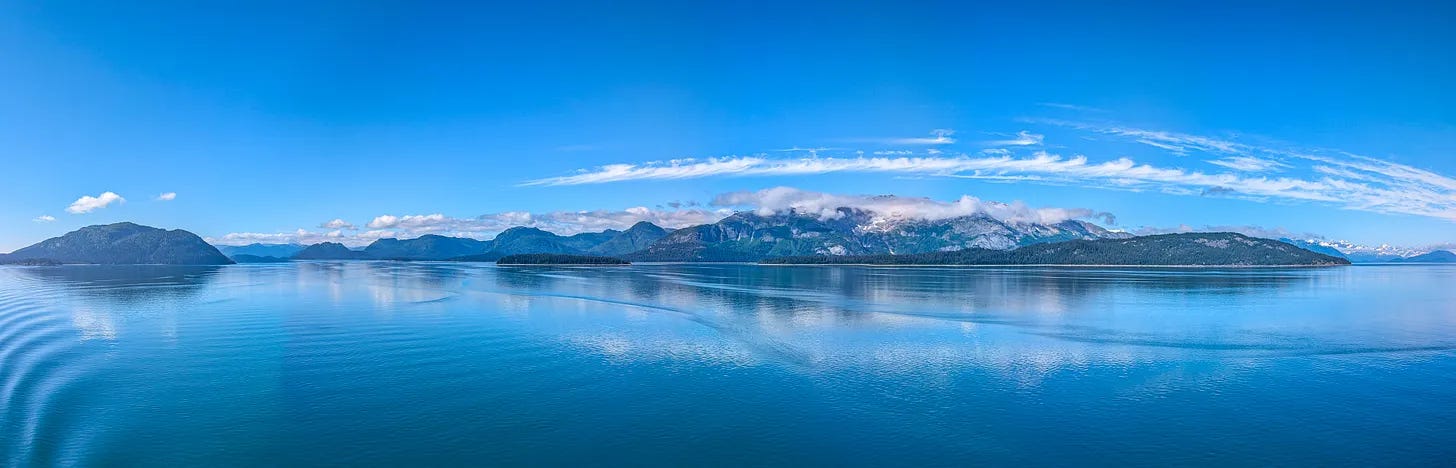
Someone pointed, and everyone looked, hoping for a glimpse of a bear on the shoreline, a raft of otters floating past, or, if we were very lucky, a whale.
It was none of those; instead, another cruise ship appeared — only two were allowed to enter each day.
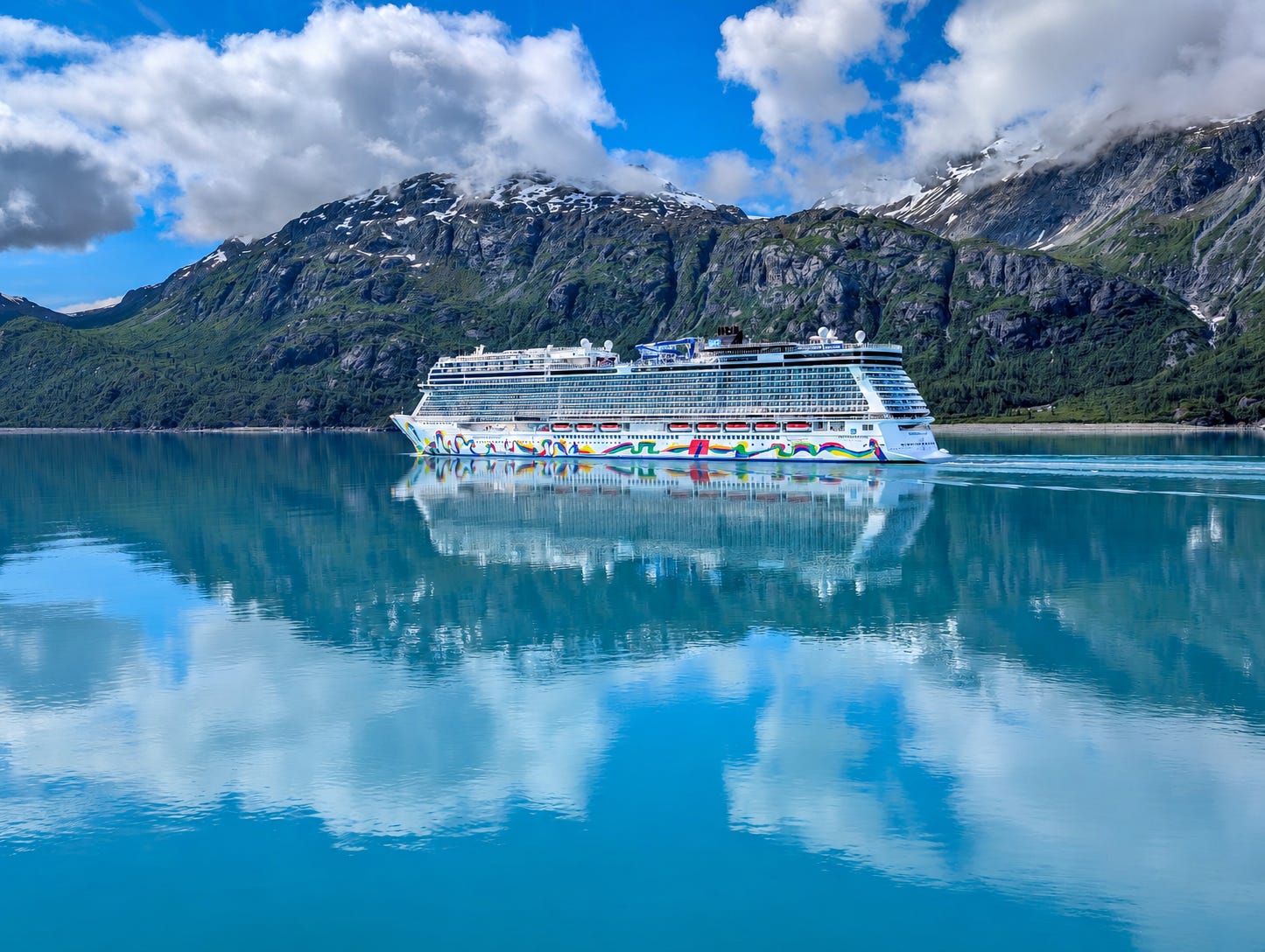
Sure, it wasn’t a bear sighting or a calving glacier, but honestly? It made for a pretty fantastic photo. Although not the photo I hoped to take. I mean, who wants to buy a picture of a cruise ship?
Our ship reached the opening to the West Arm and headed down it. The arm narrowed as we entered, and I raced from side to side to make sure I didn’t miss anything.
At one point, someone did spot a brown bear on the shore, which sparked a lot of excitement. But I was shooting strictly with my phone; without a telephoto lens, I knew I wouldn’t get anything worthwhile.
The puffy white clouds drifted overhead, sometimes snagged by the craggy peaks as if the stony giants were shy and wanted to hide.
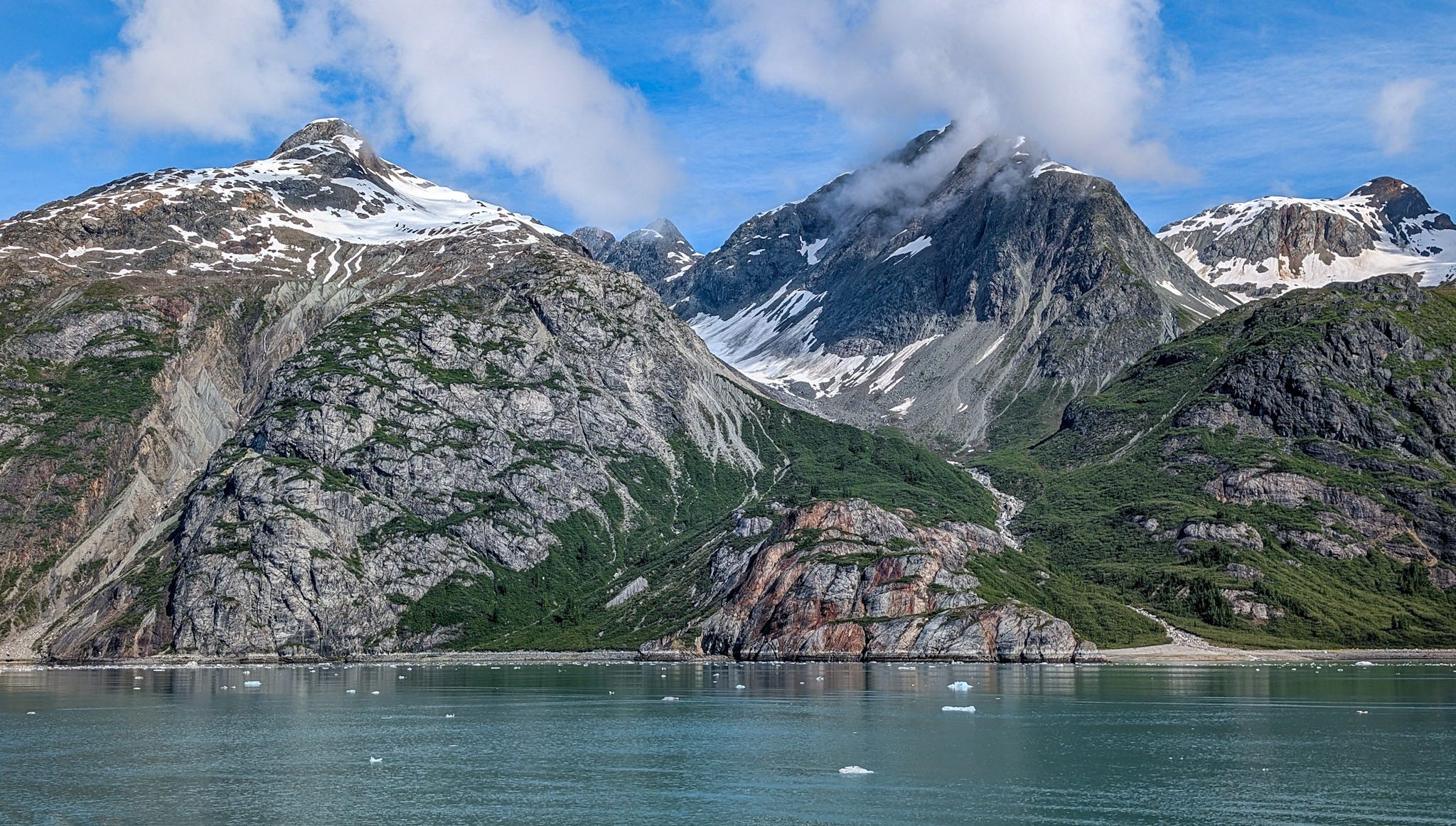
Two mountains featured a nearly empty “saddle” where a glacier had once flowed down to the sea. One mountain rose to a razor-edged ridge carved by the glacier; the other was more rounded, as if it had somehow found the strength to fend off the crushing ice.
I zoomed in and captured how trees had started to reclaim the lower reaches. The red exposed bedrock, polished by the glacier’s constant movement, added a bright splash of color before vanishing into the sea.
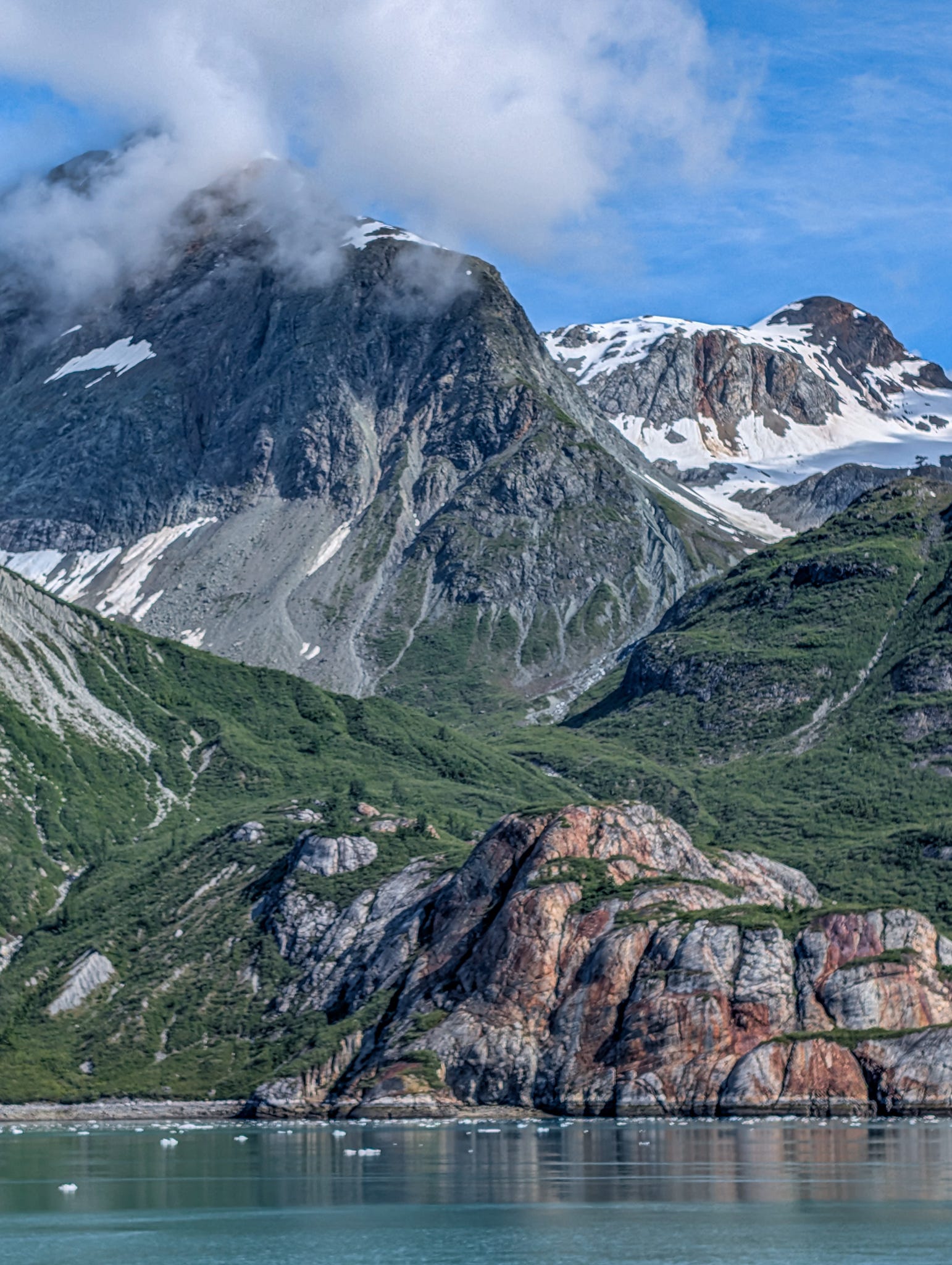
I hoped it wasn’t the best photo I took all day.
We soon came to a spot where I could capture where a tidewater glacier had once stood, its front calving into the ocean with thunderous booms.
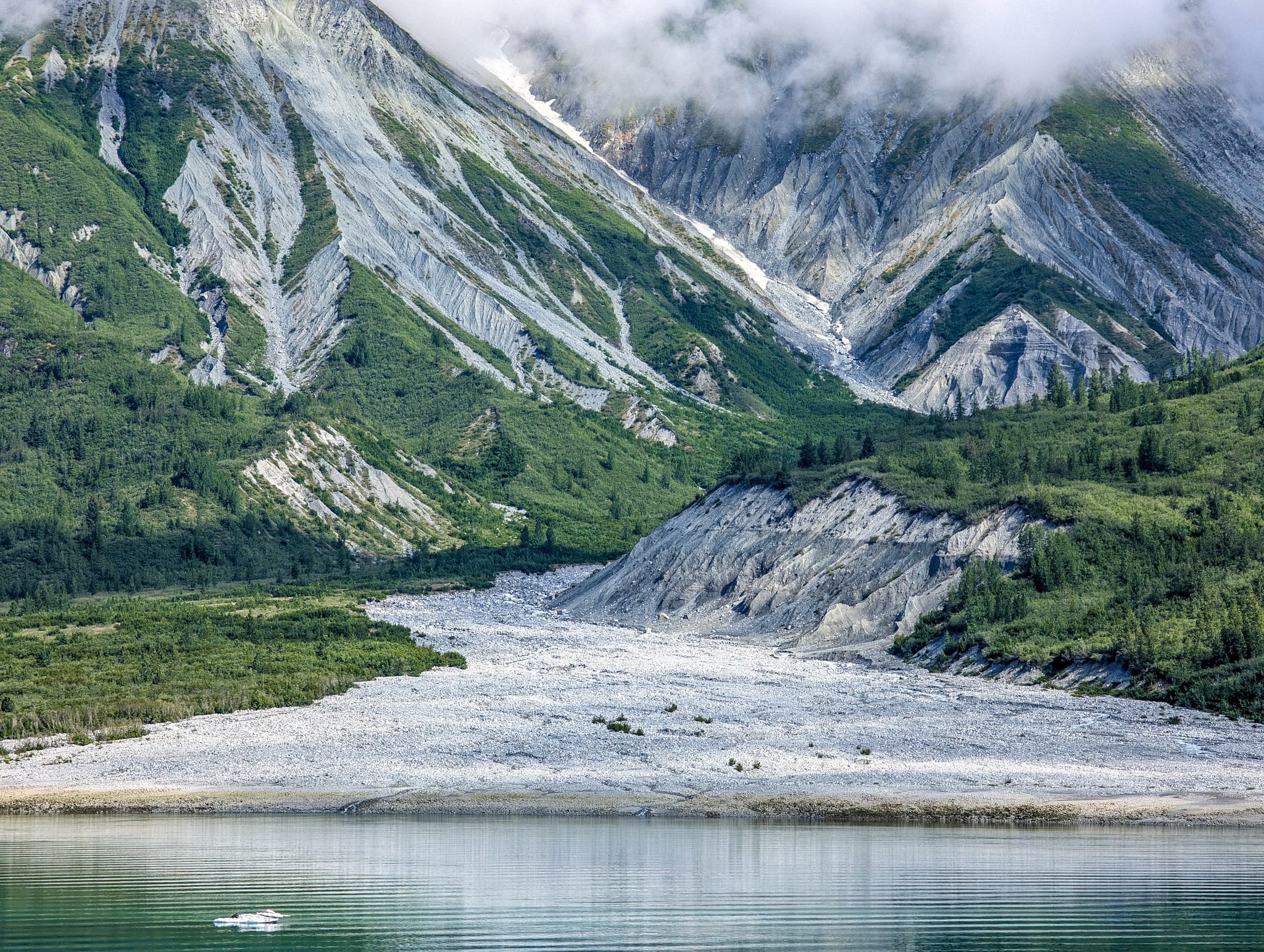
I loved how the picture turned out. But was it good enough to sell? I didn’t know, and my quest went on.
As we neared Johns Hopkins Glacier, the first small chunks of ice, known as growlers, began to appear.
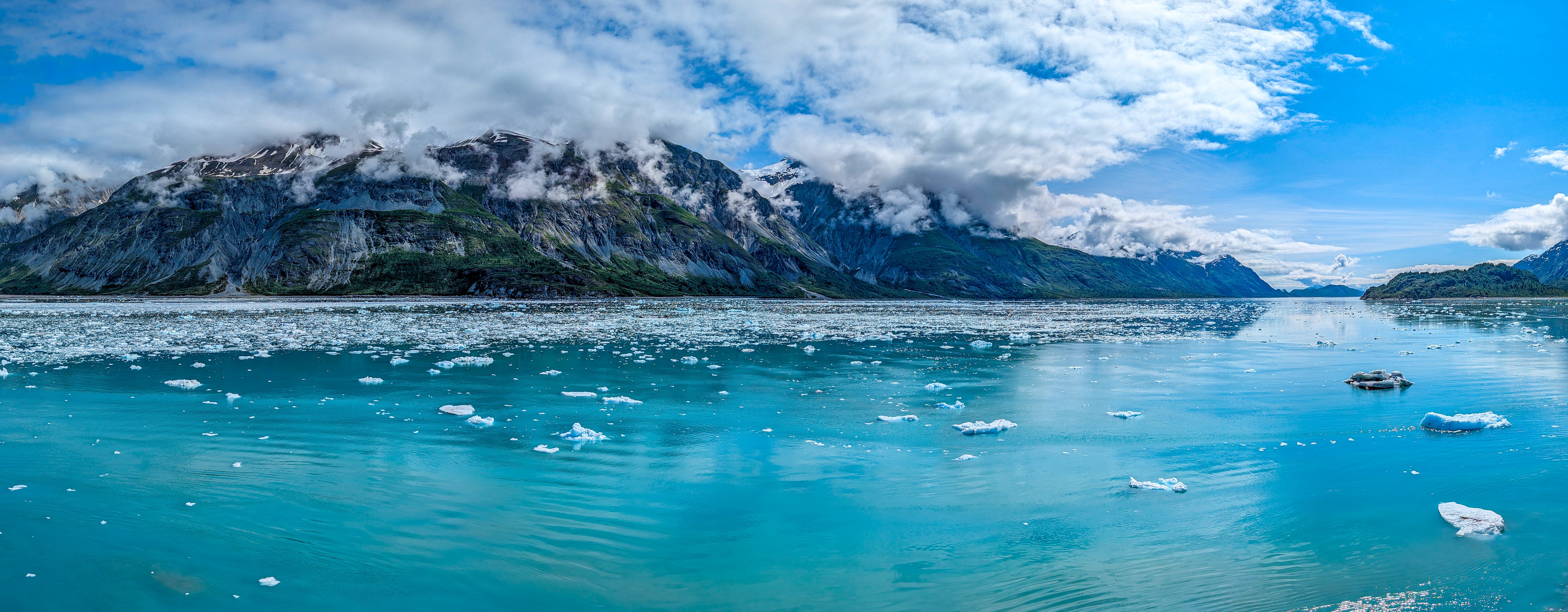
While most tidewater glaciers — and most other glaciers in the park — are retreating, Johns Hopkins is one of only seven that are still advancing.
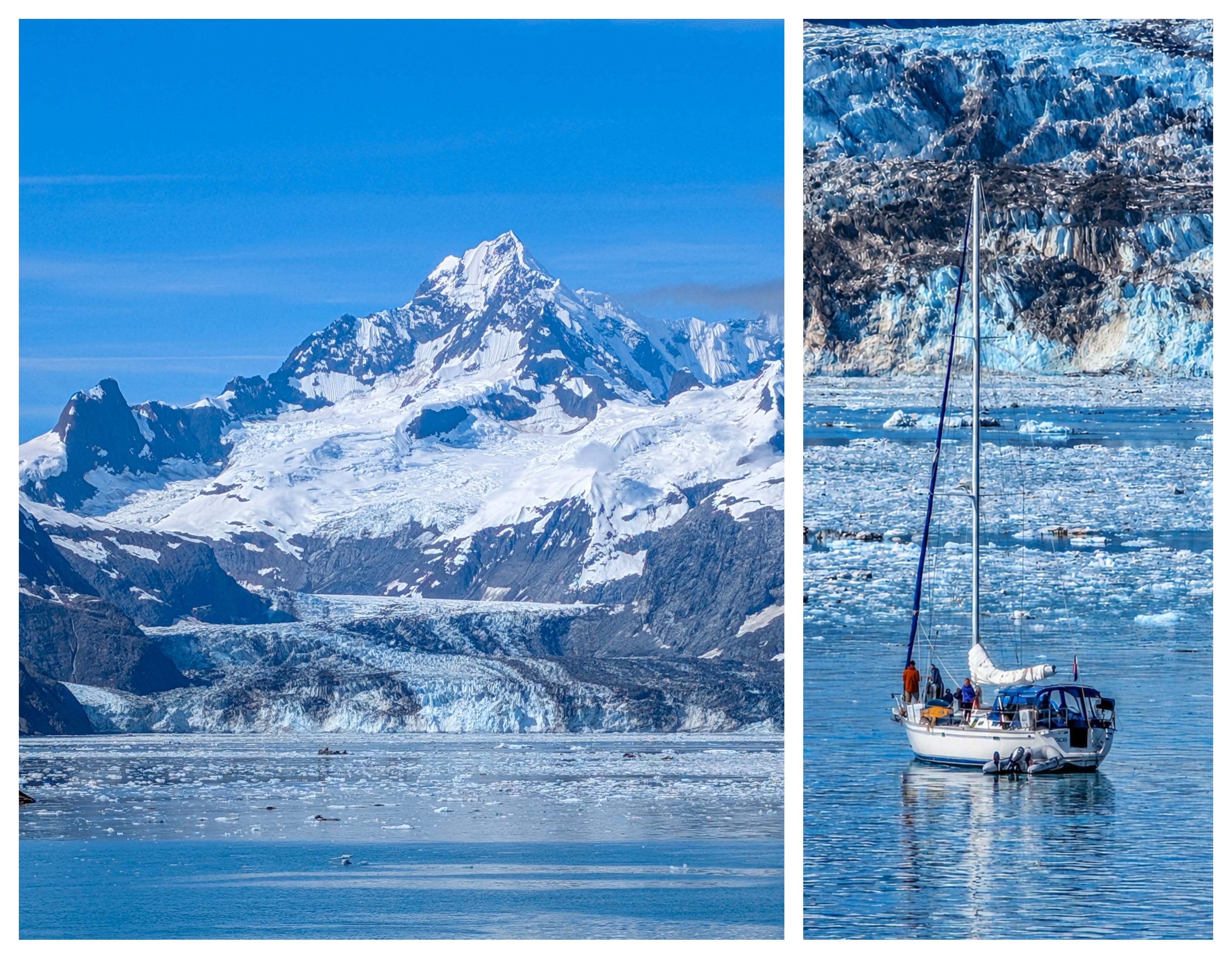
Because harbor seals use the glacier’s ice to give birth and nurse their pups, large ships must stay at least seven miles away during the summer. Smaller craft like sailboats can go much closer, but even they must watch for calving ice from the glacier.
From there we headed for Tarr Inlet, home to Margerie Glacier. Along the way, we passed a fantastic view.
On the left side, I could clearly see where a glacier had been retreating into the mountains. It had left behind a glacial cirque, a circular depression carved out by the ice. On the right, two separate landslides scarred the rock like a giant, lopsided “X.”
Above was a blue sky with clouds; below, the ice-studded green of the bay.
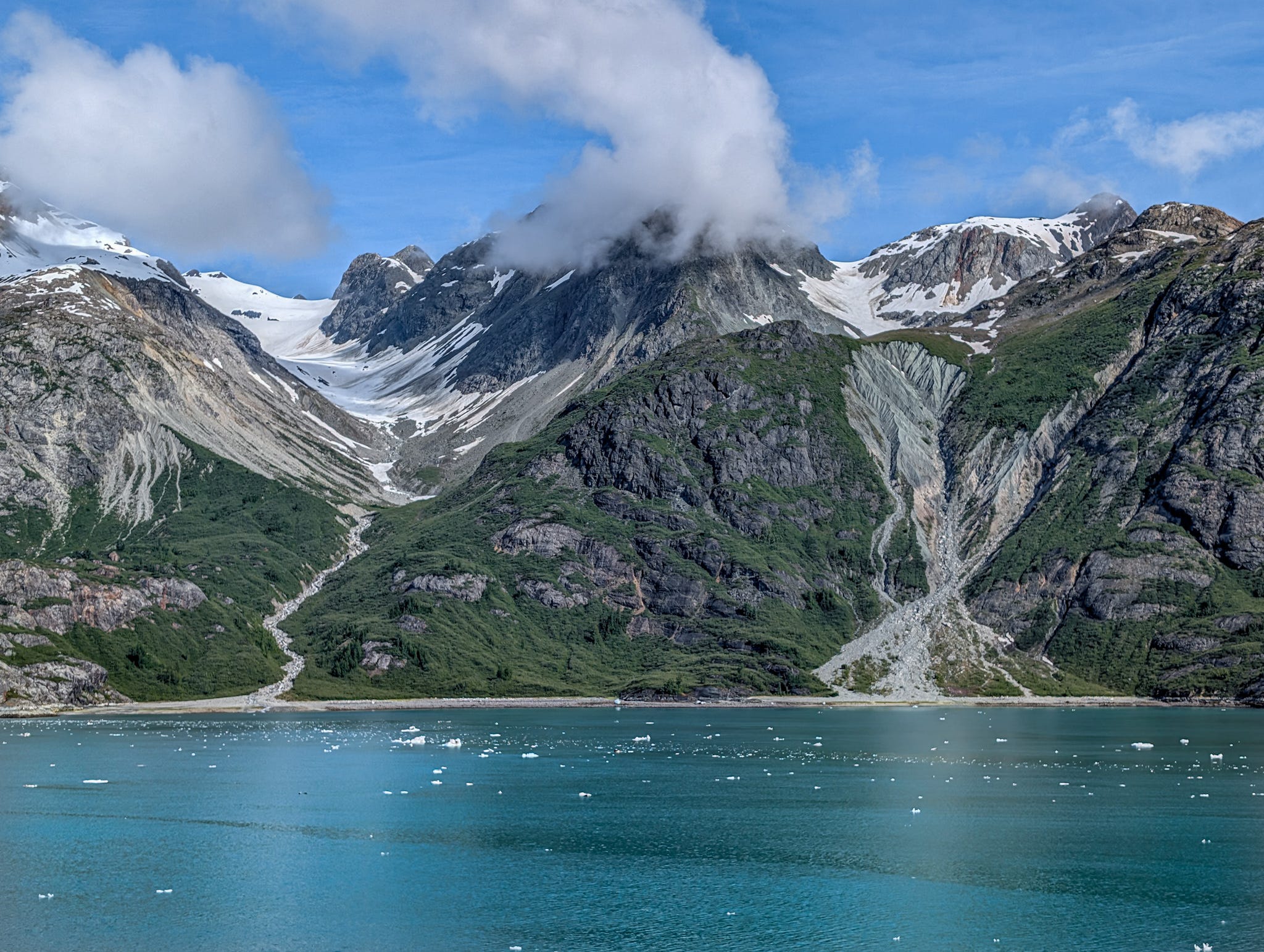
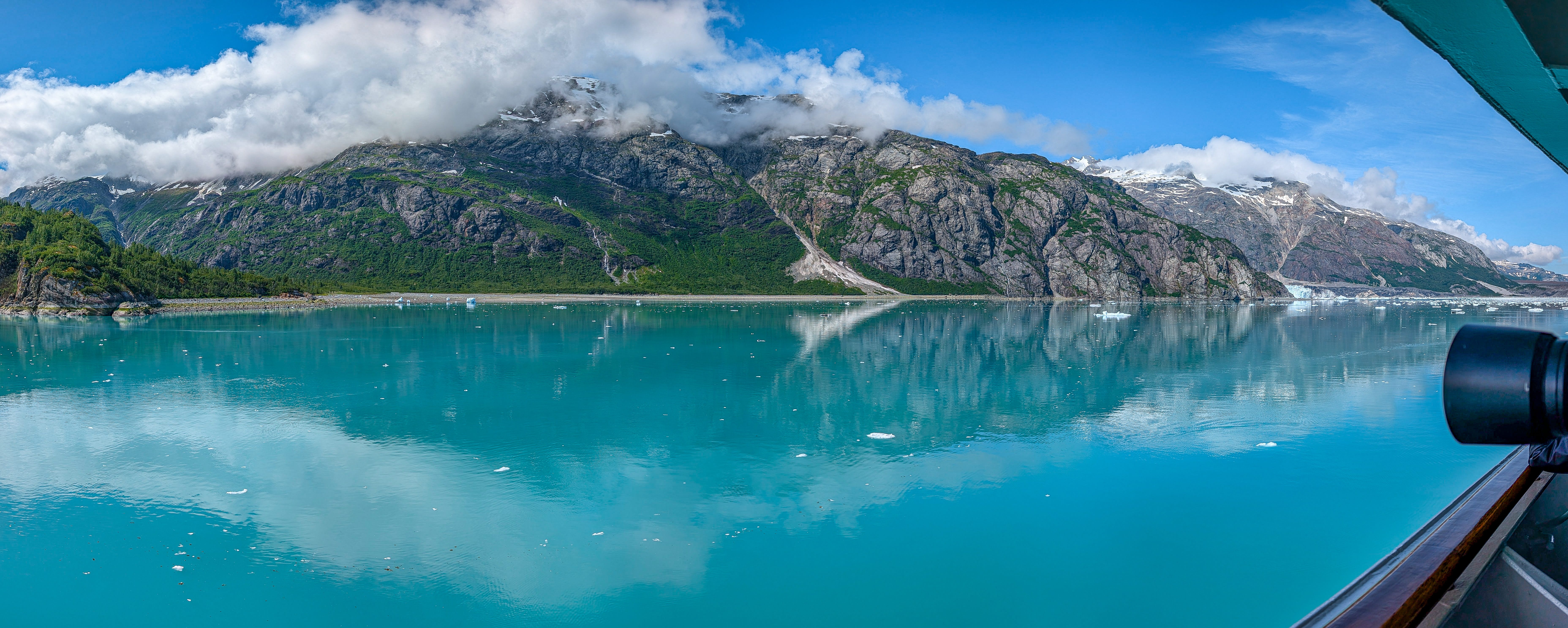
All day, the water’s color changed. One moment it was sky-blue, then aquamarine, then deep emerald, as if nature couldn’t decide which shade most flattered her.
As we drew closer to Margerie, the ice in the water grew thicker because the front of the mile-wide glacier regularly calved. Around us, the sea popped and crackled as ice melted in the warm sunlight, tiny bubbles bursting and releasing centuries-old air.
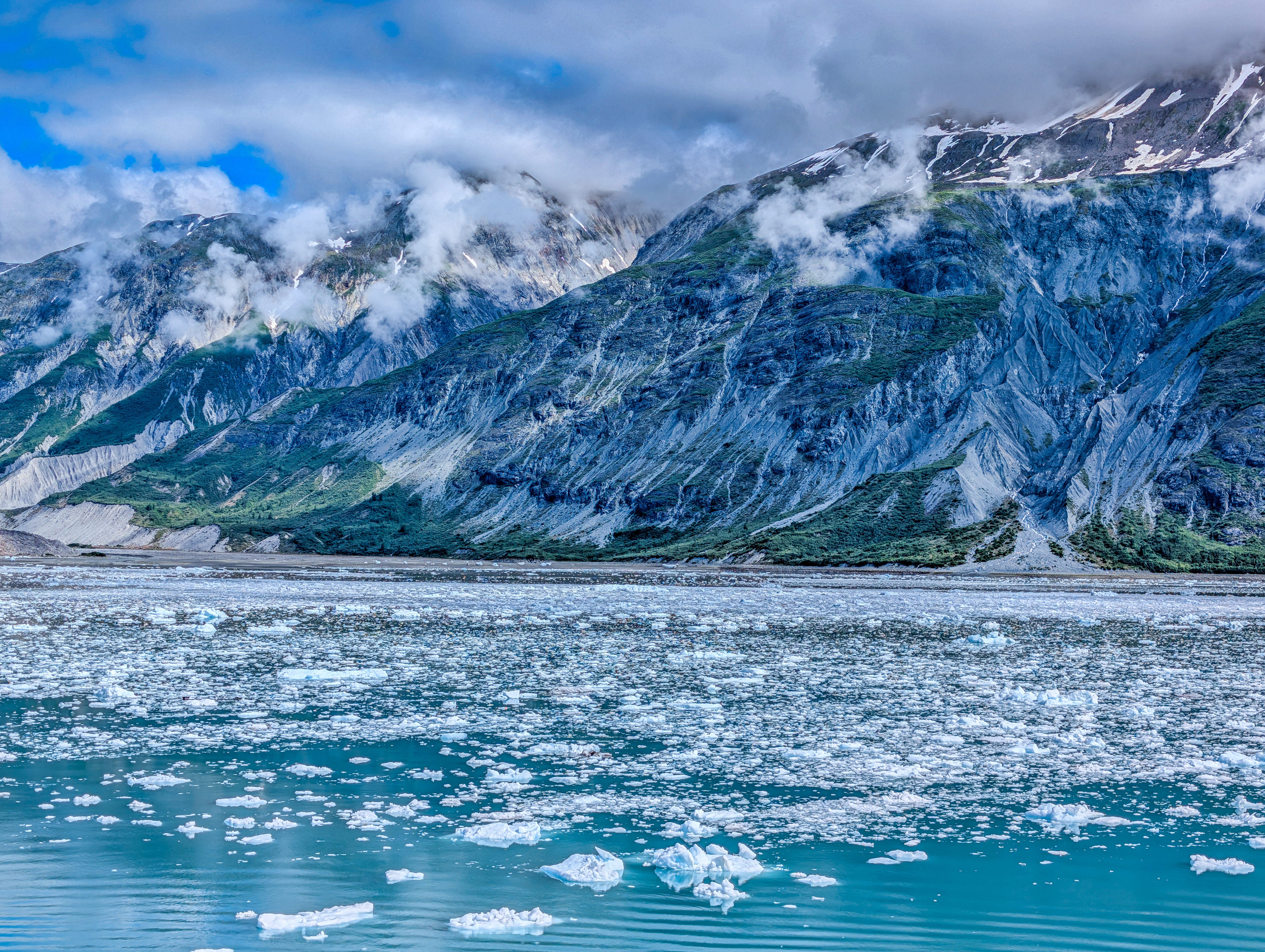
Because the inlet is 250 feet deep, and because harbor seals aren’t present, ships sail much closer to the front of the glacier.
That meant every time the ice shifted, we heard the creaking and groaning, as if the glacier were an old man struggling to stand.
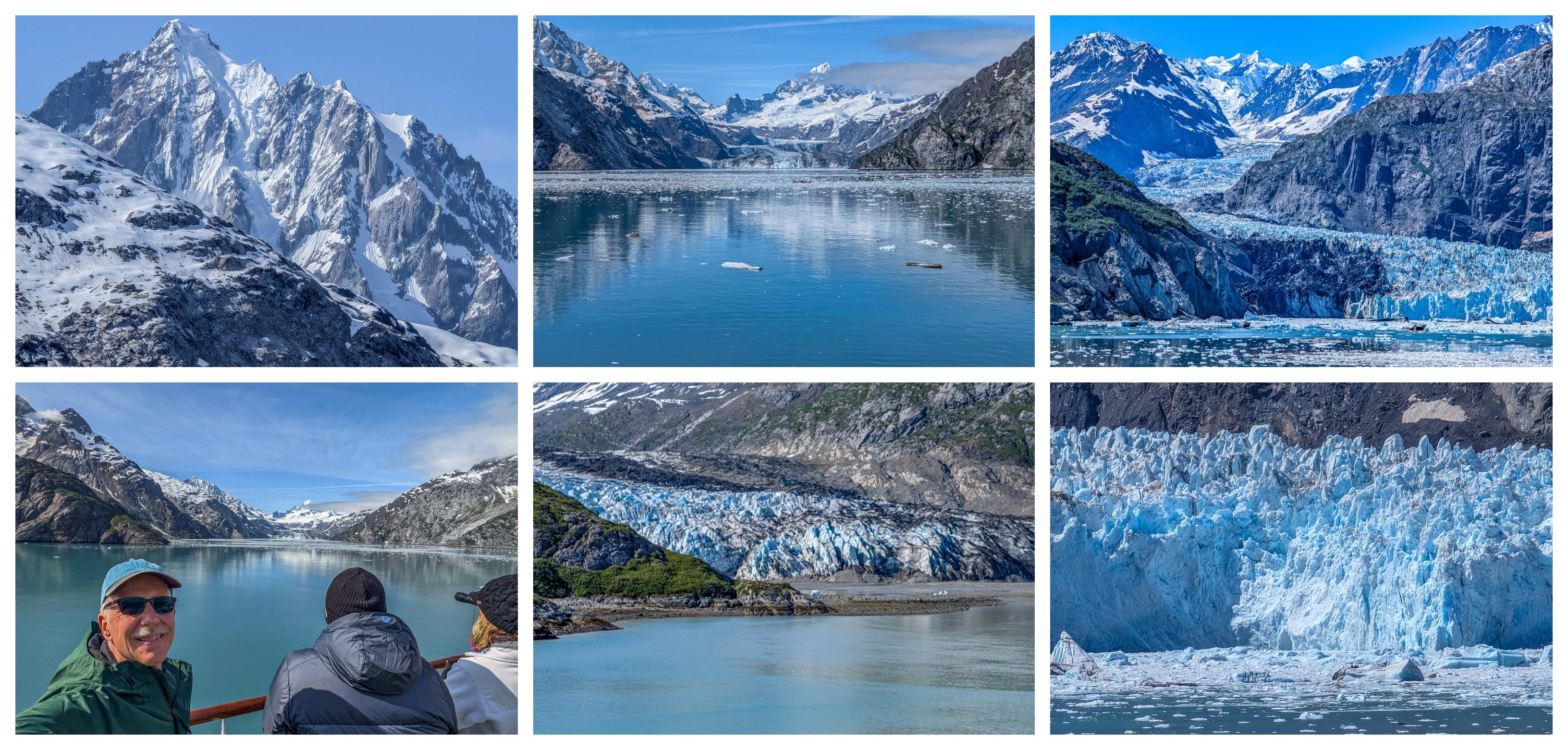
And when the glacier actually calved? The cracking sound was like a gunshot—as if Mother Nature warned us not to get too close to her.
The captain kept the boat near the front of the glacier for a good half-hour before slowly turning to take us back out to sea.
At one point I found myself almost alone at the back of the ship.
The water was gloriously blue and green and still, the sky overhead like a dome, as if we were inside a snow globe where the snow all lay on the mountaintops waiting to be shaken into the sky once more.
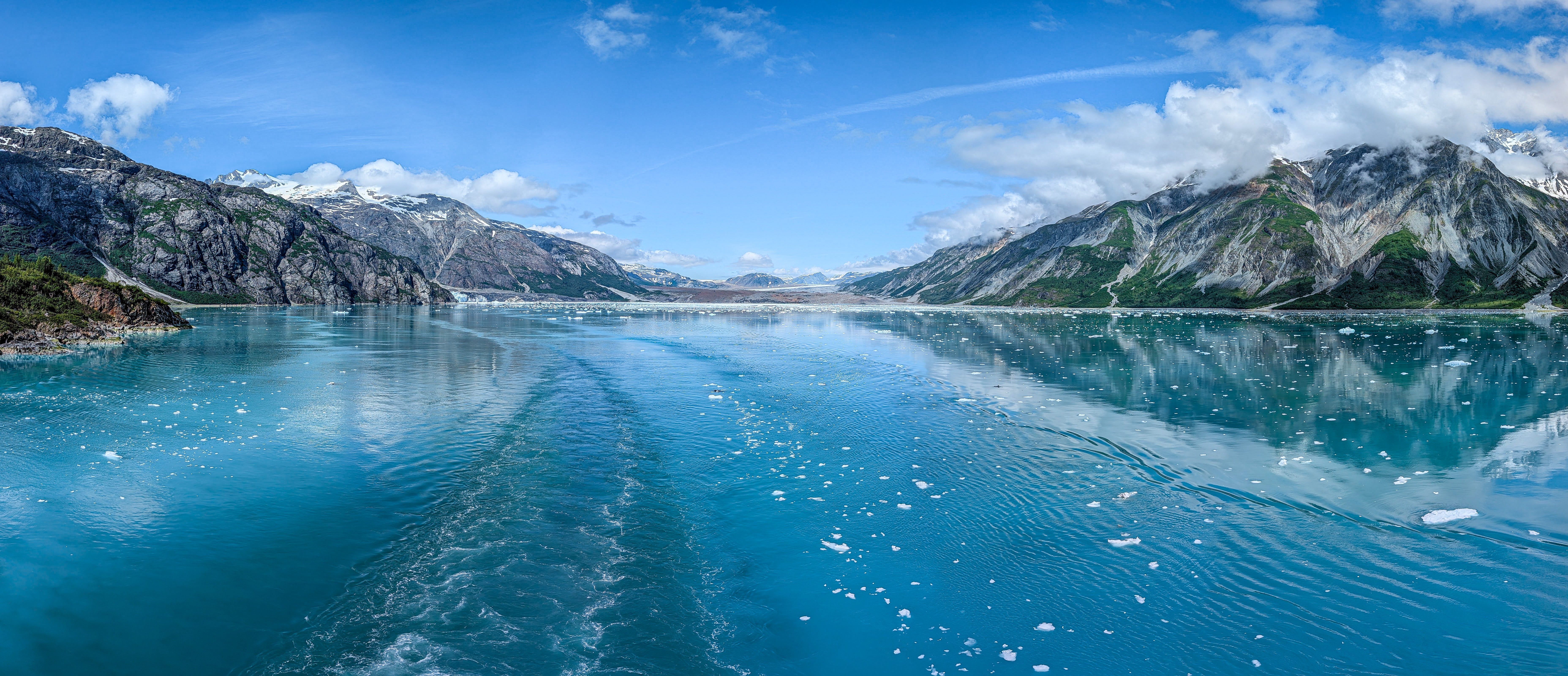
It was stunningly beautiful. Looking back and forth from the sky to the mountains to the sea, I’m not ashamed to admit that, faced with so much beauty, I cried a little.
Only then, as we sailed away, did I realize that at some point, I’d stopped trying to take the perfect picture.
I guess I’d have to settle for the perfect day.
This picture and others featured in this article are available for sale at Michael Jensen Photography. If you’d like to purchase a photo not for sale, send me a note, and I’ll make it available. Enter SAVE35 at checkout to save 35%.
Michael Jensen is a novelist and editor. To buy his photos and travel poster, visit him at Michael Jensen Photography.