
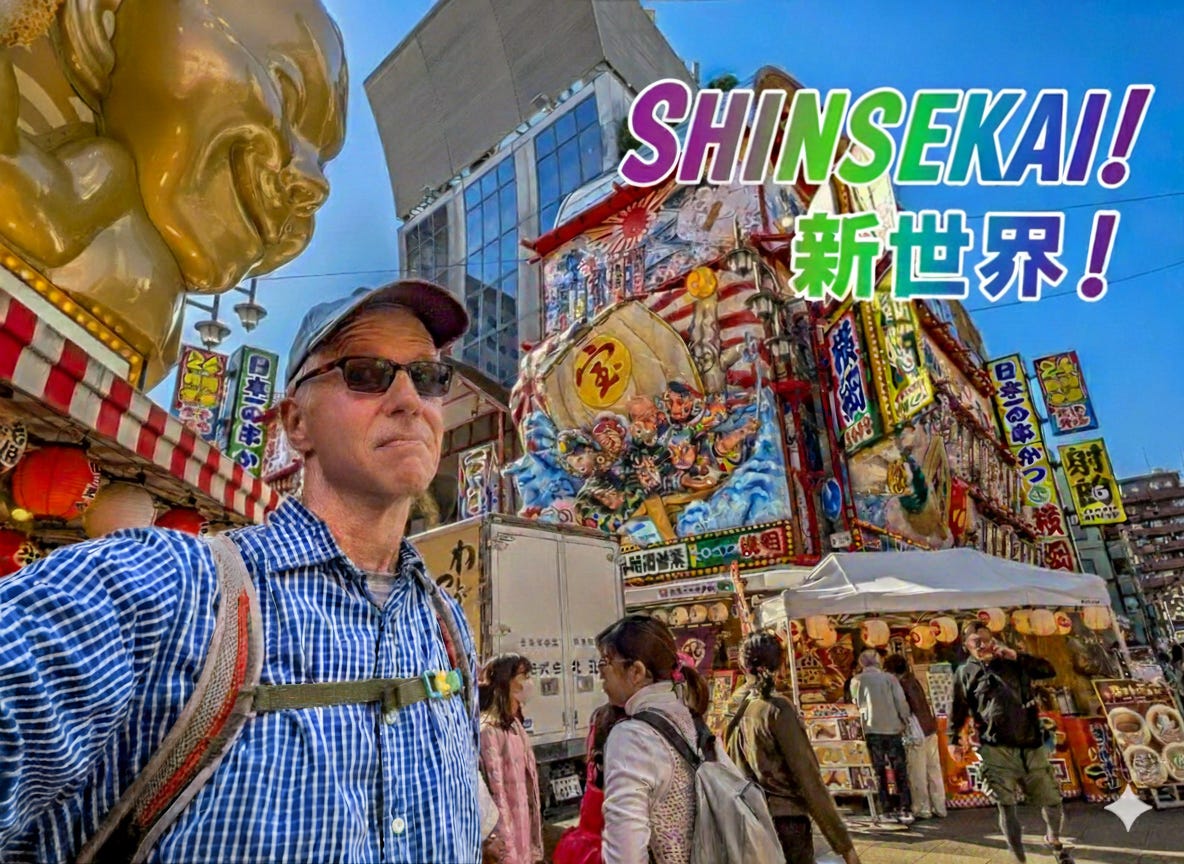
What’s the hardest part of writing this newsletter?
Choosing what to write about.
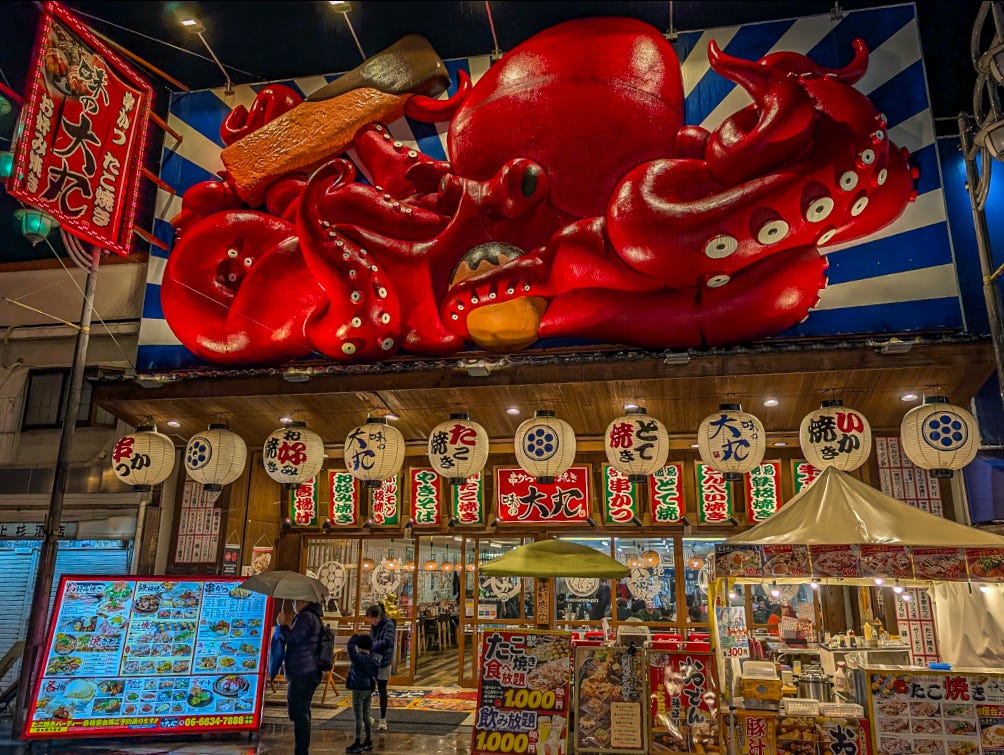
Osaka alone presented me with too many options: Osaka Castle; the futuristic Umeda district of high-rises and malls that put America’s to shame; Osaka Station City, the vast transit hub where I might have gotten lost; and, of course, Dotonbori, with its neon chaos, giant octopus signs, and endless food.
I’ll get to all of them eventually. Maybe. At least I hope so.
But this time, I chose Shinsekai.
Shinse-whatsit?
Shinsekai is a unique entertainment district in Osaka, Japan, with a retro, slightly rough-around-the-edges vibe.
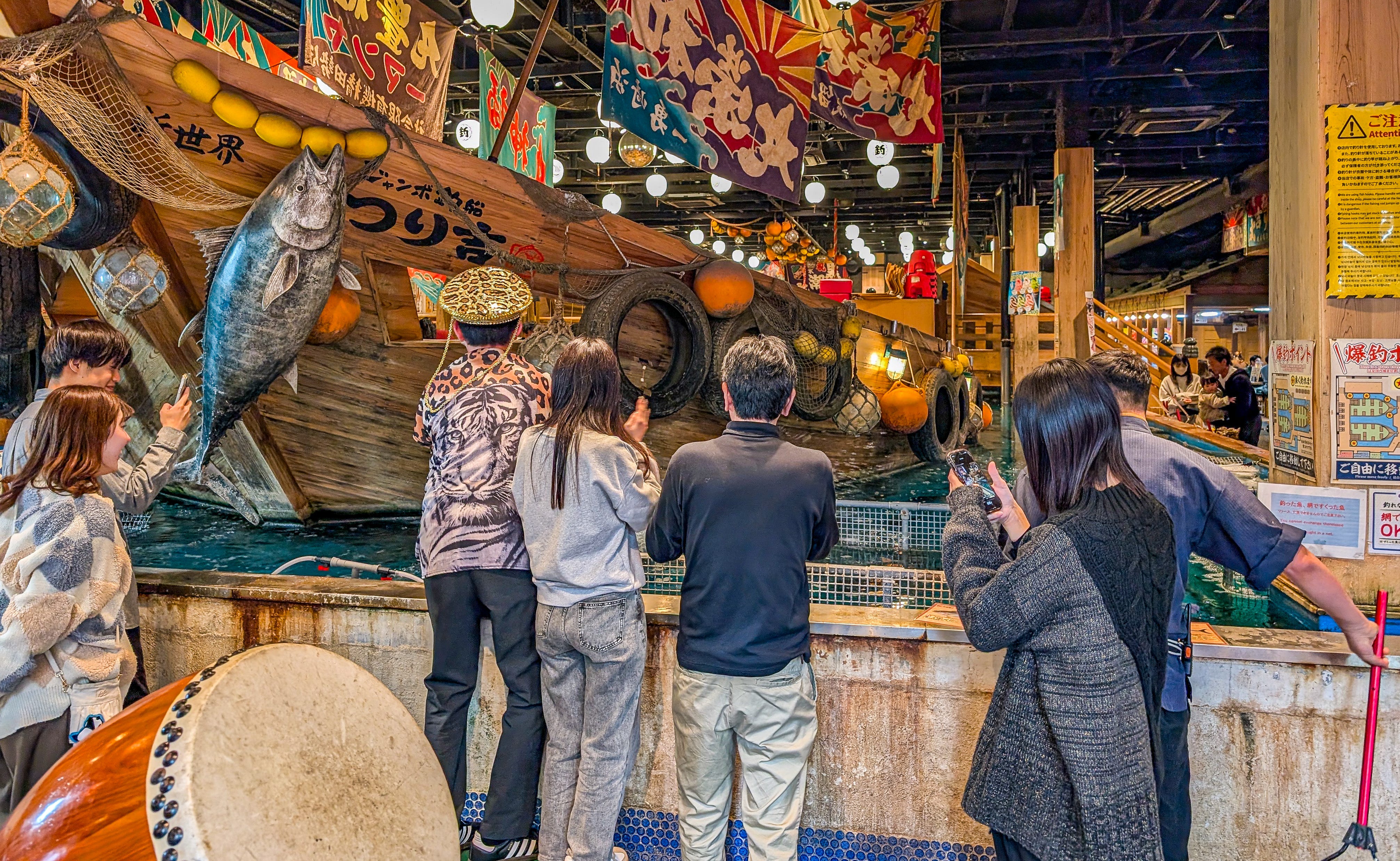
There you’ll find a restaurant where you can catch a fish and have it cooked for you, which is so tacky but also so much fun.
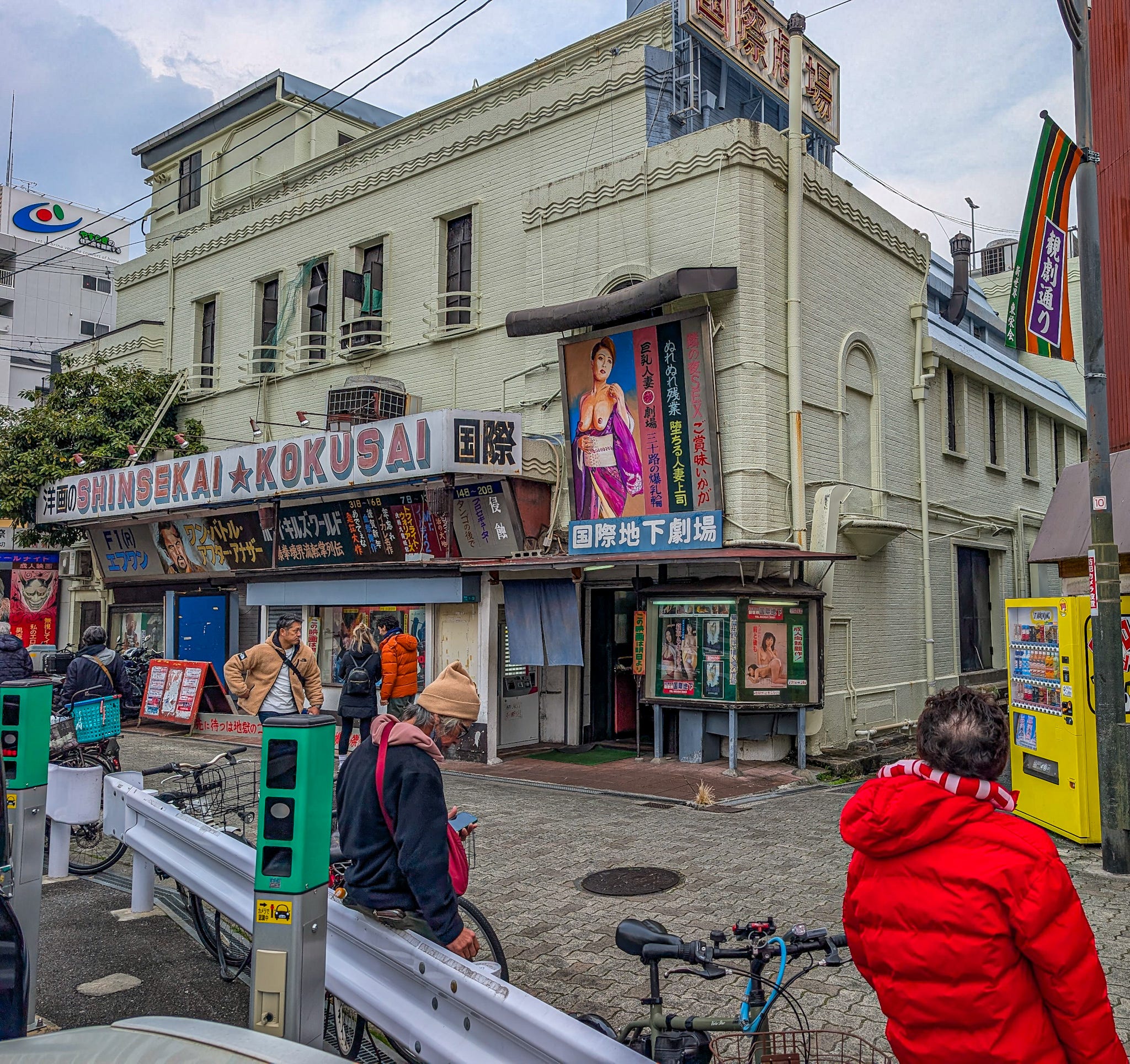
It also has a porno theater — yes, there are still porno theaters — an observation tower inspired by that one in Paris, tons of bright colors, and loads of cheap Japanese eats.
Shinsekai is a perfect collision of kitsch, grit, and Showa‑era nostalgia — the Japan of roughly 1926 to 1989 — and I fell for it fast.
Shinsekai means “New World,” and when it was created in 1912, the name was aspirational — as in France and the United States.
Osaka wanted to announce itself on the world stage, so the newly developed neighborhood was modeled on an improbable mashup of Paris and New York’s Coney Island. Hot dogs and bouillabaisse, side by side.
It shouldn’t have worked. History says it did.
The southern half featured a Luna Park amusement area inspired by Coney Island, while the northern half was anchored by the original Tsutenkaku Tower — “the tower reaching heaven” — a hybrid of the Eiffel Tower and the Arc de Triomphe. At 64 meters, it was the second‑tallest structure in Asia when it opened and quickly became the neighborhood's symbol.
Things started unraveling in the 1940s.
A fire badly damaged the tower in 1943, and during World War II, its steel was repurposed for the war effort. When Tsutenkaku was rebuilt in 1956, the Arc de Triomphe platform was gone because, let’s face it, hot dogs sell better than a fancy fish stew.
The new version rose to 103 meters and looked like the Eiffel Tower had a brief but ill‑advised fling with a pachinko machine. The result was part tower, part antenna, and part sci‑fi invader from The War of the Worlds.
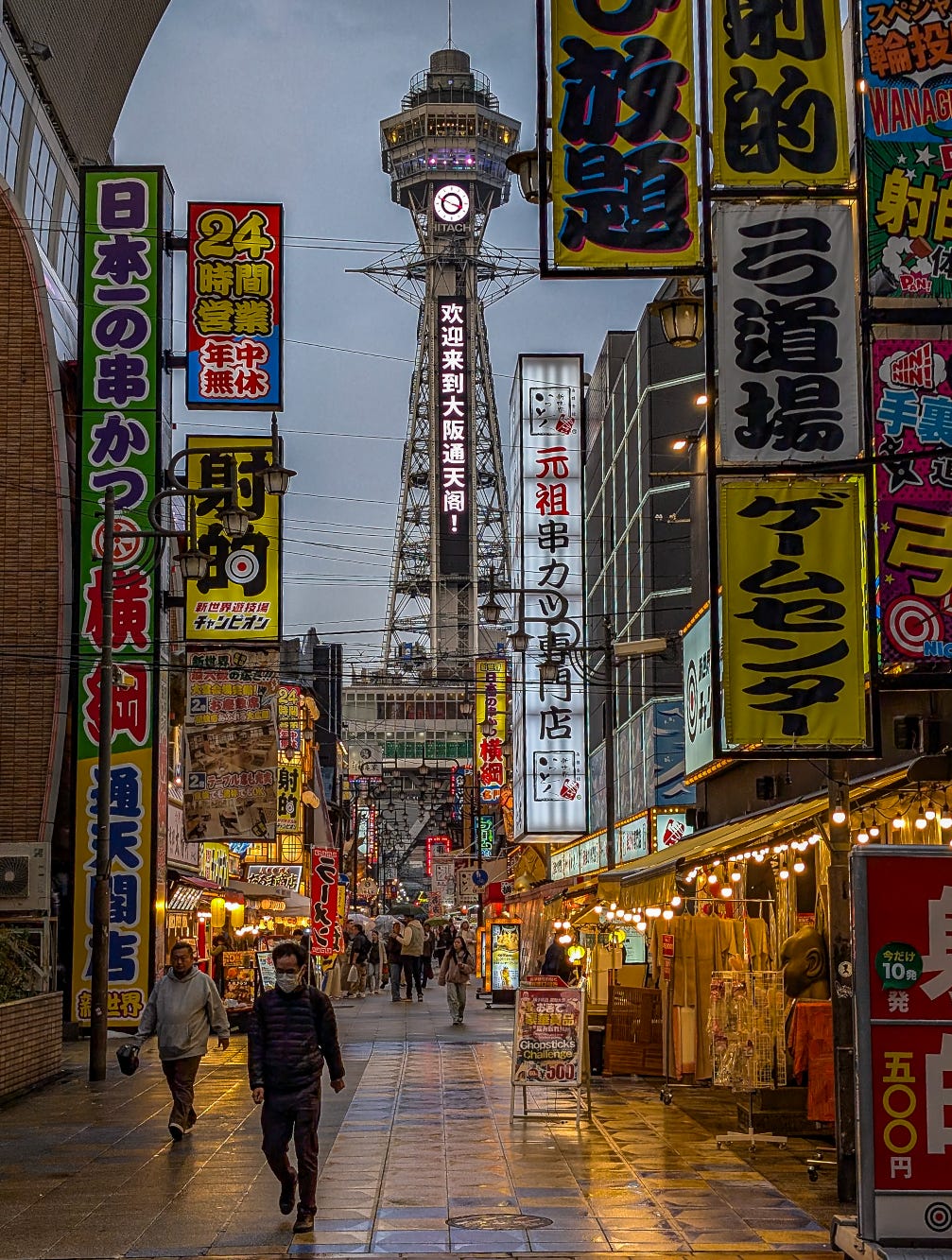
The rebuilt tower revived Shinsekai, but not as a refined tourist destination. Tourists of all sorts still came, but the district itself became strictly working‑class, shaped by day laborers rebuilding Osaka and by those same laborers relaxing there at night.
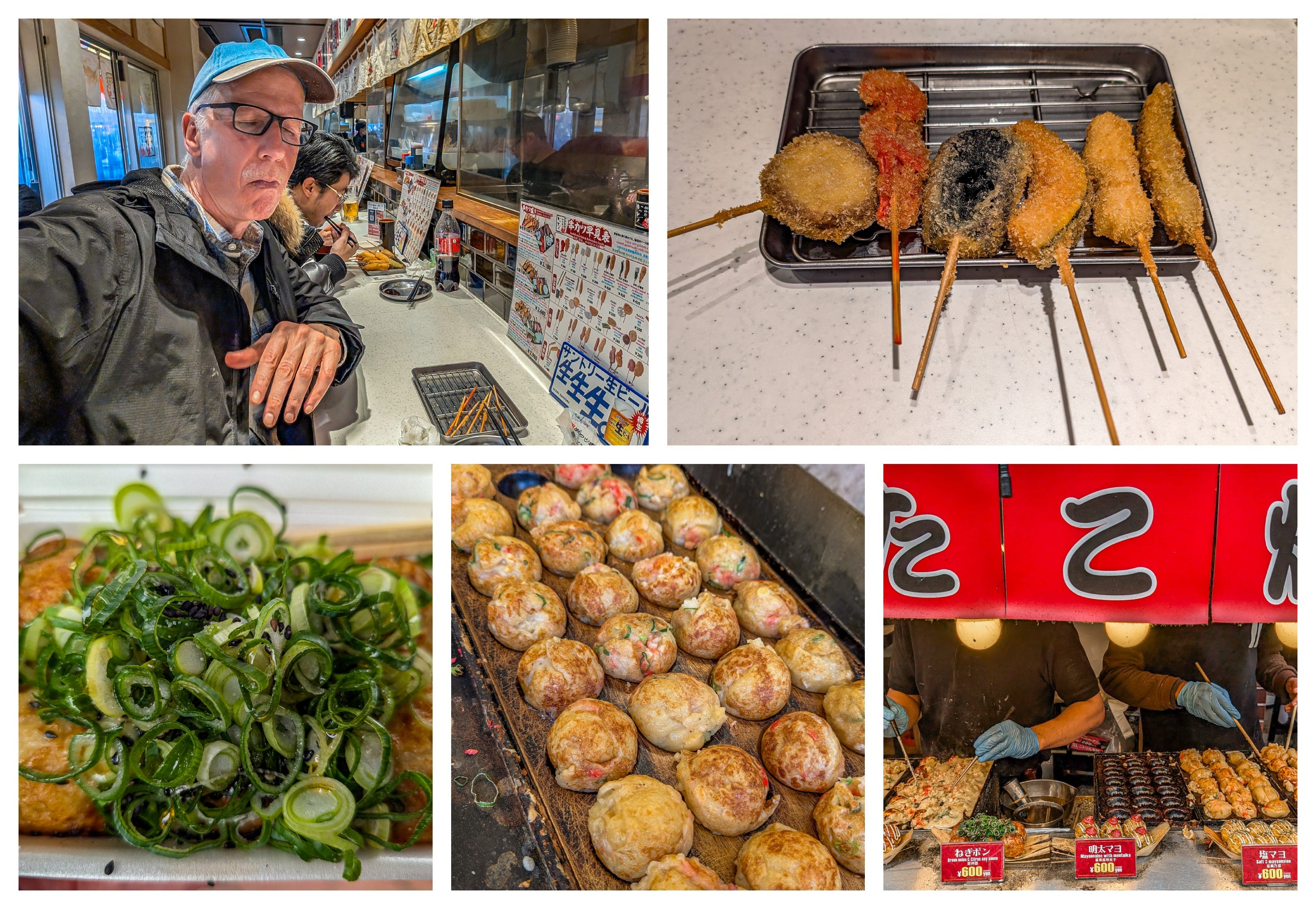
Cheap food ruled. Kushikatsu — skewered, breaded, and deep‑fried meats, vegetables, and seafood — became the local specialty, alongside takoyaki, those famous balls of dough stuffed with octopus.
Movie theaters (including porno theaters), pachinko parlors, and other low‑rent attractions followed. Combined with nearby Tobita Shinchi, Osaka’s red‑light district, Shinsekai gained a reputation for seediness. By the 1970s, it was considered unsafe — by Japanese standards anyway, which is to say, still safer than most cities elsewhere.
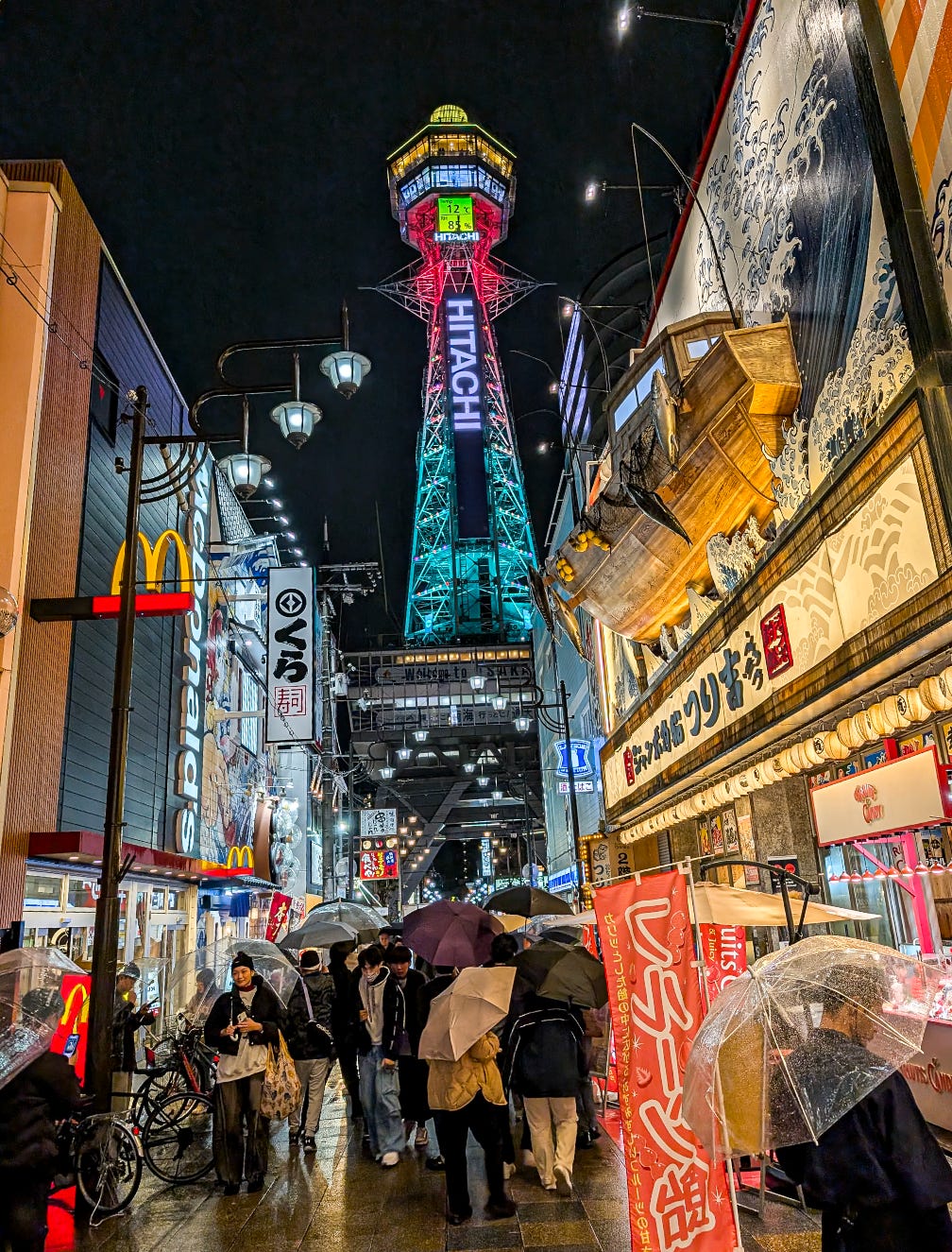
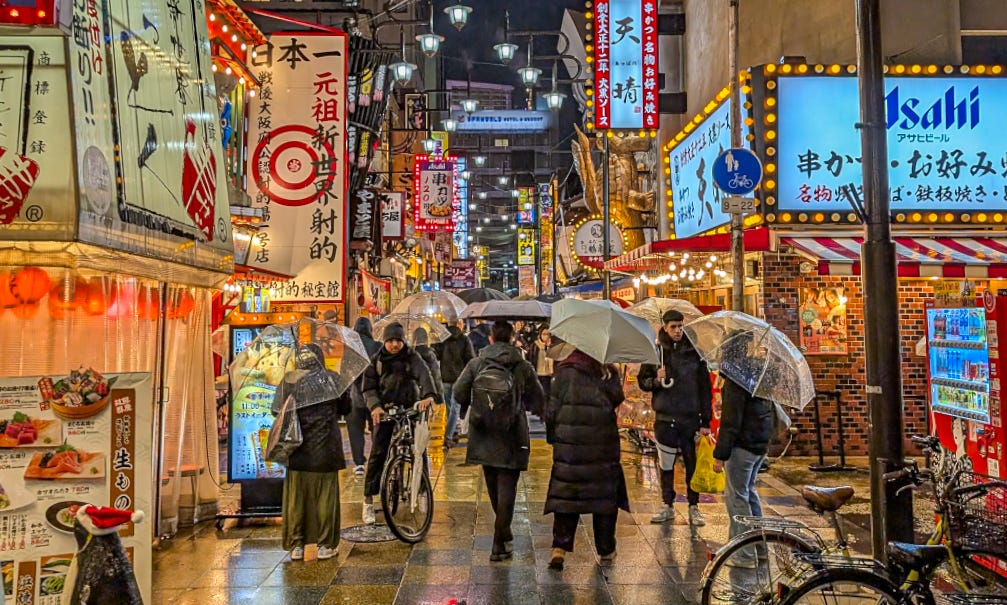
Today, that reputation has mostly faded. Shinsekai is a popular tourist area, though it remains defiantly rough around the edges.
There are still a few sketchy corners, some homelessness, and that one remaining porno theater. None of it feels dangerous; mostly, it feels real, like actual Japanese people live here.
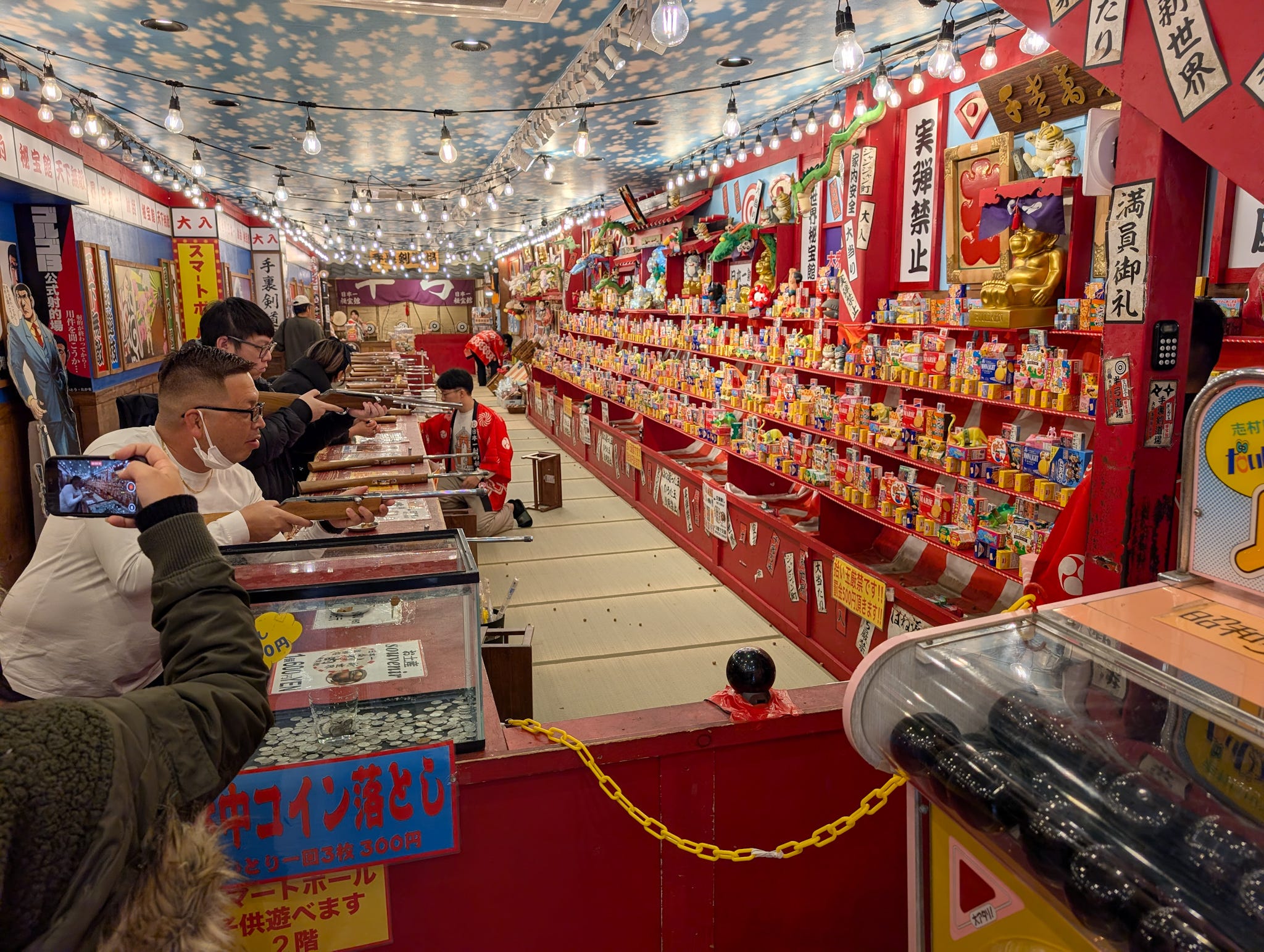
What dominates most of Shinsekai now is retro charm. Paris is long gone, but Coney Island lives on in the form of “shateki” shooting arcades where adults and kids line up to win snacks with pop guns.
And archery parlors proclaim “Shoot like a samurai!” and ring bells when you hit a bullseye.
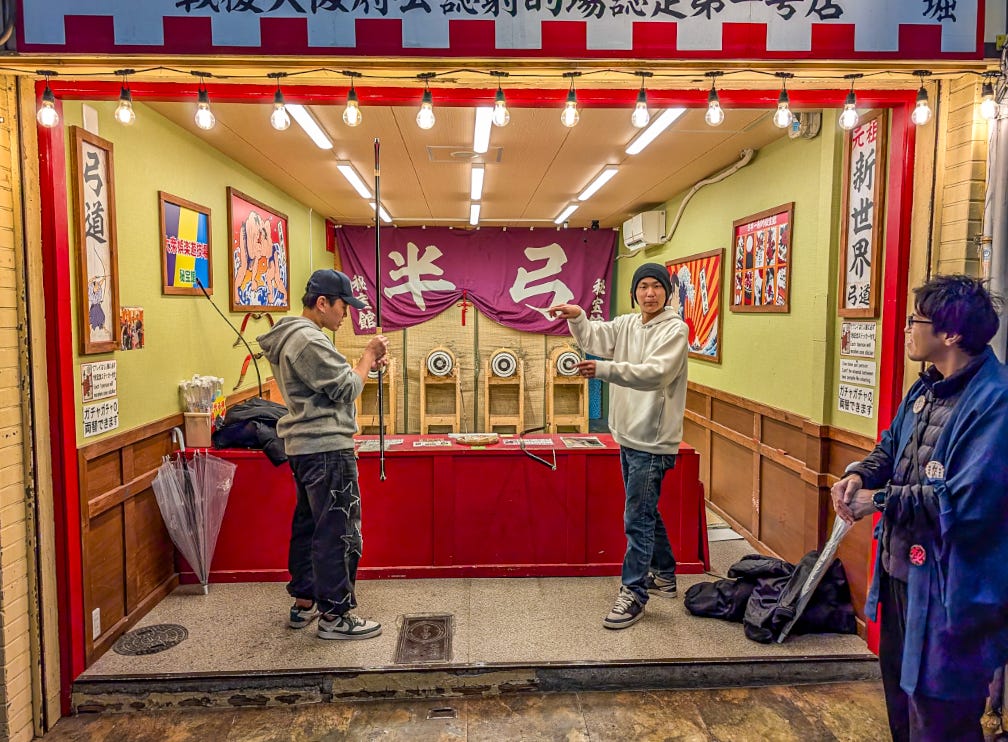
There are even places where you can throw real shuriken (sharp-edged metal stars) — only do it before you quaff the Asahi beer on sale everywhere.
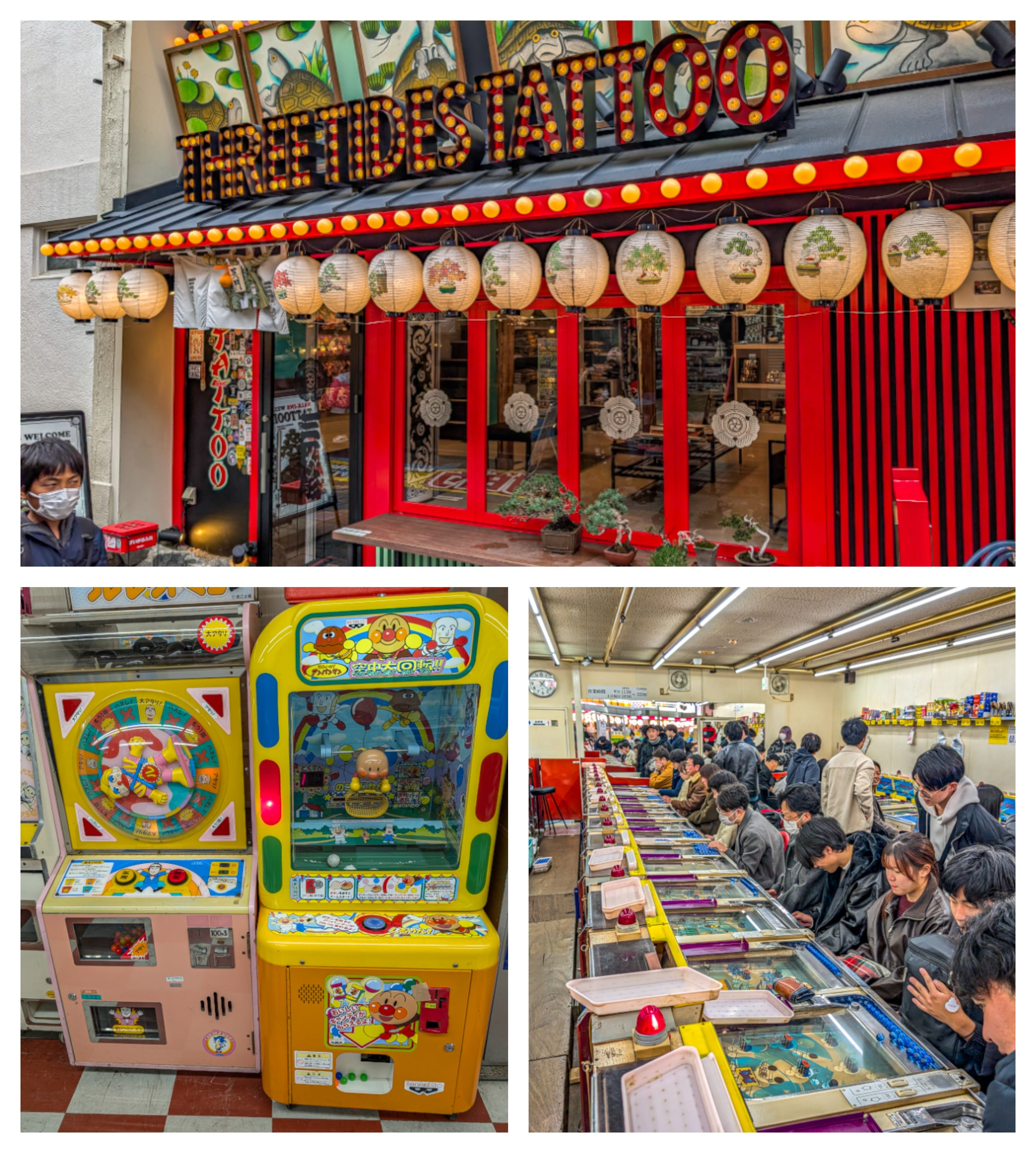
There are also electromechanical games that predate video games, old-fashioned pachinko halls, and — quite unexpectedly — a tattoo parlor, still an act of rebellion in Japan.
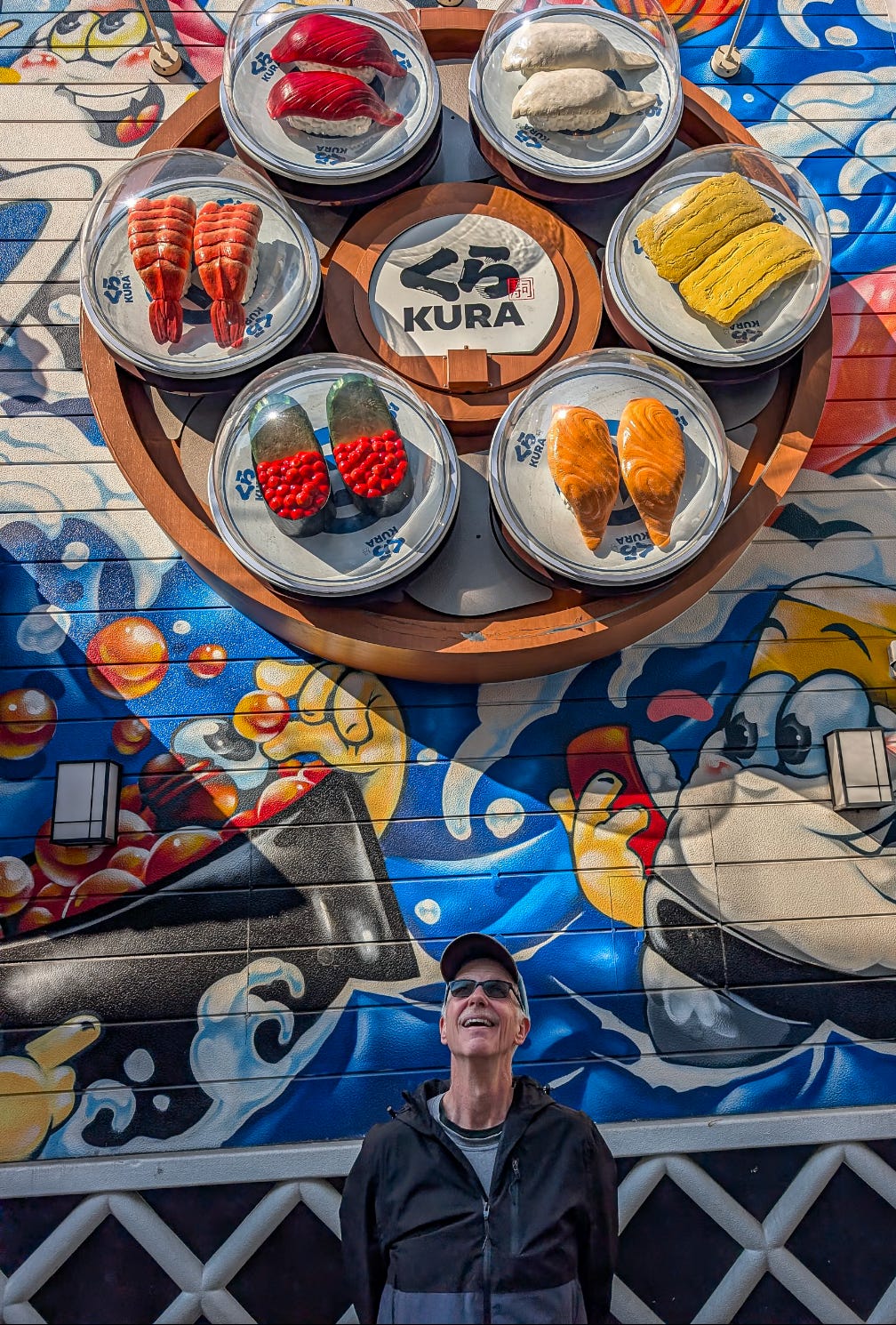
Then there are the restaurant façades. Shinsekai has the oversized mascots and food you expect in Osaka — crabs, chefs, sushi, and more.
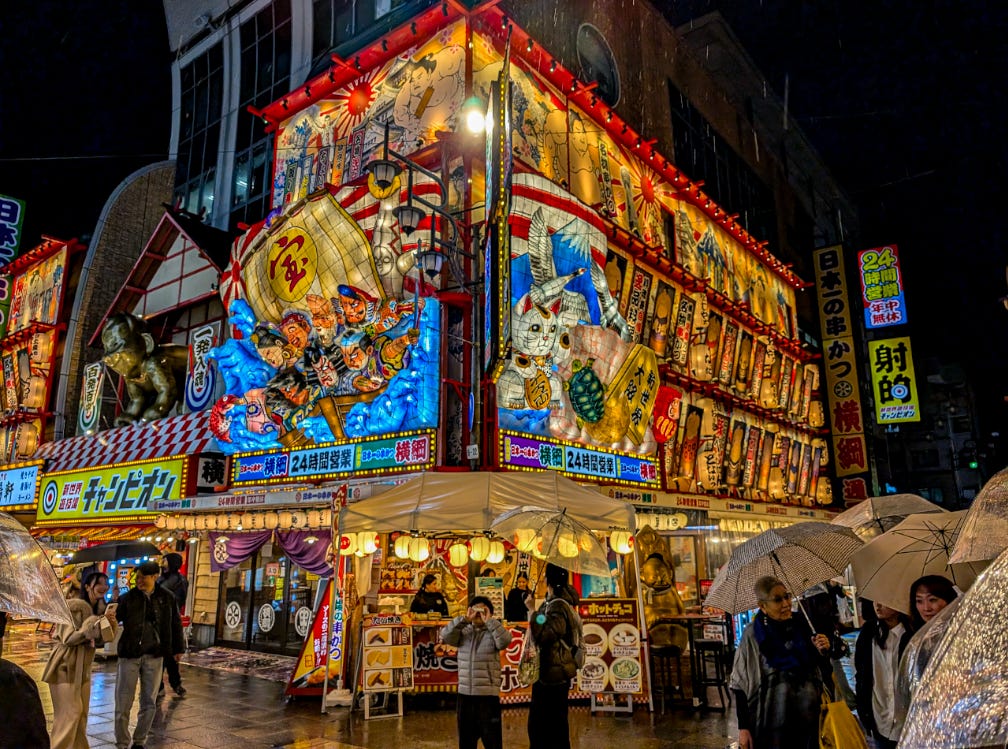
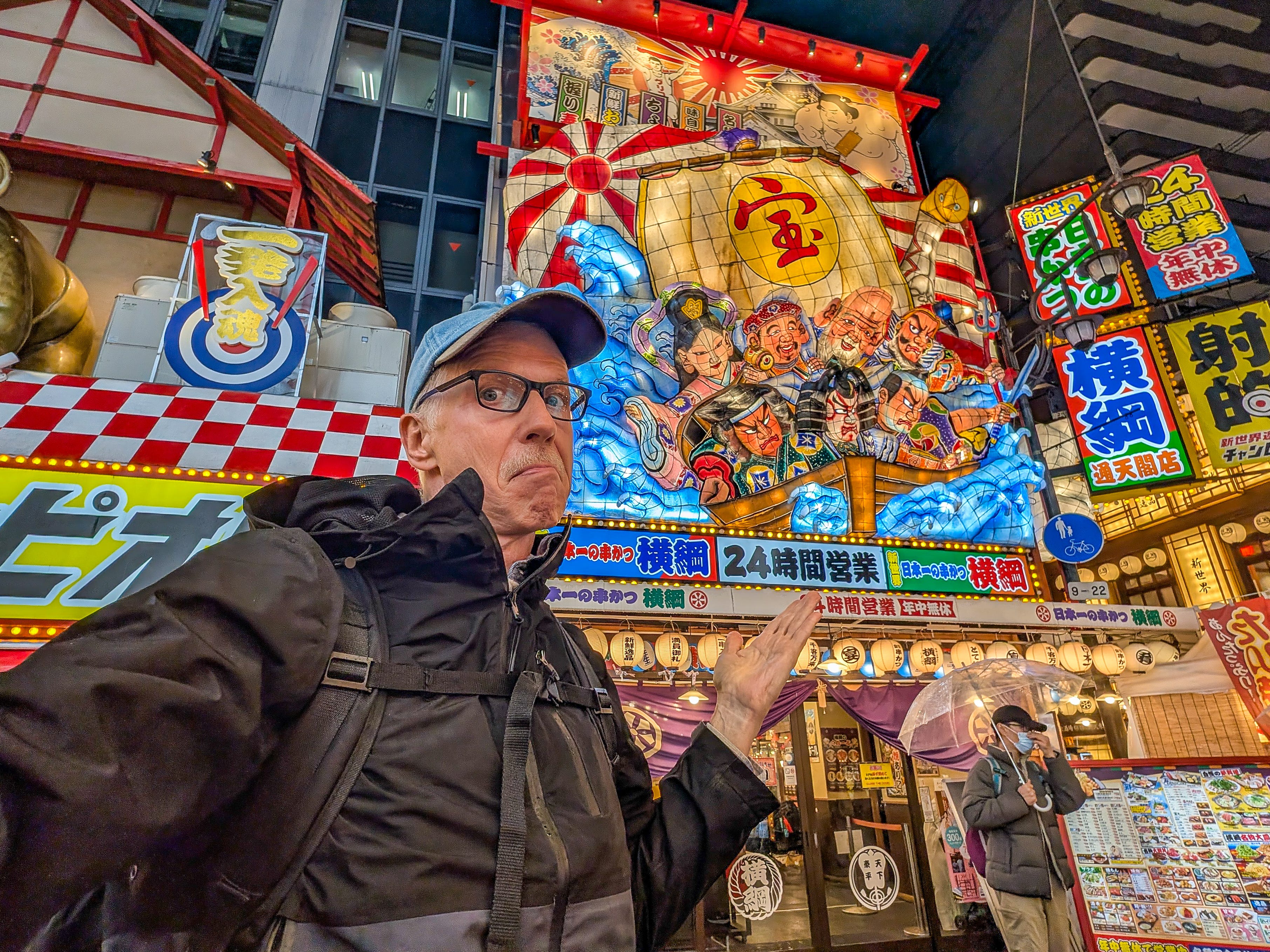
But it also has something better: a massive illuminated nebuta panel mounted on the front of Yokozuna, a kushikatsu restaurant.
The moment I saw it, I was fascinated.
Nebuta art comes from the Aomori Prefecture in northern Japan, where artists stretch paper over huge wire frames, paint dramatic figures from myth and history, and light them from within for summer festivals.
(Because I’m a sucker for festivals featuring large sculptures, I am going to have to visit Aomori to see this for myself.)
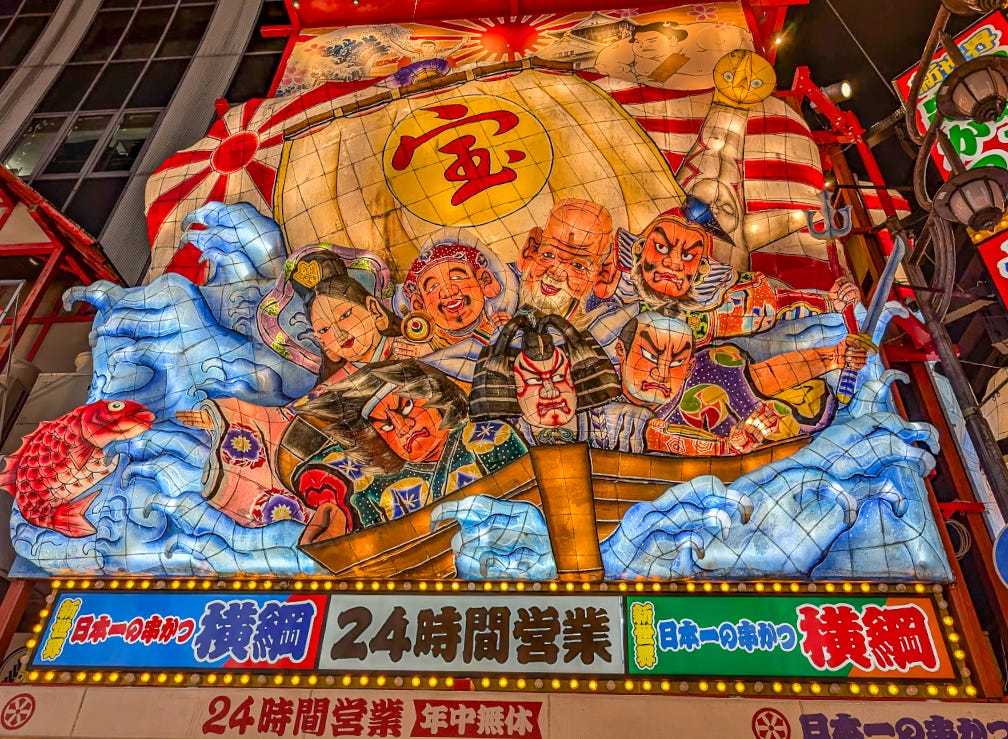
One half of this Shinsekai panel depicts the Shichifukujin, the Lucky Gods of Japan, sailing on the Takarabune, a treasure ship. The seven deities come from Japanese mythology, Buddhism, and Taoism. Together, they grant good fortune, happiness, prosperity, health, wisdom, and protection.
This nebuta panel isn’t just a simple decoration to catch passersby's eyes. It’s a glowing offer to the gods for success, exactly what a restaurant (and a neighborhood) needs in this day and age.
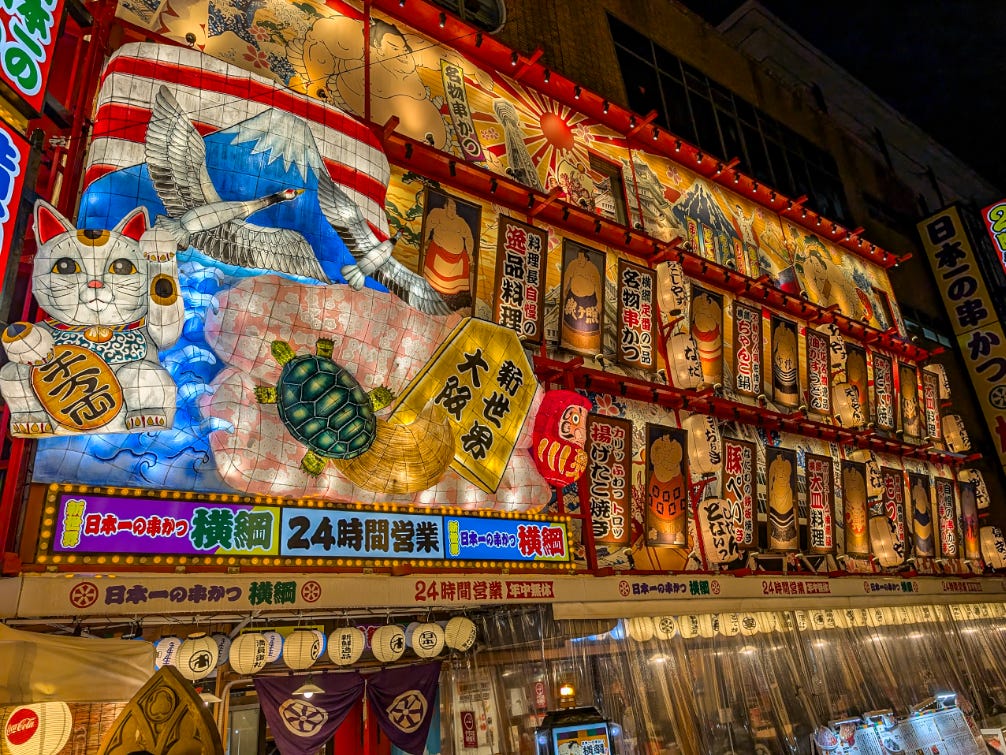
Osaka loves things big, loud, and unapologetically colorful, and Shinsekai doubles down on all of it. The surprise isn’t that a nebuta panel ended up here — it’s that there aren’t more.
Finally, there’s Shinsekai’s strangest mascot: the Billiken, a good luck charm doll that briefly became popular in the early 20th century.
Despite appearances, Billiken isn’t Japanese. Believe it or not, it comes from America.
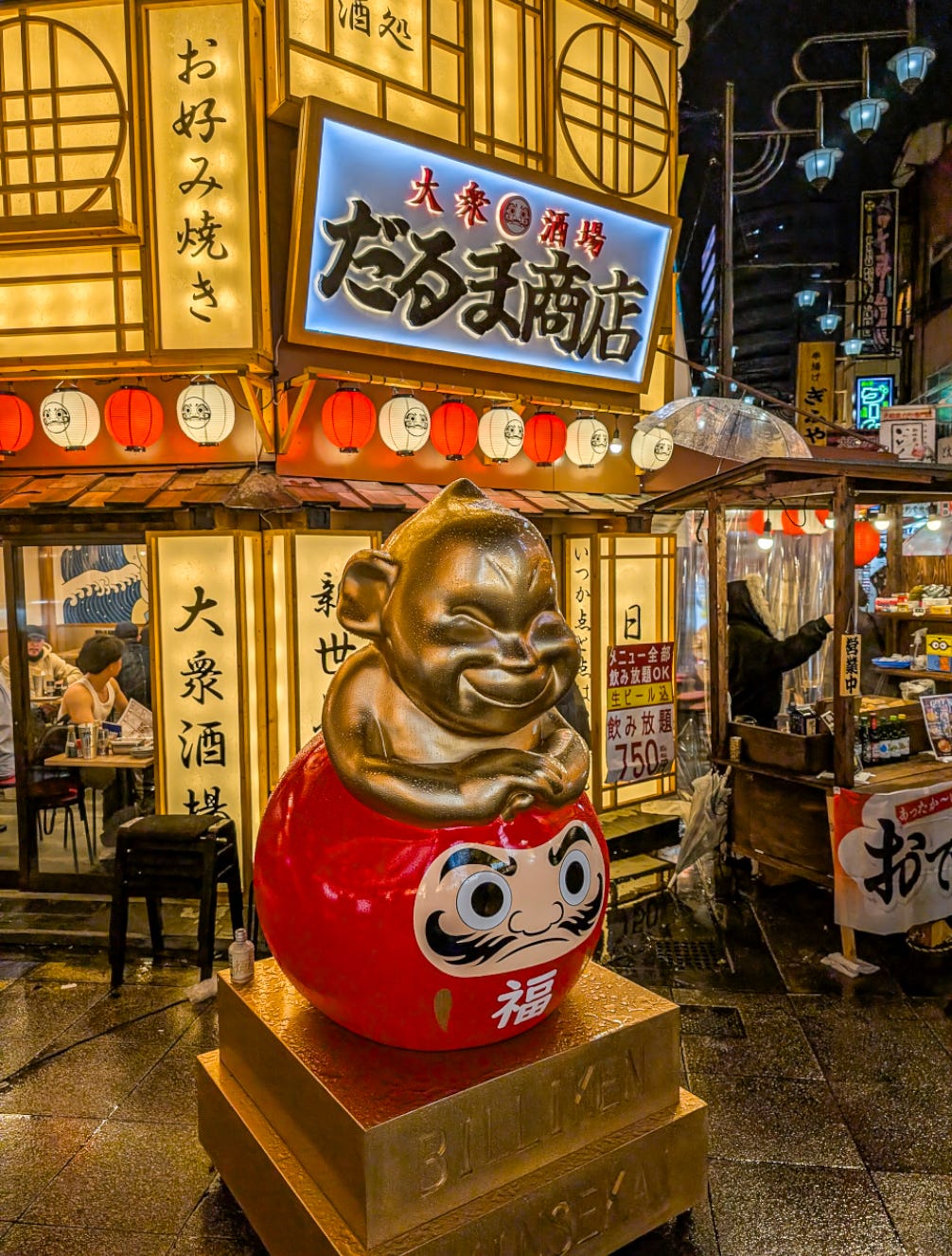
It was created in 1908 by American artist Florence Pretz, who dreamed up what she called a god of “things as they ought to be.”
Somehow, this grinning, barefoot oddity was adopted by Osaka, and nowhere more completely than Shinsekai. So completely, in fact, that most people now assume it originated here.
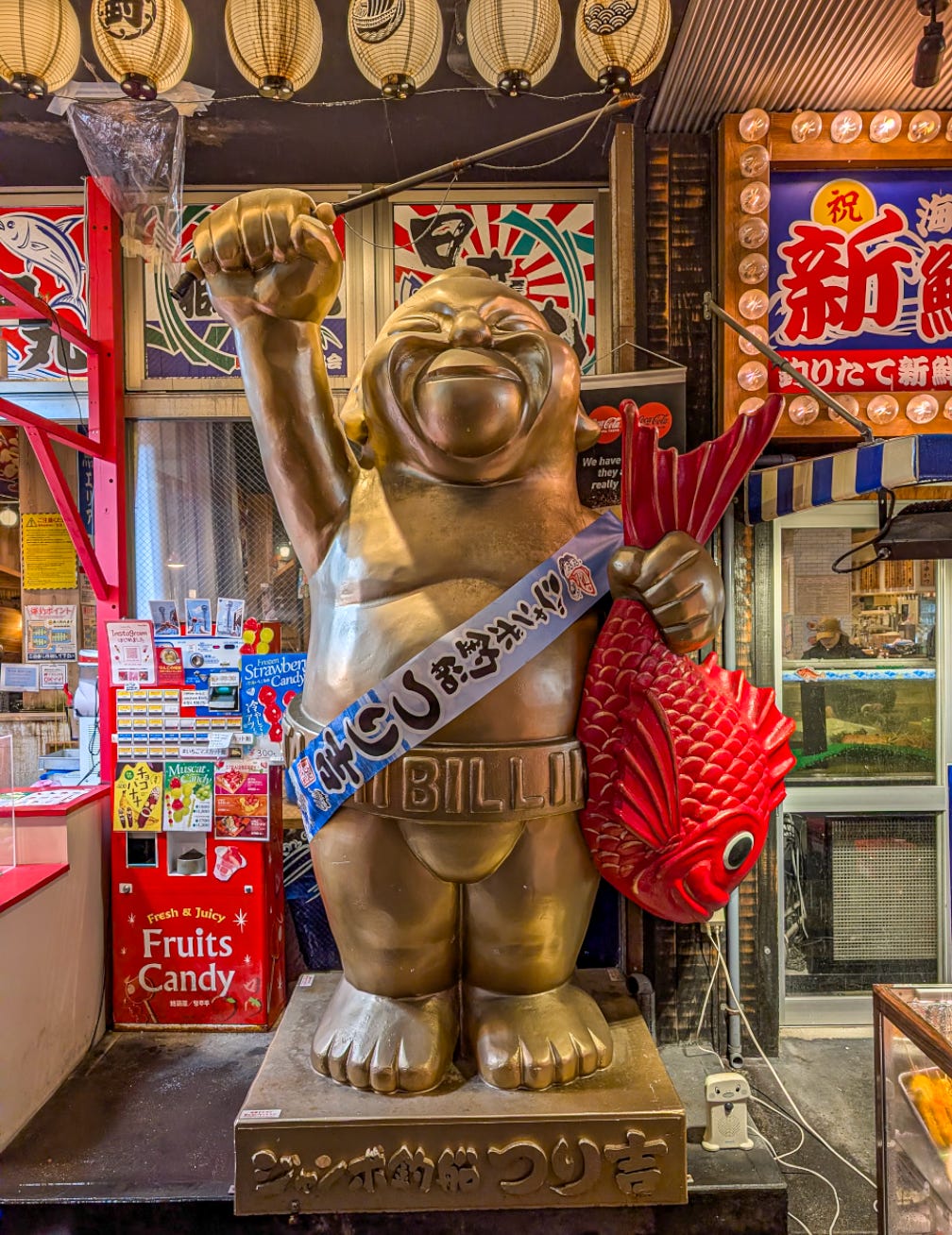
Billikens large and small are everywhere in Shinsekai (and Dotonbori). Some loom over restaurants, others are small and tucked away.
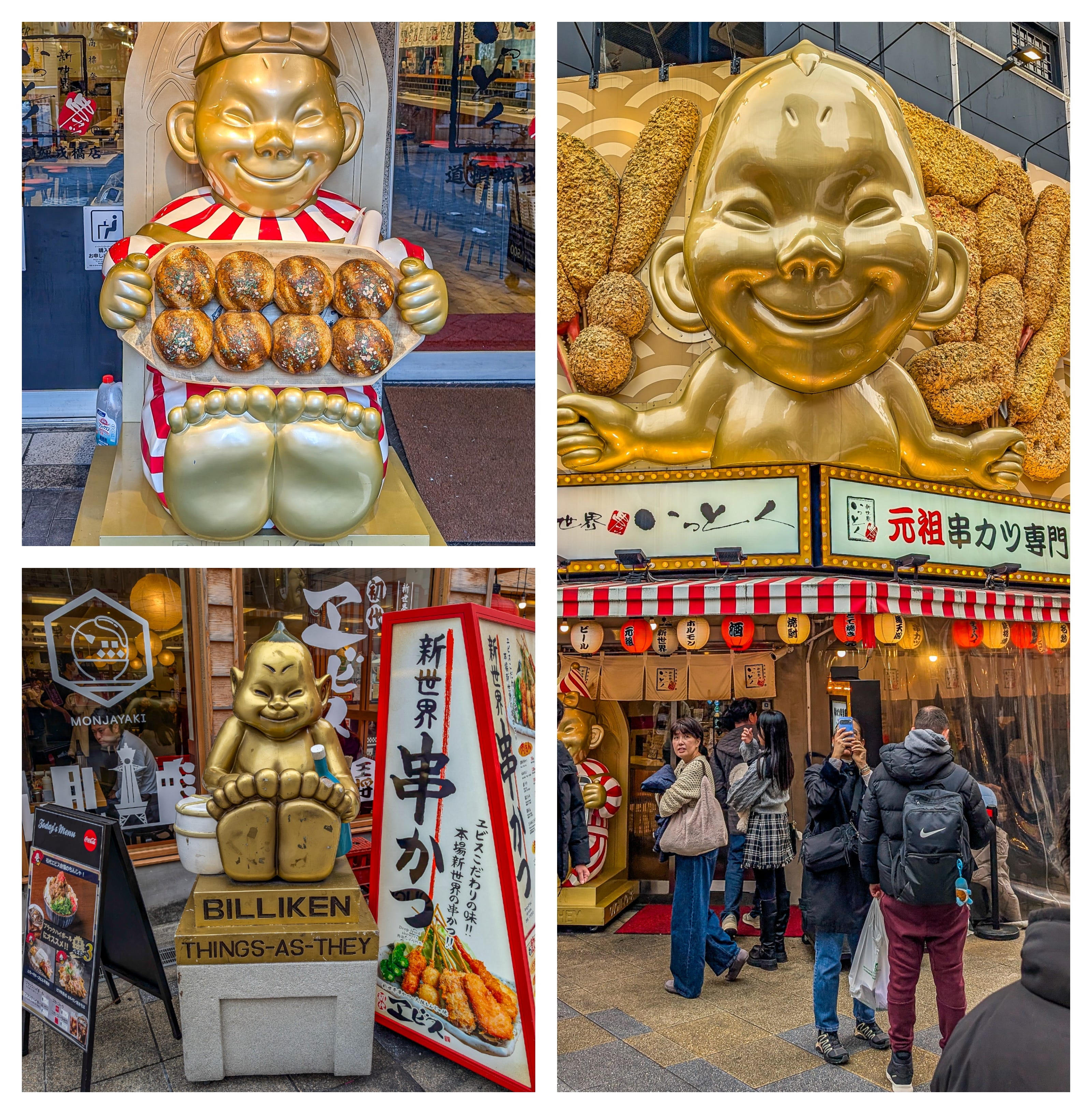
Billiken is a symbol of luck, happiness, and contentment. Tradition says you’re supposed to rub his feet for good fortune, which is both strange and a little unsanitary.
But that’s Shinsekai for you: strange, scruffy, joyful, and stubbornly itself — a neighborhood that shouldn’t work, but absolutely does.
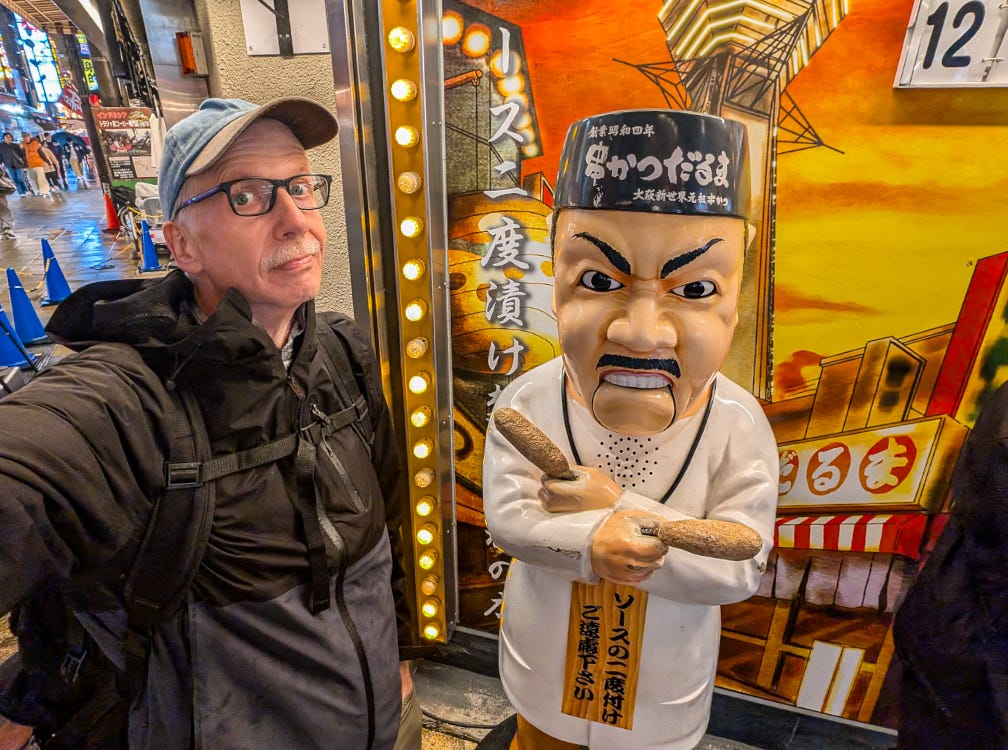
Now I just need to figure out what my next newsletter should be about!
If you enjoyed this newsletter, I would appreciate your sharing it with someone you think might also like it.
Michael Jensen is a travel writer, amateur photographer, and novelist. Check out his other newsletter about his travels at BrentAndMichaelAreGoingPlaces.com.
Hi Michael, I love your photo Substack, and I know your title with "too many pictures" is meant to be ironic. In this digital era, there is no such thing as too many, right?
Electrons are free, and storage space in the cloud is unlimited, so when I travel I fire away and come home with 1,000+ after a 2-week vacation in Europe. There's just so much to capture for the beauty and charm, and of course, to help preserve the memories. The challenge is sorting them out and choosing the best for Substack and for the Shutterfly photo/text albums I compile after each major vacation trip.
Your photos of Shinsekai are wonderful and I enjoyed every one of them. Glad I stumbled onto your photography newsletter from the link in your post about lusting for snow. (But not cold...)
Looking forward to your next post! Meanwhile, enjoy that Hawaiian cruise. And don't forget to pack your camera!!
holy sensory overload! but looks like such a funky place I dig it